The initiative, developed by biology graduate Belén Heredia, a CONICET fellow, and researchers from INTA, addresses a historical environmental liability in La Planta, Caucete, through the use of native species capable of immobilizing and absorbing heavy metals, proposing a sustainable solution that combines applied science, ecological restoration, and circular economy to mitigate contamination of mining soils in San Juan.
By Panorama Minero
Soil contamination by residues from former mining operations represents one of the main environmental challenges in the arid zones of San Juan. Faced with this complex problem, which combines environmental, social, and productive impacts, local science has begun to provide concrete and sustainable responses. One example of this is the phytoremediation project developed in the town of La Planta, in Caucete, based on the work of biology graduate Belén Heredia, a postdoctoral fellow of CONICET, together with a team of researchers from INTA.
The initiative is framed within Heredia’s doctoral thesis, entitled “Evaluation of the phytoremediation potential of native species of the San Juan monte in soils with residues from a gold mine,” and proposes the recovery of contaminated soils through the use of native plants adapted to the extreme environmental conditions of the territory of San Juan.
The work arose from a specific demand: the existence of a historical environmental liability in La Planta, a town where, more than six decades ago, a gold and silver processing plant operated. At that site, rocks from nearby mining deposits were processed, taking advantage of the availability of water from the Papagallo River, which was fundamental for extraction processes. Currently, this river brings water only occasionally. During its period of activity, it is estimated that around 1,600 kilograms of gold were obtained.
However, when mining activity ceased, no closure plans or environmental mitigation measures were implemented, in line with the limited regulations in force at that time. Over time, the residues generated by extraction, initially using mercury and later cyanide, gave rise to a contamination plume that progressively affected the surrounding environment.
Over time, settlement in the area intensified: currently, La Planta is home to more than 80 families, has a school, and carries out productive activities such as extensive goat ranching and household gardens. These practices, essential for the subsistence of the community, are directly threatened by the presence of contaminants in the soil originating from historical mining operations.
From INTA, the research team intervened with a comprehensive characterization of the affected area. The studies made it possible to identify that the main contaminants present in the residues were arsenic, cadmium, zinc, and lead. When the results were compared with the guideline levels established by national legislation for residential, agricultural, and industrial uses, it was confirmed that the concentrations far exceeded the permitted values, which prevented any type of safe use of the soil.
Faced with this scenario, the team chose to seek a remediation alternative that was ecological, economically viable, and suitable for local conditions. The response arose from observation of the environment itself: the presence of native vegetation growing spontaneously on the contaminated residues. From there, phytoremediation technology was implemented, which consists of the use of plants capable of absorbing, accumulating, or immobilizing contaminants, reducing their mobility and preventing their dispersion.
The studies revealed that several native species of the San Juan monte not only resisted the presence of heavy metals, but also accumulated them in their tissues. Four key species with high phytoremediation potential were identified: algarrobo, jarilla, retamo, and chimisque, also known as manca potrillo.
The team analyzed stems, leaves, and roots of these plants, confirming significant concentrations of contaminants. To advance in the design of an intervention strategy, trials were carried out under controlled greenhouse conditions, evaluating the response of the species during early stages of development.
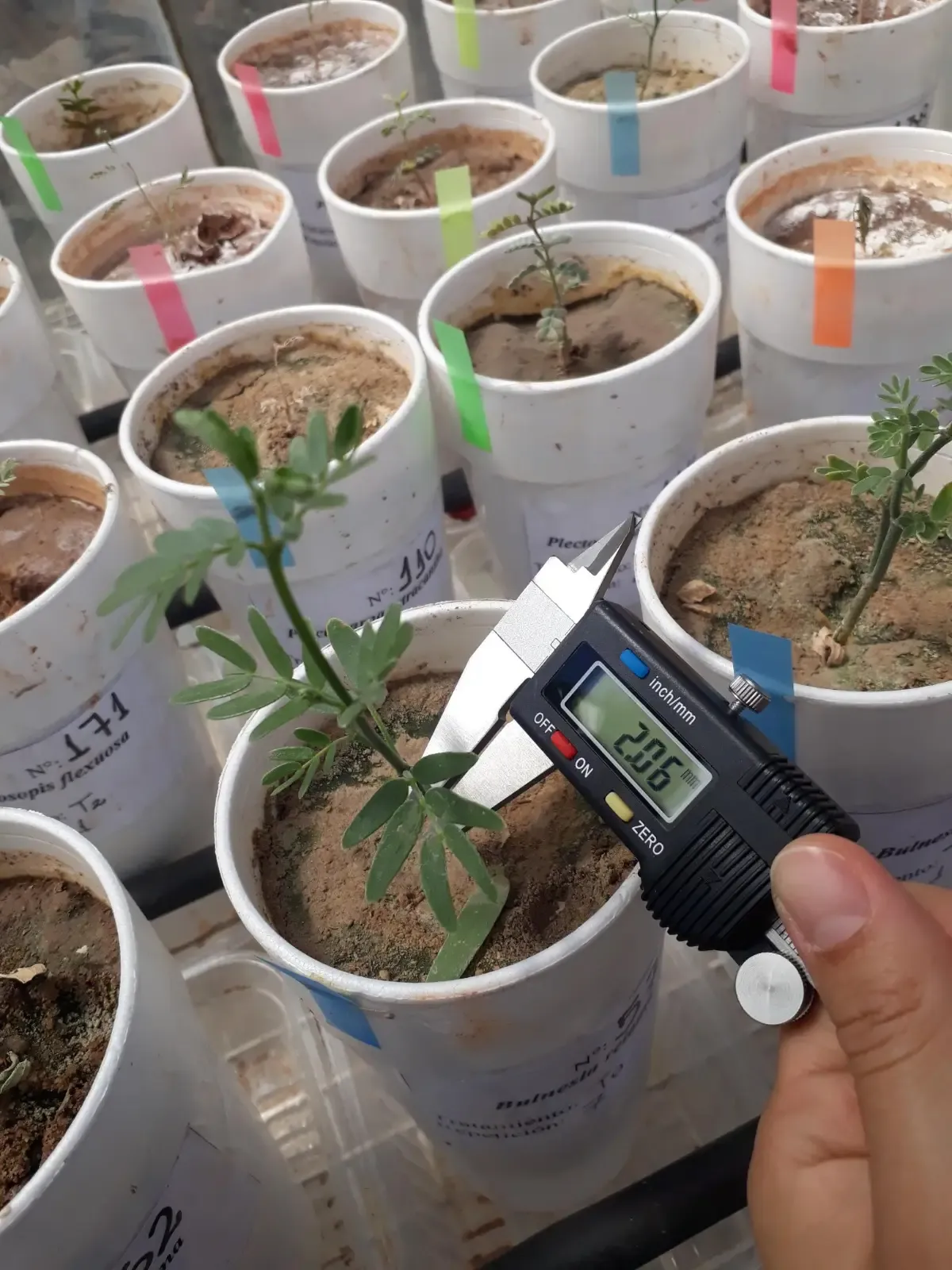
The project was financed by the European Union, within the framework of an international contribution that included Spain, Lithuania, and Serbia. Under that scheme, San Juan was selected as a pilot site for the study of soils contaminated with heavy metals. The conclusions indicated that the most efficient strategy was the transplanting of individuals—plants—with approximately one year of development.
However, to ensure plant survival it was necessary to intervene on the substrate. The residue presented an extremely acidic pH, between 2 and 3, whereas plant growth requires values close to 6. In addition, natural soil was found at depths greater than 50 or 80 centimeters, which made it necessary to work directly on the mining residue.
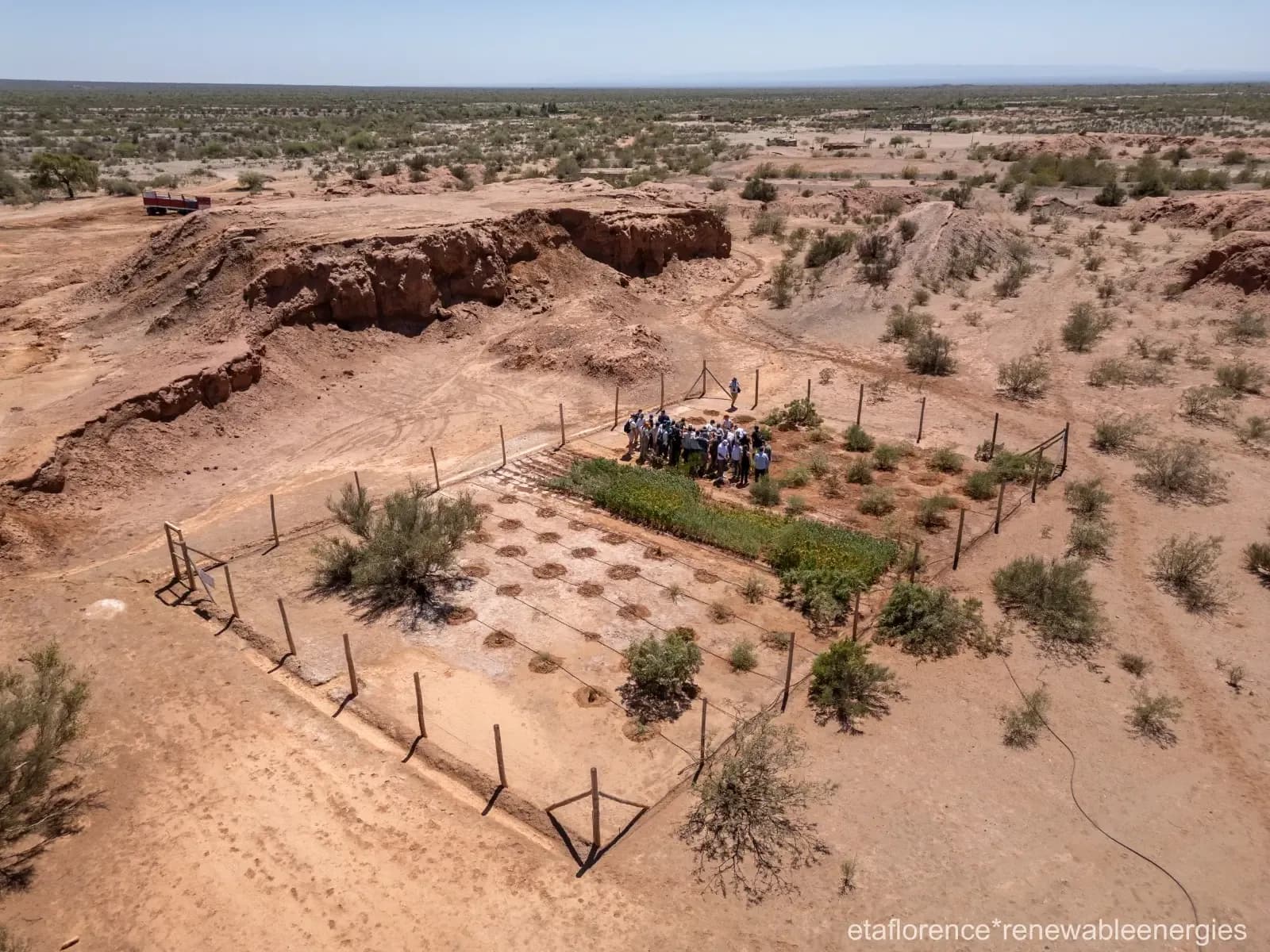
The solution was the incorporation of an amendment: dolomite, a byproduct of lime exploitation, which improves pH, provides calcium and magnesium, and favors soil aeration. Calera San Juan donated the material, which made it possible to install two experimental plots of 500 m² each in La Planta. In each plot, 40 plants were planted.
The area most affected by contamination covers almost two hectares, so the project was also conceived from circular economy logic. The objective was to produce biomass that could be sent to a partner in Germany, where it is used to generate biofuel. From the residues of that process, another company would be responsible for recovering the metals to reinsert them into industry.
Given that native species have slow growth; quinoa cultivation was also incorporated, which allows annual biomass to be obtained without the need to completely remove the native plants, carrying out only controlled pruning. Compost was added to provide organic matter and improve substrate conditions.
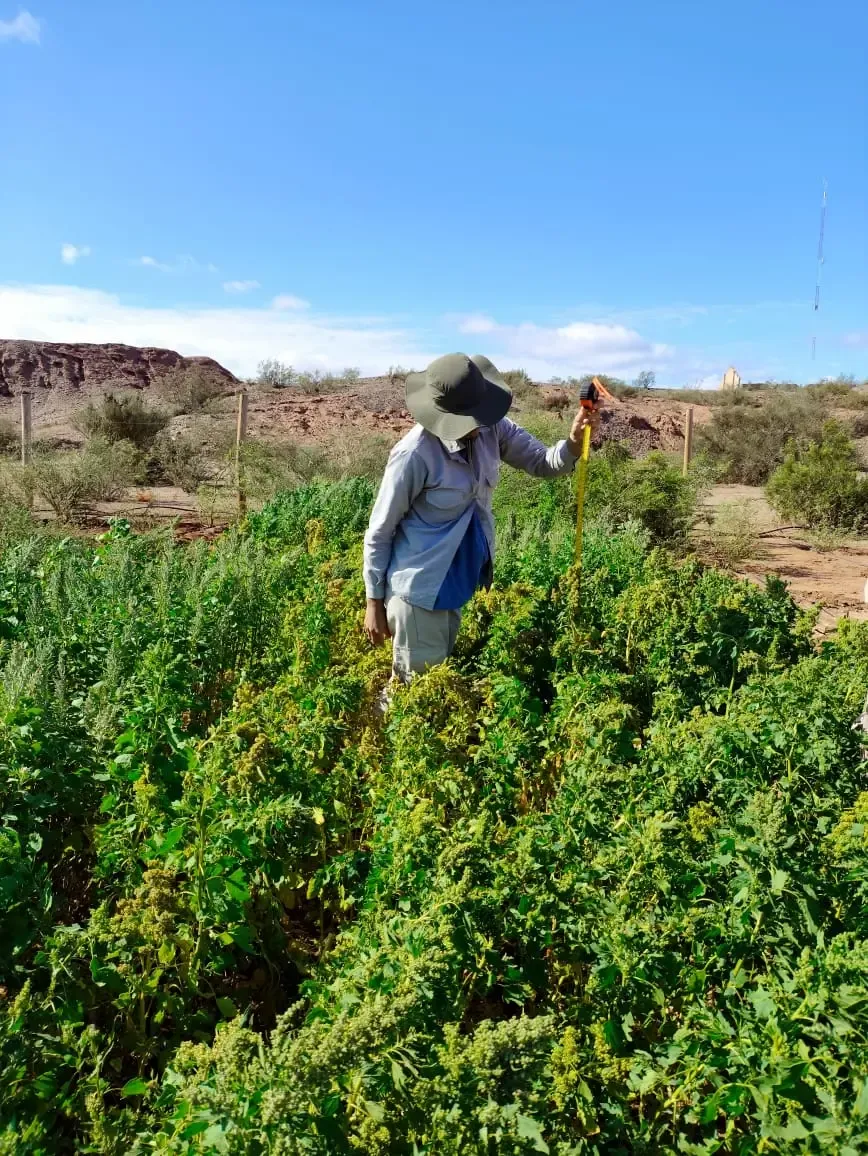
Unexpectedly, the results showed that quinoa was capable of absorbing high concentrations of heavy metals, which represented a relevant finding from a scientific point of view. However, it was clarified that in this context the crop is not suitable for human consumption, since the contaminants are transferred to the grain.
Although the project financed by the European Union has already ended, the team continued monitoring for four years. The native species planted continue to develop at the site, which confirms the viability of the strategy. A drip irrigation system was installed on a temporary basis and is being progressively removed to favor plant adaptation and allow the process to continue through natural succession.
The vegetation cover achieved fulfills a key role: it reduces the action of erosive agents, such as wind and water, and prevents contaminants from dispersing to other areas. In this way, the project led by Belén Heredia is consolidated as an example of how applied science, articulated between organizations such as CONICET and INTA, can offer concrete solutions to historical environmental liabilities, integrating local knowledge, international cooperation, and a long-term perspective on the territory of San Juan.