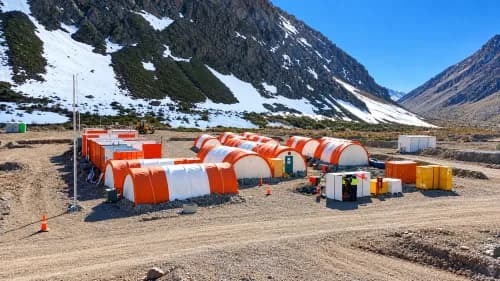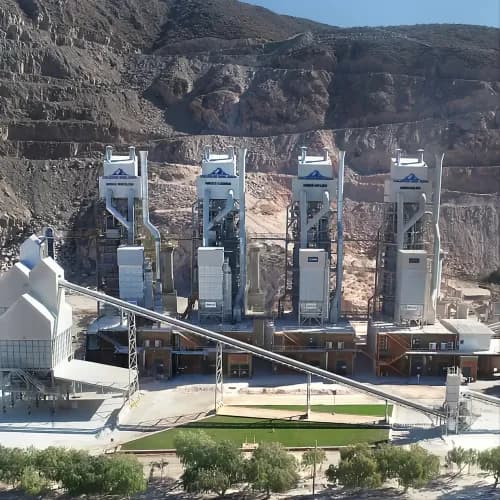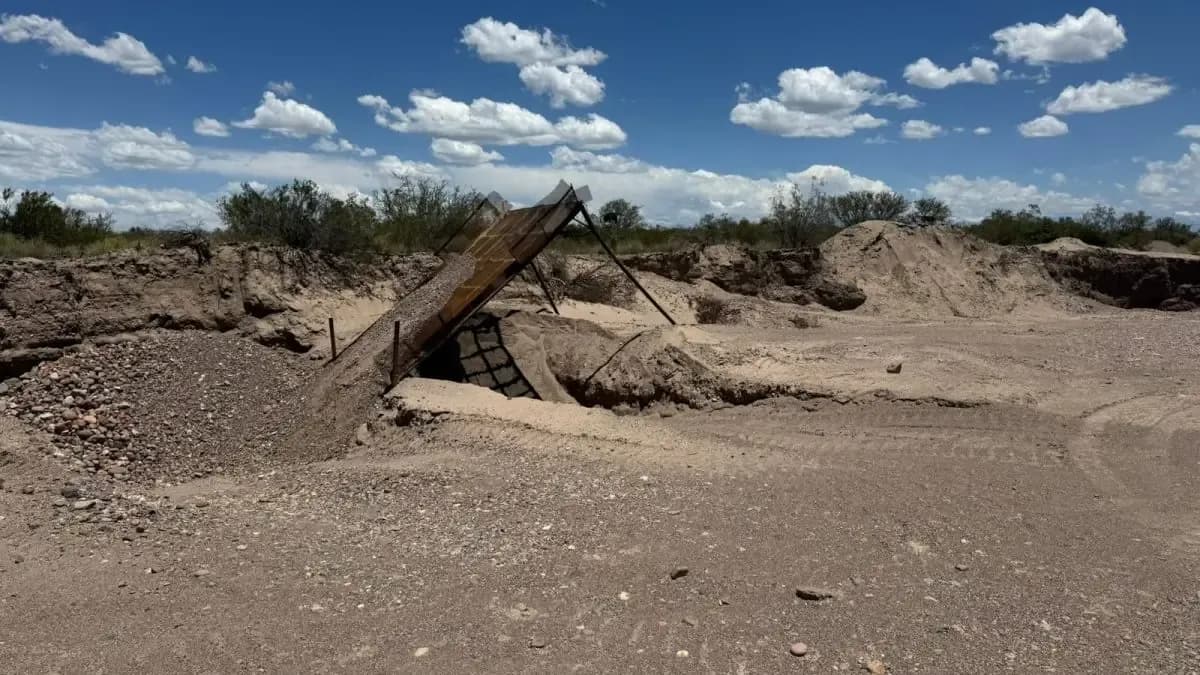
Malargüe, San Carlos, Tupungato, and Rivadavia concentrate a large part of the provincial value added in mining activities of these categories.
By Panorama Minero
The Master Plan for the Water Sector of Mendoza introduces a piece of data that makes it necessary to review part of the provincial mining debate: second- and third-category mining not only currently has an almost null water impact, but also sustains entire local economies, even in departments where opposition to mining development is more visible and organized.
The official document—which projects water management through 2050—makes it clear that, under the current legal framework, mining does not constitute a relevant pressure factor on water resources. However, when analyzing the economic structure by departments, a less discussed map appears: mines and quarries are, in several territories, one of the main drivers of value-added generation.
Invisible but structural mining
The mining activity that currently exists in Mendoza is concentrated almost exclusively in second- and third-category minerals, such as gypsum and aggregates. These are operations with low water consumption, in many cases with non-consumptive uses, and with water permits mostly associated with personnel supply or auxiliary tasks.
This productive profile explains why the Master Plan qualifies its water impact as “practically negligible.” But the same document shows that its territorial economic weight is anything but marginal.
The most extreme case is Malargüe, where the mines and quarries sector accounts for between 75% and 80% of departmental added value. There, lower-category mining does not play a complementary role: it is the very basis of the local economy, in a territory with few productive alternatives.
San Carlos and the paradox of rejection
Even more striking is the case of San Carlos, a department historically identified with a firm anti-mining stance, where some of the most active movements against the development of the activity are concentrated.
According to the Master Plan, in San Carlos the mines and quarries sector represents between 35% and 40% of departmental added value. That is, a substantial portion of the local economy depends on an activity that, at the discursive level, is strongly questioned.
The paradox is not minor: while the public debate usually associates mining with environmental or water threats, the official technical diagnosis shows that the mining that actually operates in the territory does not put pressure on water and, at the same time, contributes a decisive part of local income.
Valle de Uco: economic impact without water pressure
The pattern is repeated in other departments of the Valle de Uco. In Tupungato, second- and third-category mining contributes close to 28% of added value, becoming the main individual sector of the departmental economy. In Rivadavia, it accounts for between 22% and 24%, also being the main contributor of value.
In all cases, the Master Plan emphasizes that these activities do not demand significant water volumes, which reinforces the idea that the conflict between mining and water resources does not correspond to the current productive reality.
The spillover effect that does not occur today
The report does not state this explicitly, but the data allow an additional reading: the absence of larger-scale metal mining also limits the development of the other categories.
In provinces with greater mining dynamism, metal mining usually acts as a driving activity, promoting:
-
Greater demand for aggregates
-
Quarries Development
-
Investments in logistics, services, and local suppliers
-
Professionalization of smaller-scale mining
In Mendoza, that spillover effect does not occur, in part due to legal restrictions that prevent progress on conventional metal mining projects. The result is a second- and third-category mining sector that is economically relevant, but encapsulated, without the momentum that could expand its scale, its technification, or its productive integration.
Low water consumption, high territorial impact
From a water perspective, the numbers are conclusive. The Master Plan records, for example, 63,000 m³ annually in the Malargüe River basin for mining or hydrocarbon exploration and exploitation activities, an insignificant volume compared to agricultural use, which concentrates around 90% of total water consumption in Mendoza.
Even so, second- and third-category mining continues to be a silent economic pillar in vast regions of the province, including those where social rejection of the activity is more visible.