The Minister of the Interior anticipated that in February the tender for National Route 7 will be launched, a key project for connectivity and mining logistics in Mendoza and the country.
By Panorama Minero
The announcement by the Minister of the Interior, Diego Santilli, that in February the tender will be launched to move forward with works on National Route 7 in the high mountain section in Mendoza introduces a relevant data point into the country’s productive infrastructure agenda. “Growth needs infrastructure. That is why we are resuming works and working with the provinces to prioritize those that have a direct impact on development,” the government official stated when confirming progress on the project together with Governor Alfredo Cornejo.
Although it is not a project conceived specifically for mining, its potential impact on the development of the sector is direct, especially in Andean provinces where logistics define a large part of the technical and economic viability of projects.
Route 7 is Argentina’s main bi-oceanic corridor and connects the country’s productive center with the Cristo Redentor Integrated System and the ports of the Pacific Ocean. In mining terms, it is an enabling infrastructure: critical supplies, large-scale equipment, and industrial cargo that supply the high mountain areas circulate along it, and in a development scenario it is emerging as the natural corridor for the outbound transport of mineral production destined for international markets.
Infrastructure, the sector’s Main Bottleneck
The announcement fits within a broader context. The national report on infrastructure requirements for the development of the mining sector, prepared by the Argentina’s National Secretariat of Mining, clearly identified that one of the main limits preventing Argentine mining from scaling up is not the availability of geological resources, but rather the physical, energy, and logistical infrastructure that allows operations at scale and with predictability.
At the national level, the diagnosis focuses on strategic road corridors, access to high mountain areas, international crossings operational year-round, and logistics systems capable of sustaining continuous and high-volume flow. Within this framework, road works such as National Route 7 take on a central role, even when they are not part of a specific sectoral mining plan, since they directly condition transportation costs, operating times, and project competitiveness.
In this context, Santilli emphasized that the national strategy aims to “accompany economic growth and improve regional competitiveness,” while highlighting that road infrastructure is a necessary condition for productive investments to consolidate in the territory.
Mendoza, a Specific Case within the National Diagnosis
In the case of Mendoza, the national report is even more precise. It identifies three pending critical axes to accompany a potential mining development: the strengthening of strategic routes, the comprehensive improvement of the Cristo Redentor Integrated System, and progress on the Las Leñas Pass as a long-term alternative.
National Route 7 is located at the heart of this scheme. It not only constitutes the main road access to the Cristo Redentor system, but also functions as the logistical backbone of Mendoza’s high mountain area. Its capacity, condition, and level of service directly condition the functioning of the international corridor and, by extension, any transport scheme associated with metal mining.
A Corridor that already operates for Mining and Projects its Future Use
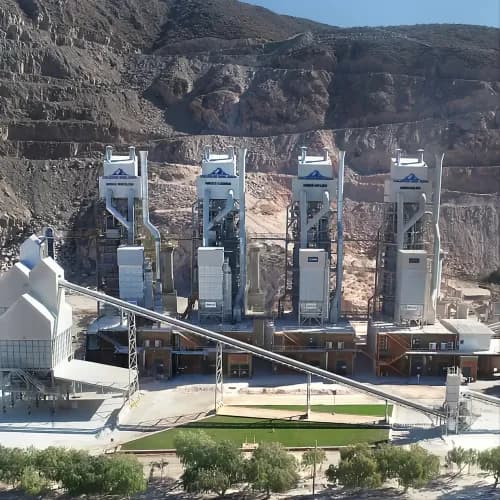
As PANORAMA MINERO has been pointing out, the Cristo Redentor Integrated System already fulfills a concrete role today in regional extractive activity. Through this corridor, mining-related cargo circulates regularly, such as lime produced in San Juan destined for operations in Chile, which demonstrates that the infrastructure exists and is used by the sector, even with operational limitations.
This background takes on special relevance in the scenario that is beginning to take shape for Mendoza mining. The PSJ copper project, the most advanced in the province, is analyzing logistics schemes that, in the near future, contemplate the shipment of copper concentrate toward the Pacific Ocean. In this context, National Route 7 will be the key road corridor to link Mendoza production with Chilean ports, taking advantage of a more efficient and competitive outlet to international markets.
Route 7 and Cristo Redentor: an Operational Binomial
The operational problems of the Cristo Redentor Integrated System—prolonged closures, lack of predictability, management bottlenecks, and absence of comprehensive planning—currently limit its capacity to absorb larger-scale flows. However, its strategic role is not under discussion. The key lies in transforming an underutilized system into a reliable productive corridor.
In this process, National Route 7 appears as one of the critical pieces. Without efficient road access, with capacity and conditions in line with mining logistics, any attempt to optimize the Cristo Redentor system remains incomplete. The tender announced by the national government does not, by itself, resolve these shortcomings, but it begins to close one of the most evident gaps in Mendoza’s logistical scheme.
Signals for a Mining Sector entering an Operational Phase
The impact of Santilli’s announcement should therefore be read more as a structural signal than as a definitive solution. It moves a key project from the realm of historical demands to that of the national operational agenda, at a time when Argentine mining—and Mendoza mining in particular—begins to evaluate real costs, transportation alternatives, and large-scale operating scenarios.
For projects that are currently advancing through prefeasibility stages, predictability in infrastructure matters is as decisive as the regulatory framework or the quality of the resource. In this context, the improvement of Route 7 becomes a factor that directly affects the logistical viability of Mendoza’s copper mining.
Infrastructure before Production
The convergence between the diagnosis of the national report by Argentina’s National Secretariat of Mining and the announcement regarding National Route 7 reinforces a central idea: infrastructure must anticipate mining development and not arrive when projects are already in production. Roads, international crossings, and logistical corridors define timelines, costs, and competitiveness long before a mine enters operation.
On that board, National Route 7 and the Cristo Redentor Integrated System form an inseparable binomial. Advancing one without resolving the other limits the impact of any investment. The challenge for Mendoza and for national mining policy will be to transform these announcements into a comprehensive strategy that allows infrastructure to cease being the main bottleneck and become an effective enabler of Argentine mining development.