Three entrepreneurs born in the northern department of San Juan recount how the arrival of metal mining and the start-up of Veladero allowed them to transform small family projects into formal suppliers, acquire technical knowledge, and build ventures with a long-term vision, designed to sustain themselves beyond the mine’s life span.
By Panorama Minero
The start-up of the Veladero mine in 2005 marked a before and after for the Iglesia department. Beyond the direct labor impact, metal mining opened a less visible but profound process: the transformation of local residents into suppliers with an entrepreneurial vision, capable of projecting their development beyond the life of the mine. Three stories, born in the heart of the department, reflect that cultural and productive change, which stopped viewing mining as a temporary event and turned it into an opportunity for learning and sustainable growth.
The protagonists share a common origin: they are from Iglesia, grew up in a department historically linked to agriculture and livestock, and understood that the real challenge was not only to sell to mining but to use that momentum to build ventures capable of sustaining themselves over time, even when Veladero ceases operations.
From a Small Workshop to an Award-Winning Supplier
Fernando Varela is the owner of the industrial laundry Fernalexis, one of the clearest examples of how a local venture was able to professionalize through mining requirements. His path began just over seven years ago, when he started working indirectly with Aramark, the company providing laundry services at Veladero.
Fernalexis began as a very small venture with only two people, according to its owner. At that time, the service was provided by an external company, and the possibility of taking it on from Iglesia seemed distant. However, observation, constant consultation, and the conviction that they could do it better locally were vital. Over time, Fernalexis incorporated staff, absorbed technical knowledge, and trained local labor.
Today, the laundry employs 16 people, all from Iglesia, and has been a direct contractor for Veladero since 2023. The path was not without difficulties. The entrepreneur explained that adapting to the regulations imposed by international standards was challenging, but he highlighted the mining company’s support during the process of complying with hygiene, safety, and environmental standards.
That effort received recognition: last year, Fernalexis won first prize in hygiene, safety, and environment at Veladero mine, surpassing larger and more experienced companies. For Varela, mining was much more than a client. It brought knowledge and provided the impetus to generate economic spillover that also strengthens agriculture and livestock. In
this way, all that economic movement remains in the department.
Family Bakery and the Challenge of Modernization
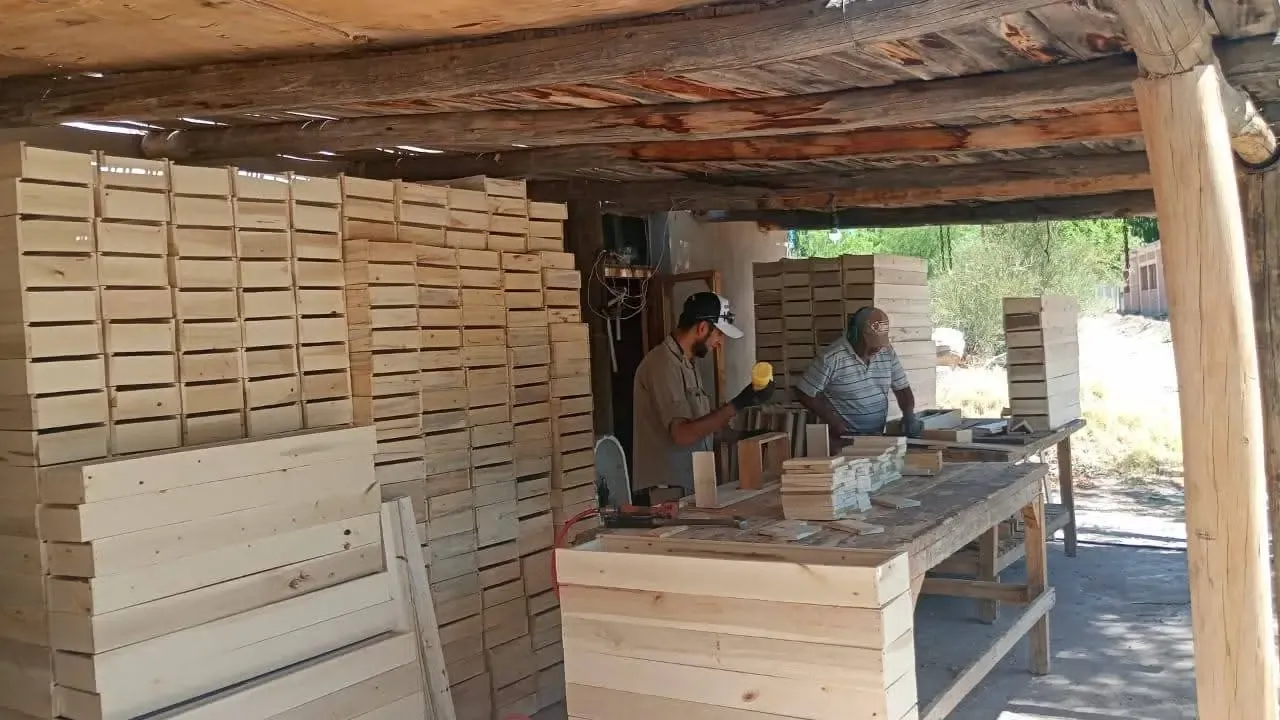
In Tudcum, Enrique Montaño embodies another facet of local development: that of the small producer trying to grow without losing the family nature of his venture. A lifelong baker, he became interested in mining from its beginnings in 2001, attending meetings to stay informed. However, he only began to sell in a limited way from 2012 or 2013.
His bakery remains a small venture, and what he sells to mining accounts for between 8% and 10% of production. Even so, Montaño considers the process worthwhile because it implied improvement and growth. Montaño is a public employee, and before professionalizing his venture, he sold homemade bread and semitas baked in a clay oven. They baked on weekends and sold to tourists. The leap to a mining supplier implied a profound transformation: abandoning the wood-fired oven, investing in electric machinery, and adapting to regulations requiring more modern and controlled production.
That change was not simple, especially in an area without natural gas and with high electricity costs. Nevertheless, Montaño diversified production and today makes sandwich bread, loaf bread, and cookies, with the capacity to double sales.
For the baker, the key is the long term. The process led him to understand that the venture must be sustainable over time.
Learning to Produce with Industrial Standards
The story of Alfredo Díaz adds a technical and educational perspective to the process. A sociologist and agro-industrial producer, he owns Productos Regionales Valle de Tudcum and represents the less visible impact of mining: knowledge transfer. Díaz is from Iglesia but had to move to the city of San Juan to study. To support himself financially, he made artisanal sweets, an activity that later became his business.
His return coincided with the start of Veladero and a completely new scenario for the communities. He states that at that time Iglesia was a town without business experience, with subsistence economies based on small family gardens and small-scale livestock and agriculture. Integration was not immediate: safety and food hygiene regulations were unknown and required a profound cultural change.
Over time, the support from companies and contractors was essential. According to Díaz, there was a collective learning process: from lending machines and equipment to train operators, to technical monitoring on-site. Mining began requiring its contractors to work with communities and support local development.
The production process also involved research and testing. Díaz recalls it took him about three years to create a fruit salad that would last 11 days without oxidizing. The issue knew with certainty the behavior of certain food products at high altitude. Technical feedback from the camp allowed the product to be corrected until it was finally approved by Public Health.
To grow, there were no shortcuts: continuous training, studies in agroindustry, and a demanding work pace. The guideline is that mining has no holidays or breaks; it operates 365 days a year.
A Legacy beyond the Mine
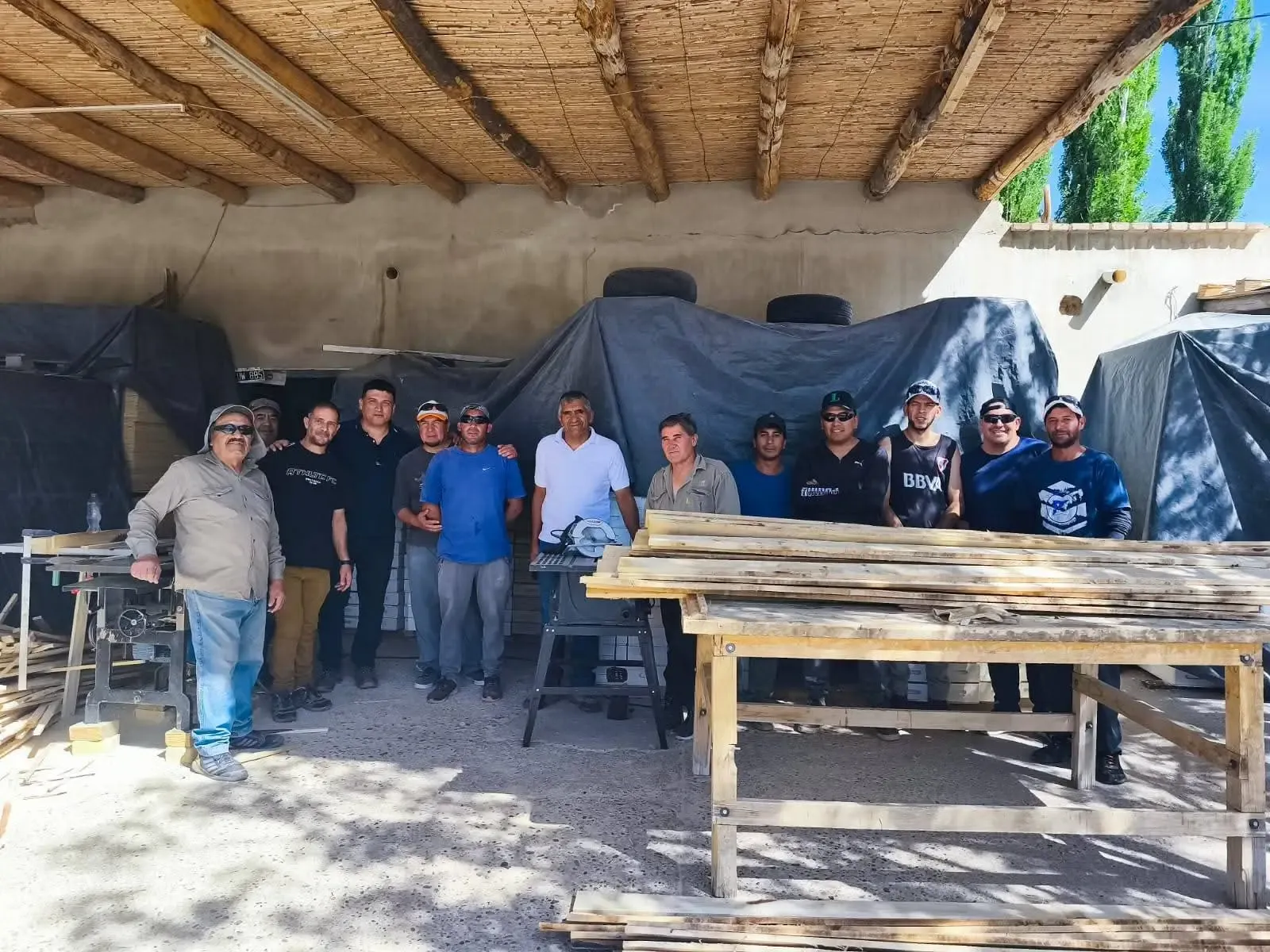
The stories of Varela, Montaño, and Díaz show that the real impact of mining in Iglesia is not measured only in extracted tons or direct employment, but in the human and productive capital left in the territory. Entrepreneurs who started small, learned to work with international standards, and projected their businesses with a clear premise: that the day Veladero ceases operations, the ventures will continue. Currently, the premise they follow is to sell more and keep growing.