The approval of the EIS for the PSJ Cobre Mendocino project marks a turning point for Argentina’s productive sector. This step in metal mining development in Mendoza—the first extraction project to clear the hurdle of Law 7,722 since 2007—represents a victory for political decision-making grounded in technical arguments.
Por Panorama Minero
This political green light allows Mendoza to add a new productive engine to its current economic matrix, which has been stagnant for more than a decade. This factor is one of the main reasons many social and political actors have shifted their stance on mining development.
Cornejo, the Big Political Winner
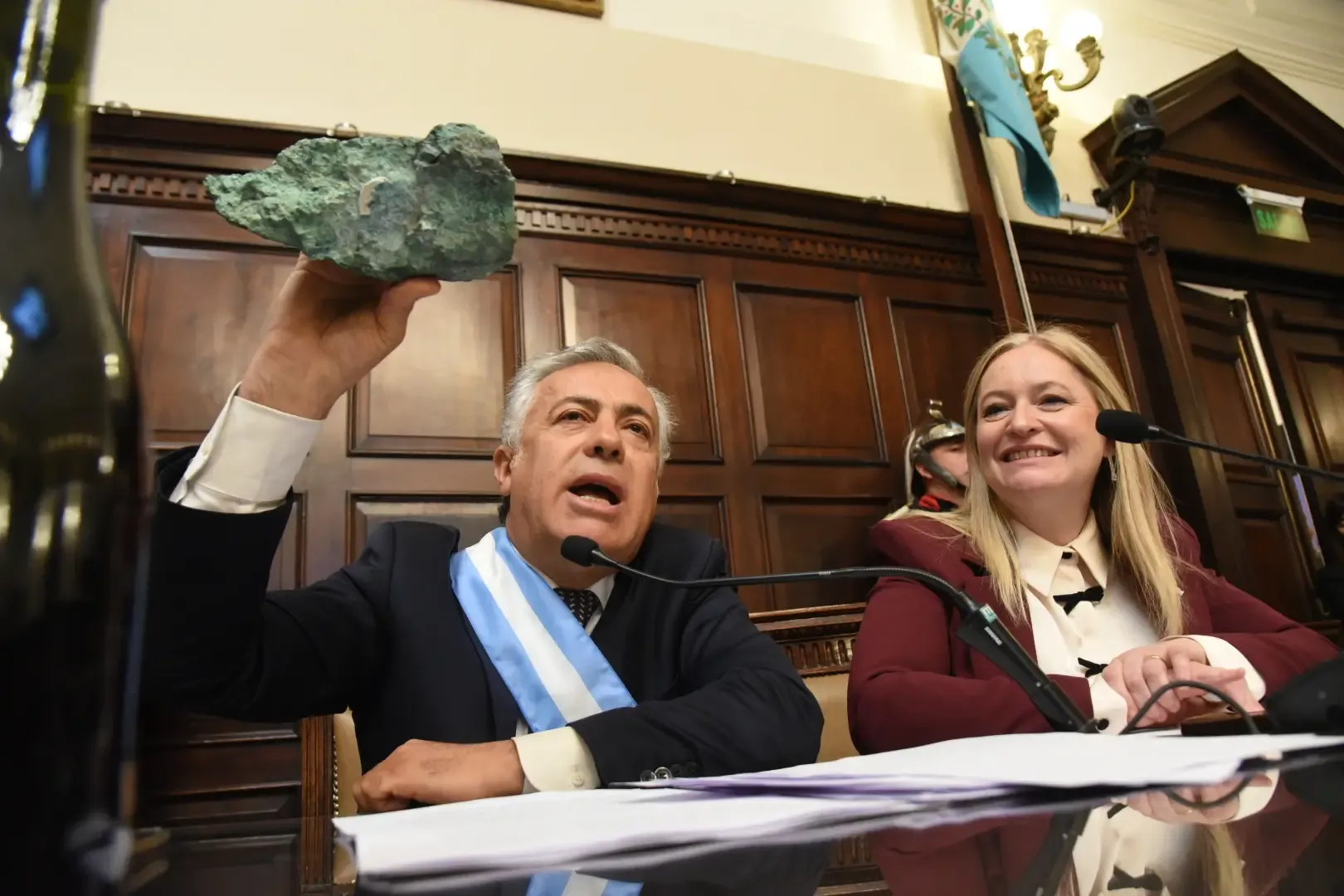
The same Cornejo, who, during the previous attempt to advance the San Jorge project, stood firmly in opposition, has over the years encountered an irrefutable reality: Mendoza needs to activate every possible productive engine. With a pragmatic stance, he pushed to develop mining based on what was concrete—the only resource that had been measured in Mendoza after years of paralysis: the San Jorge project.
For this reason, the major winner in this process is Alfredo Cornejo, who has positioned himself as a firm decision-maker, moving forward with conviction. The approval of PSJ Cobre Mendocino puts Mendoza at the forefront of the race for copper production with a mid-sized project in a province long regarded as anti-mining.
In the context of the Governors’ Copper Roundtable, this milestone elevates Cornejo as a reference voice, even with the smallest of the eight most advanced copper projects in the country. The ability to advance the industry despite the severe restrictions imposed by Law 7,722 reinforces his leadership within the national productive arena.
The Strategic Shift and the Silent Prioritization
Mendoza’s push for mining began with an initial idea of exploring copper at the start of Governor Alfredo Cornejo’s second term, on December 9, 2023. During the first year of his term, projects such as Hierro Indio, Cerro Amarillo, and Malargüe Distrito Minero Occidental served as official flagships for mining development, focused on exploring copper potential.
However, the governor gave himself a year to evaluate the larger bet: the PSJ or San Jorge project. During that time, no one mentioned the Uspallata-area project, and officials prioritized other developments, even downplaying the San Jorge option. The surprise came in November 2024, when Cornejo himself, during a sustainable mining summit, placed the San Jorge project back on the table. Just two months later, in January of this year, the initiative formally resurfaced through Zonda Metals and Alberdi Energy with the submission of the updated Environmental Impact Report (EIR) for PSJ Cobre Mendocino.
Consolidating the Mining Plan amid Restrictions and Challenges
Experts agree that the sector’s progress—driven by a complex political decision—played a crucial role in moving things forward, even with laws that constrain the natural development of certain projects. The sacrifice of part of the copper resource due to the prohibitions of Law 7,722 highlights that development proceeded at the cost of giving up some productive potential.
In this context, the approval of metal mining under the constraints of Law 7,722 will help consolidate Mendoza’s mining plan. Nevertheless, the sector still faces deep uncertainty: after the approval of PSJ, mining exploration in the province is about 20 years behind. This delay means that, behind PSJ, the most advanced projects are those with only preliminary drilling despite having advanced exploration status. In the specific case of Malargüe Distrito Minero Occidental (MDMO), only this summer will one of the projects—out of the 61 that already have legislative approval to begin activities—move forward to the drilling stage.
For this milestone to translate into sustained reactivation, several pending issues must be addressed. One example is the conflict between Minera Del Oeste and Danone over Paramillos Sur. This mining property, which has extremely high potential and already holds an approved exploration EIS, remains stalled due to a legal dispute. Resolving these legal challenges and boosting exploration will be crucial next steps for the future of the industry in Mendoza and for its impact on national productive development.