Minister José Gabriel Gómez Highlighted the Recovery of Investments, the Promotion of Local Employment and the Articulation With Communities and Universities to Strengthen Development.
By Panorama Minero
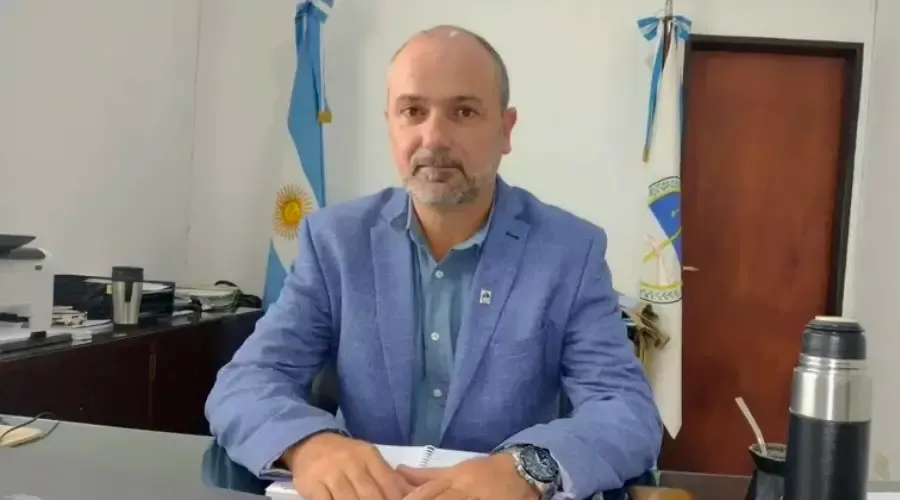
The creation of the Ministry of Mining of Jujuy marks a new stage in the productive policy of the province. Upon taking office at the head of the portfolio at the beginning of January, engineer José Gabriel Gómez proposes an agenda that seeks to consolidate the growth of the sector, strengthen coordination with other areas of the government and project new investments in an international context that is beginning to show signs of recovery for strategic minerals.
Gómez assumed the position just a few weeks ago, although his trajectory within the provincial mining area goes back several years. Before occupying the ministry, he was part of the technical structure of the sector and also worked in private activity. That previous experience, he assures, allows him to clearly understand the challenges of an industry that today is among the main economic engines of Jujuy.
In that framework, he highlighted the political decision of the provincial government to elevate the activity through the creation of a specific ministry. “Our province is the third mining province and the number one in lithium. Among the main mining jurisdictions of the country it was the only one that did not have a Ministry of Mining. It is a great political decision of the governor to give value to the sector,” he stated.
According to what he explained, mining has become a transversal axis for provincial development, not only because of the investments it generates, but also because of its impact on other areas of the economy and public management. “Mining activity is very transversal in the province. It is an activity that contributes resources to sustain health, education and other areas. That is why it is important to sit down with other ministries and define that mining is a State policy,” he expressed.
In his first weeks at the head of the organization, Gómez held meetings with different areas of the provincial cabinet to coordinate joint actions. Among them he mentioned meetings with the ministries of Health and Environment, with whom they seek to strengthen controls and planning in the areas where mining activity takes place. “With Environment we have been working together for a long time because the control of the activity is carried out between both areas, and we reaffirmed that we are going to continue working this way,” he said.
Perspectives for 2026
The new minister considered that the scenario for mining in Jujuy could improve during 2026, after a complex year marked by the fall in the price of lithium. In 2024, he recalled, the province recorded a record of investments in exploration driven by the global demand for that mineral. However, during 2025 that pace was considerably reduced.
“In 2024 we had a record year in exploration investments driven by lithium. In 2025 those investments fell a lot because of the international price. But we believe that this 2026 is going to be a good year because since December the price of lithium has been showing an improvement,” he explained.
In addition to lithium, the official highlighted the growing interest in other mineral resources. During the last year there was an increase in exploration work linked to copper and the so-called rare earths, minerals considered strategic for the energy transition and global technological development. “Metallic minerals began to take a leading role. At the end of last year and in January some companies already started exploration work,” he indicated.
Local Employment and Training of Professionals and Technicians
Parallel to the growth of the activity, the ministry aims to strengthen local employment and the training of professionals linked to the sector. Gómez explained that there are already agreements with the Faculty of Engineering and the Faculty of Agrarian Sciences of the National University of Jujuy that allow students to carry out internships and professional practices within the organization.
“We are receiving interns who carry out their professional practice in our offices. That allowed us to update and modernize many internal processes,” he stated. The intention now is to expand that scheme toward the mining companies that operate in the province. “Many times companies look for personnel with experience, but we have young people who are training and need that first opportunity. We want to generate professional practices in the mining companies to further promote local employment,” he added.
Currently, the mining sector employs around ten thousand people in the province between direct and indirect positions. According to data from the ministry, as of December 31 there were around 9,900 workers linked to the activity. The official believes that this number could grow in the coming years if new projects move forward. “I believe that this year we can surpass that number of people employed in mining,” he estimated and in that sense recalled that recently Exar announced its request to adhere to the Regime of Incentive for Large Investments (RIGI), understanding that although it is a fairly long process that can take more than a year, also the approval of the environmental impact means that many times preparations begin beforehand that would allow surpassing that number of people employed in mining.
Infrastructure
However, one of the main challenges for the competitiveness of the sector continues to be infrastructure. Gómez warned that the condition of national routes represents an important difficulty for mining logistics, especially in a province where a large part of production is transported by truck.
“We necessarily need all our minerals to leave by trucks. The condition of the roads is fundamental. Only on Route 52, because of the two lithium companies we have, around 120 trucks circulate per day,” he explained. He maintained that the lack of maintenance increases logistical costs and affects the competitiveness of the projects.
“The main axis is the social license and the relationship with the communities. The ministry must be a bridge of relationship,” he affirmed, recalling that he has already held meetings with representatives of indigenous communities and also received messages of support from some sectors.
The objective is that mining development translates into concrete improvements for the regions where the resources are extracted. “We want the wealth of our soil to transform into infrastructure, health and education, especially for the towns of the Puna and the Quebrada,” he stated.
In that context, the strategy of the ministry aims to consolidate a model that combines productive growth, environmental control and institutional transparency. For Gómez, the challenge is to ensure that mining continues expanding without losing sight of its social and territorial impact.