On the eve of the provisional implementation of the Mercosur–European Union agreement, scheduled for May 1, the province of Salta is emerging as a central geostrategic actor in linking mining value chains to the European bloc.
By Panorama Minero
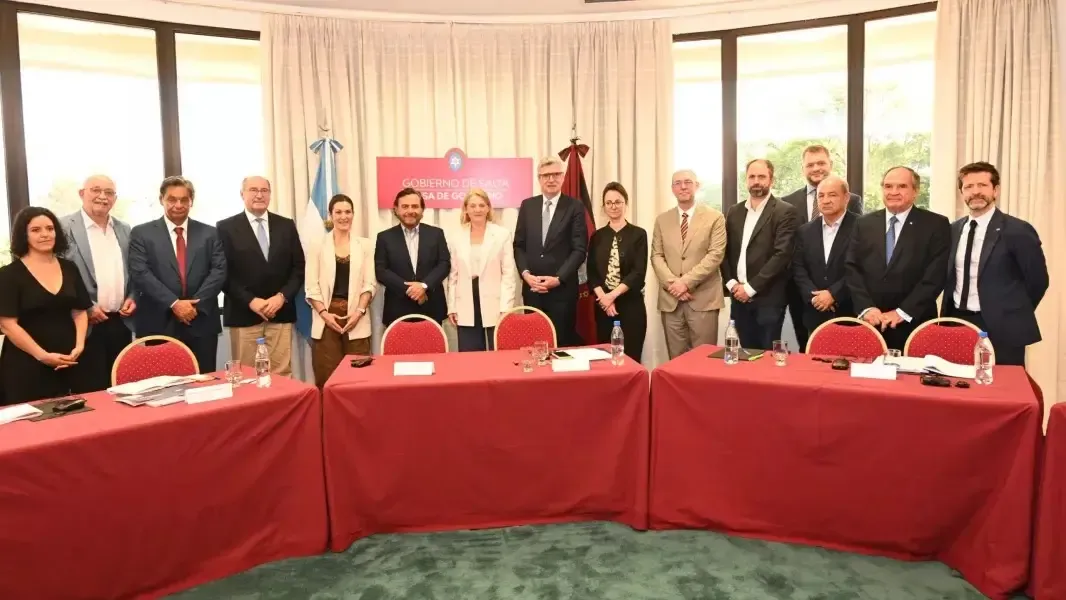
The recent visit of a European Parliament delegation, led by Evelyn Regner, consolidates the province as a privileged observation point for assessing investment and cooperation opportunities in critical resources.
Salta was the only subnational jurisdiction included in the mission’s official agenda, alongside Buenos Aires—an indication, in diplomatic and economic terms, of recognition of it’s positioning within the regional mining landscape. In particular, the province is part of the so-called Lithium Triangle, together with Chile and Bolivia, and hosts key projects at various stages of development, making it a territory of high interest for Europe within its strategy to secure critical raw materials.
During the meeting at the Government House, Governor Gustavo Sáenz emphasized the value of this institutional engagement in a context where mining is consolidating as one of the main drivers of provincial economic growth. The European delegation, for its part, expressed concrete interest in gathering information related both to mining development and logistical infrastructure—two key dimensions for enabling exports to European markets under increasingly stringent traceability and sustainability standards.
In this regard, Sáenz highlighted that Salta’s competitive advantage goes beyond resource availability. Its geographic location—bordering Chile, Bolivia, and Paraguay, and connected to six Argentine provinces—positions it as a natural logistical hub within the bioceanic corridor.
This framework is further strengthened by infrastructure such as the Northern Trans-Andean Railway, which connects to the Chilean port of Antofagasta, facilitating the export of mining products to the Pacific and from there to Asian and European markets.
The integration of mining and infrastructure thus emerges as a critical axis within the Mercosur–EU agreement. Europe is not only seeking to diversify its sources of strategic minerals such as lithium, but also to ensure production conditions aligned with its environmental and social regulations. In this scenario, Salta has the opportunity to position itself as a reliable supplier by consolidating governance standards, social license, and territorial integration.
The European mission also highlighted the growing importance of parliamentary diplomacy in the implementation of complex trade agreements. The participation of Members of the European Parliament from different political groups—including social democrats, conservatives, greens, and left-wing representatives—reflects that interest in South American natural resources spans the European political spectrum, beyond differences regarding regulatory requirements.
From the provincial government, officials such as the Minister of Production and Mining, Ignacio Lupión, and the head of International Relations, Julio San Millán, agreed that such visits not only help showcase Salta’s productive potential but also advance a concrete agenda of international cooperation.