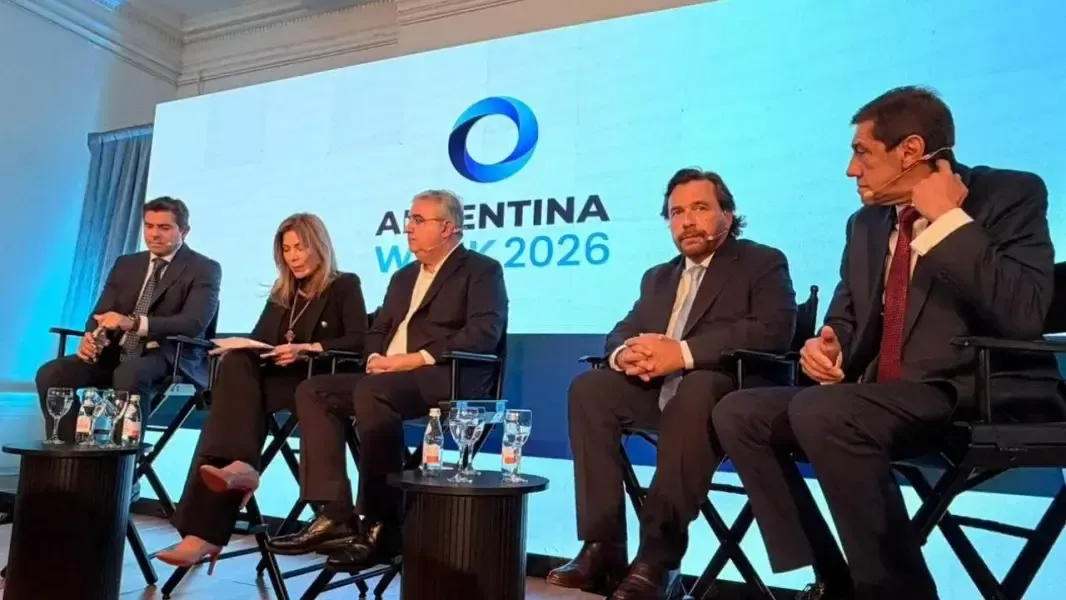
The Governor of Salta, Gustavo Saenz, participated in the panel “Strategic Mining and Critical Minerals” held at the Argentine Consulate in New York, where he presented to investment funds and representatives of the international financial system the province’s vision for the development of the mining sector.
By Panorama Minero
The governor shared the panel with the governors Marcelo Orrego (San Juan), Raúl Jalil (Catamarca), and Carlos Sadir (Jujuy), in a space moderated by Paula Uribe, Director of External Affairs at Rio Tinto, company leading the Rincon lithium project in the Salta Puna.
“We came to New York not only to show what we have beneath our soil, but what we have built on top of it: solid institutions, predictable rules, and a firm commitment to sustainable growth,” Saenz told investors.
In this sense, the governor stated that Argentina’s main challenge is to regain the confidence of international markets. According to him, the country has strategic resources demanded by the global energy transition, but it must consolidate stability and predictability to channel investments.
“Today Argentina has everything the world demands and what we lack is something that unfortunately has been lost over the years: trust. The presence of the governors together with the National Government supporting the RIGI is a clear demonstration of this great opportunity for investors,” he emphasized.
He also reiterated that in Salta mining has been consolidated as a cross-cutting public policy.
“Mining investments are long term and we must respect and support them. Legal certainty and clear rules of the game are non-negotiable,” he stressed.
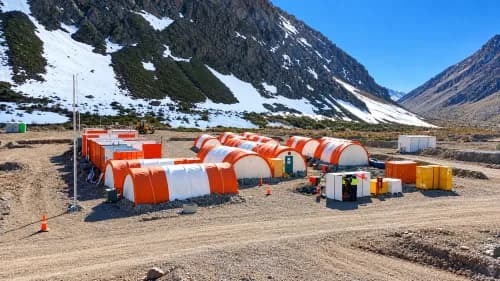
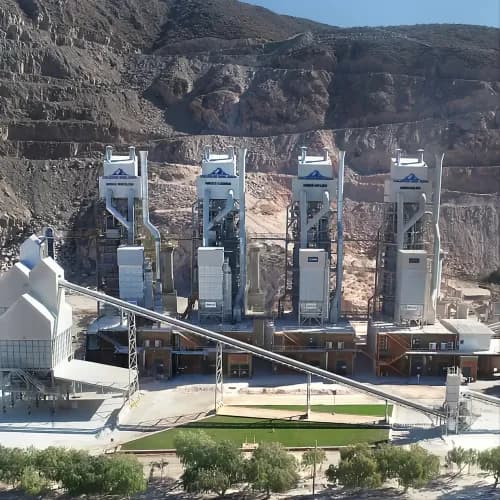
As an example of institutional continuity in the province, Saenz mentioned the development of Mina Lindero, operated by Mansfield Minera, a subsidiary of Fortuna Mining, which after decades of exploration and development has become one of Salta’s main exporting complexes.
Strategic Infrastructure: Bioceanic Corridor and C14 Railway Branch
During his remarks, the governor placed special emphasis on the need to strengthen logistics infrastructure in order to improve the competitiveness of mining production in northern Argentina.
“When we talk with investors, the issue of infrastructure always arises. That is why we are pushing for the Bioceanic Corridor and for the restoration of railway networks, such as the C14,” Saenz explained.
The governor indicated that the province is working together with the national government and multilateral organizations to finance key connectivity works. Among them he mentioned the World Bank, the IDB, and Fonplata, with whom projects linked to the freight railway system, are being analyzed.
In this context, he noted that railway branches destined for the transport of inputs and minerals will soon be tendered, which are essential to reduce logistics costs and boost the sector’s exports.
The governor also highlighted the importance of expanding energy infrastructure, particularly the development of gas pipelines to accompany the growth of mining projects in the region.
Salta’s mining project portfolio concentrates some of the largest investments in the sector in the country. Among the most relevant developments is Taca Taca, promoted by First Quantum, with an estimated investment of nearly US$3.6 billion for copper production.
In addition, the expansion of Rio Tinto’s Rincon project is underway, whose development plan contemplates around US$2.5 billion in investment to scale lithium carbonate production.
Another large-scale project is Sal de Oro, developed by POSCO, which foresees investments that could exceed US$4 billion in different stages.
These developments are joined by projects already underway such as Centenario-Ratones, by Eramet, and Mariana, by Ganfeng Lithium.
Recently, both Rio Tinto’s Rincon project and Ganfeng’s Mariana marked two milestones in export activity by carrying out their first shipments of lithium carbonate to China.
Both companies, whose main destination is the Asian market, dispatched their shipments through Buenos Aires and Rosario respectively.
In this context, the development of the Bioceanic Corridor and the recovery of the C14 branch of the Belgrano Cargas railway system appear as strategic pieces to reduce transportation costs and connect the mining projects of the Puna with Pacific ports in Chile.
This logistics integration would allow shorter distances to the Asia-Pacific markets, the main destination for critical minerals such as lithium, and position Salta and the provinces of the Lithium Triangle as one of the key nodes of mining trade in northwestern Argentina within the framework of the global energy transition.
Sustainable Mining and Social License
Toward the end of his remarks, Saenz reaffirmed the province’s commitment to a sustainable mining development model.
Under the motto “producing while conserving and conserving while producing,” he explained that Salta works with interdisciplinary teams and territorial dialogue mechanisms to guarantee the social license of projects.
“Global investors do not choose destinations solely because of their natural wealth. They choose legal certainty. That is what Salta offers. We welcome them with open arms and give them all the guarantees; we invite them to invest, to trust, and to grow together with us,” he concluded.