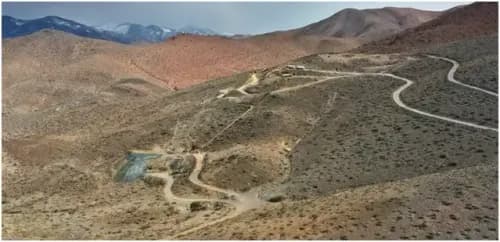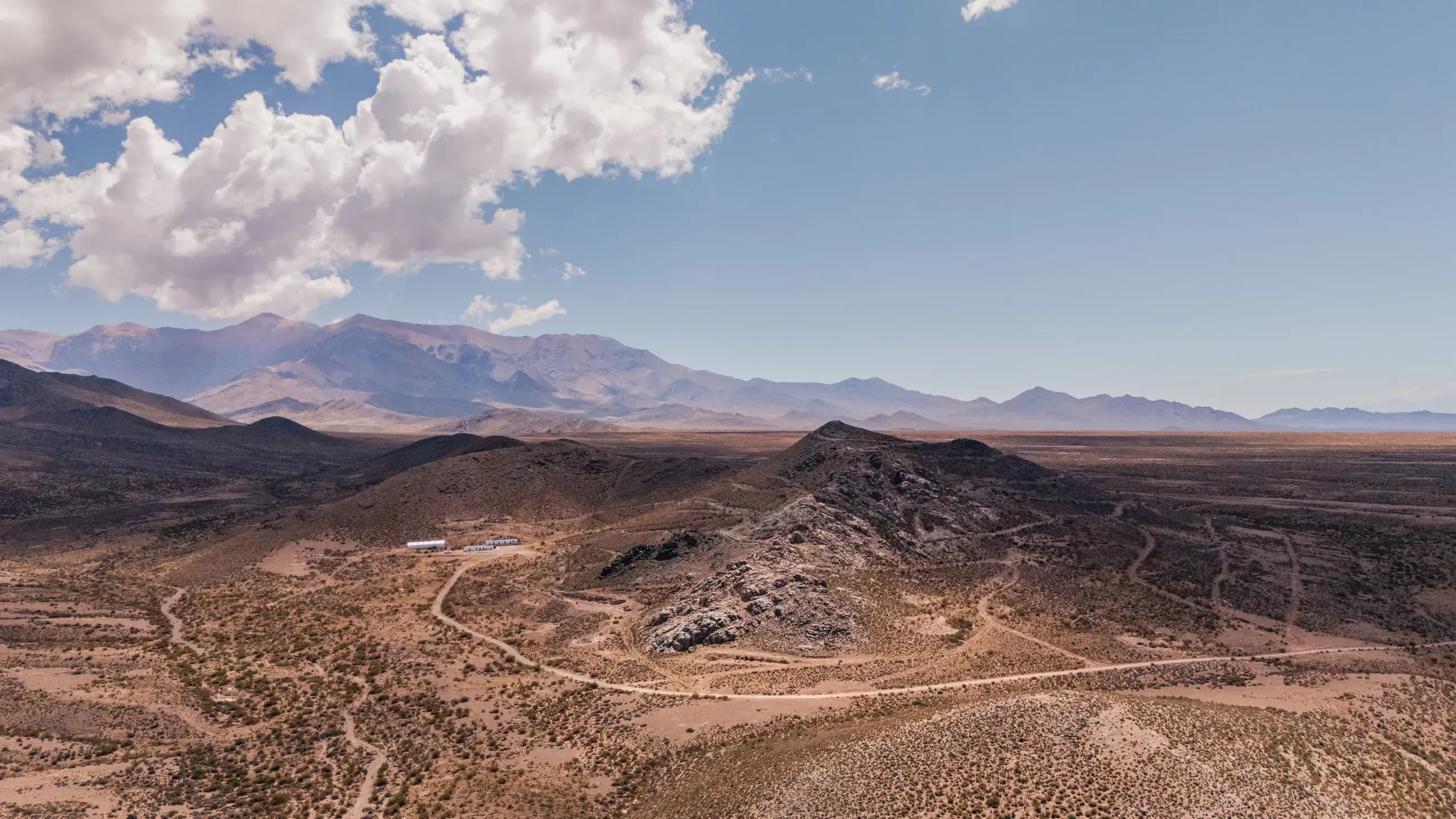
PSJ Cobre Mendocino became the project that validated, in practice, the new provincial mining policy by progressing within the constraints of Law 7,722. A story that began in January 2025 and culminated in December with a political endorsement enabling unprecedented advancement.
By Panorama Minero
January 10, 2025, was not just another day for mining in Mendoza. That morning, the new company in charge of PSJ Cobre Mendocino, composed of Zonda Metals and Alberdi Energy, formally submitted to Mendoza’s Mining Environmental Authority the adaptation of the Environmental Impact Report (EIR) for the project located in the Uspallata district. The gesture was technical in form but with a much broader significance: for the first time in years, a copper project progressed by explicitly accepting the restrictions of Law 7,722 and seeking development within that framework.
The decision implied relinquishing part of the deposit’s original potential. The historical project—which contemplated production of both cathodes and copper concentrate—was definitively discarded. Instead, PSJ opted for a comprehensive redesign: concentrating the production scheme exclusively on obtaining concentrate and declaring the oxidized ore as sterile, eliminating any process that could conflict with current regulations. This was neither a minor correction nor a cosmetic adjustment; it was a structural redesign of the business model and the technical profile of the undertaking.
From a strictly mining perspective, the adaptation meant accepting lower value capture and a reduced production range. From an institutional standpoint, however, it represented something deeper: the validation of a strategy that the Mendoza Government had been hinting at but had not yet managed to materialize with concrete actions. PSJ thus became the project that allowed moving from discourse to dossier, from political proposal to regulatory engineering.
Law 7,722 as Limit and Starting Point
For more than a decade, Law 7,722 operated in Mendoza as an insurmountable barrier to metal mining. In many cases, it functioned as an argument for the total blockage of projects. What PSJ did was different: it did not seek to reopen the legislative debate or force a judicial reinterpretation of the regulation, but rather to work within its limits, even if that meant leaving part of the deposit’s economic value behind.
This decision was neither isolated nor naive. It responded to a precise political reading of the moment the province was experiencing and the existing balance of power. Attempting to restore the original project would have meant opening a high-intensity institutional conflict, with uncertain results and timelines incompatible with the strategic urgency currently imposed by the global copper market. The adaptation, on the other hand, allowed unlocking the only copper project with advanced studies, known reserves, and confirmed location in Mendoza.
In this sense, PSJ did not just advance as a mining project: it became a key piece of a broader strategy by the provincial Executive to demonstrate that mining was possible in Mendoza without modifying—at least at this stage—the current legal framework.
PSJ as a Validation Project
Governor Alfredo Cornejo’s role is inevitably associated with this process. Not because the project was promoted by the State, but because its progress served as practical support for a mining policy that required visible results. For years, Mendoza had been labeled an anti-mining province, not only because of its legislation but also due to its inability to convert geological potential into productive activity.
In just twelve months, that label began to erode. With PSJ advancing through its environmental processing, obtaining technical approvals, legislative authorization, and resisting subsequent litigation, the province moved from being a case of paralysis to becoming an example of reactivation. This was not a generalized opening nor an abrupt shift, but a tactical move: consolidating what was known, advancing with what existed, and buying time while other projects—such as those in the Malargüe Western Mining District—went through their initial exploration stages.
From Blocked Province to Copper Player
One year after that January 10, the assessment is clear. PSJ achieved what had seemed impossible for decades: to reinstall Mendoza in the national copper conversation. Not as a future promise, but as a concrete project, with a dossier, engineering, environmental controls, and a defined roadmap.
The contrast is evident. In 2024, Mendoza was labeled as a territory closed to metal mining. In 2026, it is mentioned as one of the Argentine jurisdictions with a copper project capable of advancing toward development in the short term, in an international context marked by the urgency of new supplies for the energy transition.