The CAPRIMSA 2026 Annual Meeting, organised jointly with CAME in San Juan under the theme “From Interest to Knowledge: Perspectives on the Copper Industry”, brought together industry representatives to examine the challenges and opportunities associated with major copper projects.
Speakers included Ernesto Cussianovich of Poliarquía Consultores, Mario Hernández of Los Azules and Javier Robeto of Aldebaran Resources, who addressed actual mining development timelines, local supplier development and the importance of business collaboration.
By Panorama Minero
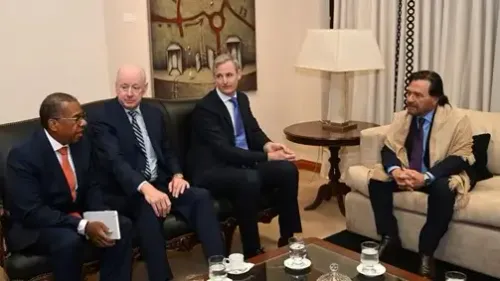
The meeting provided a forum for discussing the transition towards copper mining development. Under the theme “From Interest to Knowledge: Perspectives on the Copper Industry”, the Franklin Rawson Provincial Museum of Fine Arts in San Juan hosted the CAPRIMSA 2026 Annual Meeting, bringing together representatives from Argentina’s mining and industrial value chains.
The event was jointly organised by the San Juan Chamber of Interdepartmental Mining Suppliers (CAPRIMSA) and the Argentine Confederation of Medium-Sized Enterprises (CAME), through its Gas, Oil and Mining division, headed by San Juan businessman Dino Minozzi.
The meeting provided a forum for strategic discussion on the opportunities and requirements associated with the renewed development of major copper projects in San Juan.
The event attracted representatives from institutions, academia and the business community.
In addition to CAPRIMSA officials, led by President Fernando Godoy, and CAME’s Gas, Oil and Mining Coordinator Dino Minozzi, representatives from the Veladero, El Pachón, Los Azules and Altar projects attended.
Institutional participation also included delegations from the National University of San Juan (UNSJ), the Catholic University of Cuyo (UCCuyo), the San Juan Council of Occupational Health and Safety Professionals, Women in Mining (WIM) Argentina, the Sustainability and Ethics Committees of the San Juan Professional Council of Economic Sciences, the Almirante Brown Industrial Union, trade unions and SME suppliers from different parts of Argentina.
In the museum foyer, attendees were able to visit the art exhibition El pulso del cobre (The Pulse of Copper), which offered a perspective on the identity associated with the mineral wealth of the Andes.
During the discussions, a general consensus emerged that translating geological potential into tangible socioeconomic development requires planning, transparent information and integration across Argentina’s provinces.
The panels were structured around three main themes: managing public expectations in relation to actual mining development timelines; competitiveness and formalisation challenges facing local suppliers; and the need to establish partnerships between companies and cooperation across provincial boundaries to meet the requirements of projects operating on a global scale.
Actual Timelines Versus Expectations: An Analysis of Public Attitudes Towards Mining
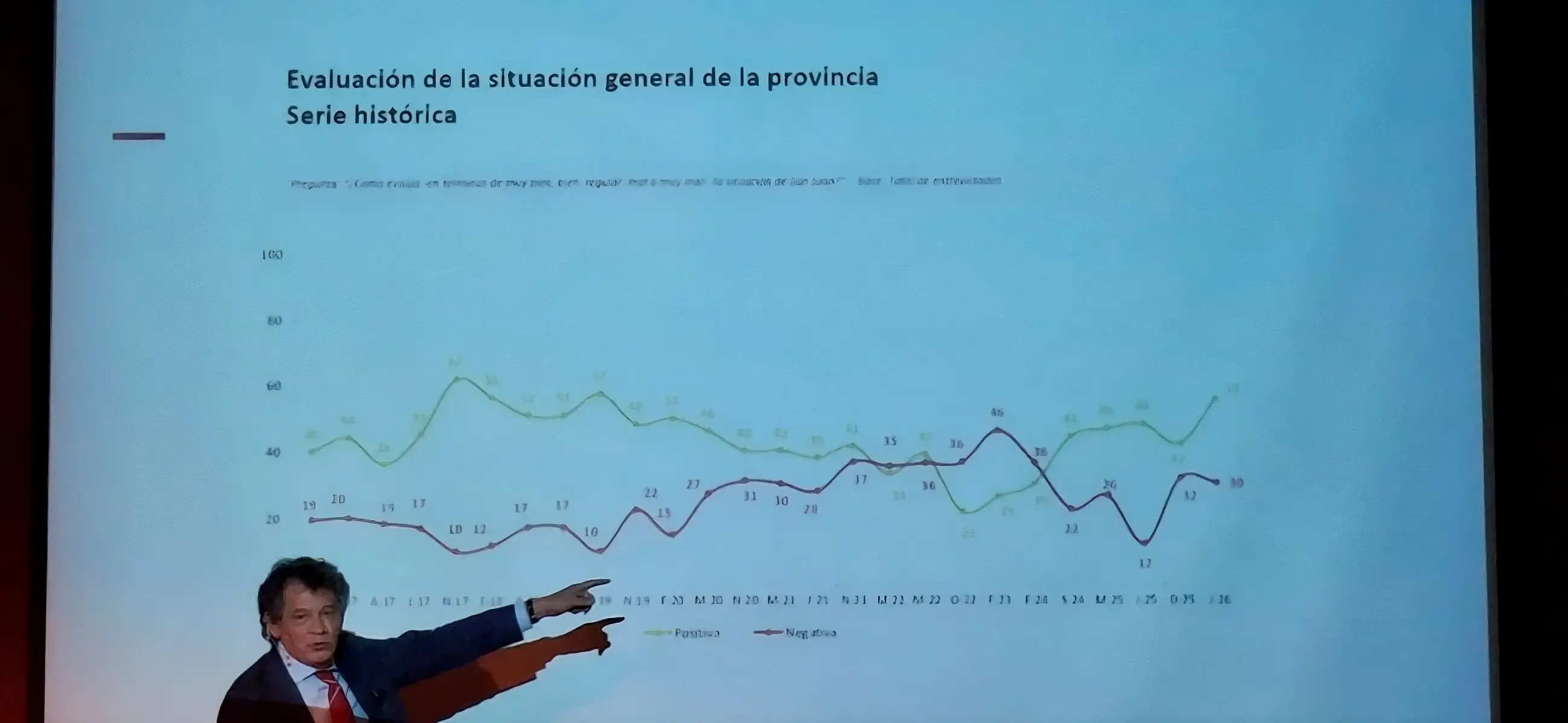
The first presentation was delivered by Ernesto Cussianovich, Director of Mining and Natural Resources at Poliarquía Consultores, who presented an overview of national and provincial public opinion towards the mining sector.
Cussianovich warned of the risks arising from the gap between heightened media attention and the operational realities of mining projects.
He explained that expectations, unless properly managed and supported by concrete scenarios rather than promises, can represent a much greater risk than is generally assumed. He emphasised that behind every announcement are families and communities anticipating employment opportunities.
The Poliarquía specialist explained that Argentina is experiencing a period of change characterised by historically favourable public attitudes towards mining, driven by the global prominence of lithium and copper as materials associated with the energy transition.
However, he argued that one of the main obstacles to understanding mining lies in Argentina’s productive structure, which has been shaped for more than 120 years by agriculture and livestock farming, activities characterised by annual planting and harvesting cycles.
By contrast, copper mining operates over medium- and long-term cycles, with the development of a deposit from advanced exploration to production requiring more than 12 years on average.
According to the studies presented by Poliarquía, there is an imbalance in how the sector communicates its development.
While the industry has effectively explained the “Y-axis” — the scale of investment, projected employment and export figures — insufficient attention has been paid to the “X-axis”: the specific timelines, technical milestones and chronological requirements involved in advancing through each development stage.
This gap is reflected in the consultancy’s surveys in San Juan.
Although overall support for mining remains strong and concerns associated with previous environmental conflicts have diminished as demands for information and governance have increased, the perception of mining as a source of immediate employment has declined by 20 percentage points, from 80% to 60%, when comparing recent survey results.
For Cussianovich, this decline in employment expectations reflects public impatience with the lack of immediate progress following project announcements.
Against this background, he noted that the industry is moving towards the coexistence of “three types of mining”: traditional mining, represented by operating mines; large-scale multinational mining, involving companies such as BHP, Glencore and Rio Tinto; and mining-related supplier activity.
He also urged companies and governments to establish dedicated “expectation management” functions to provide accurate information about recruitment and contracting opportunities, preventing disappointment from turning local stakeholders into critics of the development process.
Operational Challenges in the High Andes and Development of the Local Value Chain
The discussion subsequently turned to the operational realities of projects located in Calingasta, with presentations from representatives of two of the area's major copper deposits.
Mario Hernández, Sustainability and Community Relations Manager at the Los Azules project (McEwen Copper), outlined the geographical and climatic conditions affecting work in the High Andes and their implications for procurement and contracting schedules.
Hernández explained how winter weather conditions, characterised by heavy snowfall and ice accumulation at elevations exceeding 3,500 metres above sea level, forced the company to restructure its schedules for road opening and access to intermediate camps, including Candadito and Embarrada.
Despite these climatic challenges, he highlighted progress at Los Azules.
The project has already obtained approval of the Environmental Impact Declaration (DIA) for its high-voltage power line, advanced engineering work for a 240-metre bridge across the Los Patos River, and is planning modular expansions of its camps to capacities of 360 and 480 beds in preparation for the construction phase.
Regarding supplier development, Hernández reported that more than 60% of the project's total expenditure takes place within San Juan Province, with 12% allocated directly to suppliers from Calingasta.
The sectors benefiting most from this spending include catering, accommodation, personnel transport, logistics, environmental services and civil works.
However, he emphasised that consolidating this participation requires compliance with existing regulatory frameworks, including Provincial Law No. 2827 on Local Supplier Development and registration with REPROMIN.
The Los Azules manager stressed that the emerging copper mining industry requires standards of professionalisation, digitalisation and internationally recognised certifications in quality, safety and environmental management that are substantially higher than those of previous decades.
He maintained that supplier development cannot remain merely an aspiration. It requires continuous training, accredited certifications and mutual commitment to enable local SMEs to participate competitively and sustainably in the supply chain.
A Multigenerational Perspective, Phased Development and Cooperation Between Mining Operators
Javier Robeto, Country Manager of Aldebaran Resources, the company responsible for the Altar project, then presented the perspective of a world-class deposit at the advanced exploration stage and progressing towards feasibility studies.
Robeto emphasised that understanding the nature of copper projects requires a change in business thinking, distinguishing them substantially from previous experience in gold or lithium mining.
He recalled that Altar was discovered in the late 1990s and that Aldebaran Resources is the fifth operator to manage the project.
This history illustrates the multigenerational nature of copper porphyry deposits, which require sustained investment on a substantial scale and rigorous technical studies.
Robeto highlighted the Preliminary Economic Assessment (PEA) presented by the company, which projects initial capital expenditure (CAPEX) of US$1.6 billion, with estimated total investment of US$5 billion over the project's life cycle, and an initial mine life of 48 years for its three principal deposits.
Regarding the progress of fieldwork, the Country Manager announced that the company had completed more than 222,000 metres of cumulative drilling and was preparing to publish a substantial update to its mineral resource model in the coming weeks.
This update will incorporate more than 65,000 metres of new geological information from recent drilling campaigns and the Pórfido Radio deposit, providing the basis for preparation of the Pre-Feasibility Study (PFS), scheduled for mid-2026 or 2027.
Robeto also highlighted the advantages of phased copper project development in San Juan.
He explained that Altar entering construction between two and three years after earlier projects such as Los Azules or Vicuña represents a strategic advantage for the local business ecosystem.
According to Robeto, this difference in development schedules will help prevent bottlenecks in regional infrastructure and allow local suppliers to benefit from previous experience, expand their scale and strengthen their capabilities.
Finally, Robeto highlighted the operational cooperation between Aldebaran Resources and Glencore, operator of the neighbouring El Pachón project, in jointly clearing roads and coordinating mountain logistics.
He described cooperation between companies as an essential model for enabling mining development in San Juan's Andean region.