The full reactivation of integrated border controls strengthens the Capricorn Bioceanic Corridor and improves logistics conditions for the mining industry. At the same time, the paving and upgrading of National Route 51 continues to be one of the most important infrastructure projects supporting the development of lithium and copper projects in the Salta Puna.
By Panorama Minero
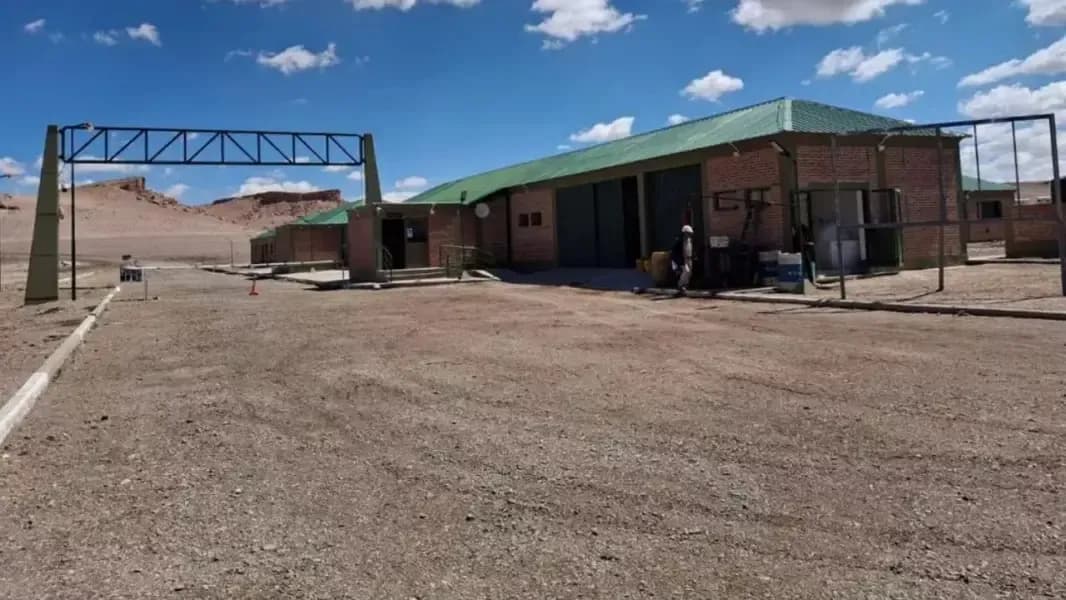
Since June 15, the Paso de Sico Border Complex has resumed full operations under a “White March” scheme, once again allowing unrestricted transit of freight vehicles, private vehicles, and tourists between Argentina and Chile.
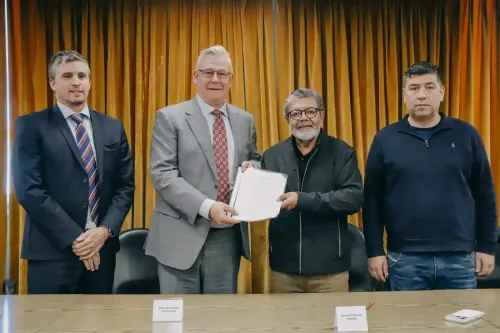
The normalization of operations was made possible by the decision of the Government of Salta to undertake refurbishment, expansion, and equipment works at the border complex, an infrastructure facility under national jurisdiction. According to the Province, the investment exceeded AR$1 billion and included improvements to the main building, common areas, housing for Argentine and Chilean personnel, accommodation for Senasa agents, the construction of a healthcare post, and the provision of four power generators.
Telecommunications were also upgraded through the expansion of internet service to 120 Mbps symmetrical bandwidth and the incorporation of a satellite redundancy system. In addition, two UPS systems were repaired to ensure the operation of electronic equipment during power outages or fluctuations.
The restoration of in-person services by Chilean border agencies made it possible to remove the restrictions that had affected border operations and to restore the usual integrated control system.
A Strategic Corridor for Mining
Located at more than 4,000 meters above sea level and connected to Chile’s Antofagasta Region, Paso de Sico is one of the main land links between the Salta Puna and Pacific Ocean ports.
The crossing forms part of the Capricorn Bioceanic Corridor, the logistics network linking northern Argentina with the ports of Antofagasta, Mejillones, and Iquique.
The operational recovery of Paso de Sico once again highlights the importance of National Route 51, the main access road to the Salta Puna and a fundamental corridor for supplying mining projects.
The route connects the city of Salta with San Antonio de los Cobres and continues to the international border with Chile, crossing the province’s main mining activity centers.
Over the past few years, various paving, resurfacing, bridge, and culvert improvement works have been carried out along different sections of the route. However, high-mountain segments still require further intervention to improve road safety and increase heavy-load transport capacity.
The consolidation of the Salta–San Antonio de los Cobres–Paso de Sico corridor is considered a central component in supporting the growth of mining activity.
With the full rehabilitation of Paso de Sico, the province has recovered one of the most important logistics hubs in the Puna and strengthened a key piece of infrastructure for the export competitiveness of mining in northwestern Argentina.