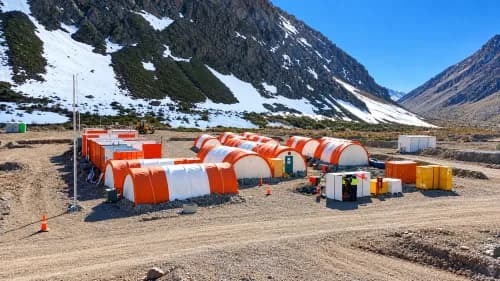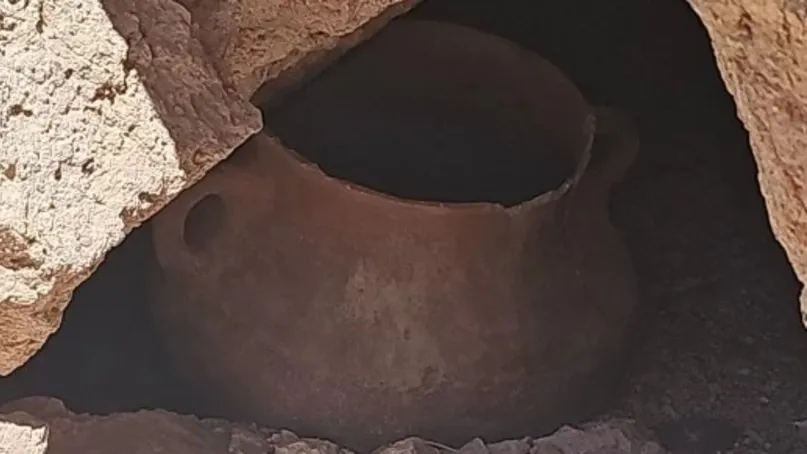
During a biodiversity survey carried out at the El Pachón project, an ancestral ceramic vessel of high historical value was found, relevant to the cultural identity of the Calingasta Valley, in the province of San Juan.
By Panorama Minero
The finding constitutes a direct testimony of the communities that inhabited this territory hundreds of years ago and provides new information to understand their way of life and their relationship with the environment.
After the discovery, Glencore Pachón gave immediate notice and activated the protocol established by provincial legislation for the protection of cultural heritage. Together with the specialized consulting firm Arqueo Ambiental, it filed a formal report with the Provincial Secretariat of Culture and coordinated tasks with the Instituto de Investigaciones Arqueológicas y Museo Profesor Mariano Gambier, dependent on the National University of San Juan, to carry out the rescue of the piece.
The operation was carried out on the site of the finding, with the participation of Claudia Mallea, director of the institute, who, together with her technical team and archaeology specialists, conducted the controlled recovery and the subsequent transfer of the vessel to the laboratory, where it will undergo studies and cataloging tasks.
According to initial analyses, the vessel would correspond to the late period of the Calingastina culture, between the 5th and 15th centuries. It is in an unusually good state of preservation, which sparked special interest among the researchers. Ongoing studies will allow deeper understanding of its possible use and the conditions that made its preservation over time possible.
“Findings of this type are fundamental because each piece adds information and helps complete the history of the peoples who inhabited San Juan. In addition, it is key to act correctly in the face of a chance finding. In this case, Glencore Pachón acted quickly and responsibly, protecting the site and accompanying the entire process as required,” Mallea stated.
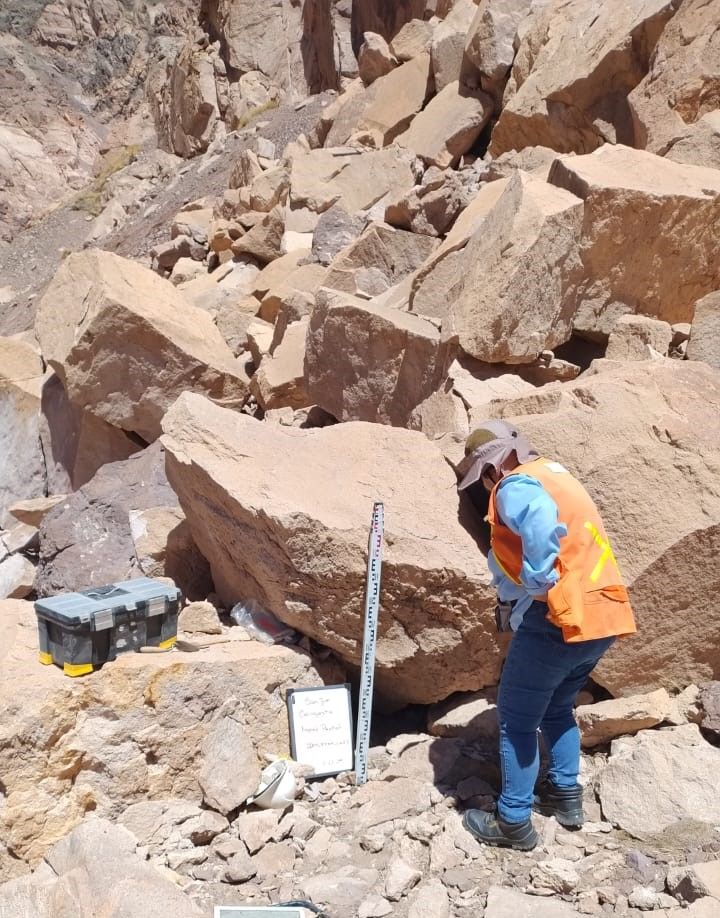
The institute also emphasized the importance of protecting these types of cultural goods, as they are unique and irreplaceable elements. Proper action allows valuable information to be preserved for present and future generations.
In this regard, Fernando Cola, Head of Environmental Studies at Glencore Pachón, highlighted that the finding made it possible to put into practice the procedures that the project applies systematically. “Situations of this type demonstrate that protocols and training work. Upon detecting a possible archaeological finding, immediate notice was given to the authority, specialists were consulted, a report was filed with the competent body, and work was carried out jointly on-site for the rescue. Seeing this entire process materialized is very gratifying and confirms Glencore Pachón’s commitment to the care and preservation of cultural heritage,” he said.
At Glencore Pachón, archaeological studies are part of the continuous environmental and social work carried out in the project area. These tasks have made it possible to record more than 200 sites of archaeological value, with evidence ranging from ancient human settlements to remains from Inca and Hispanic periods. These actions are part of a responsible development vision that seeks to reconcile the project’s productive activities with the protection of the history and cultural identity of the territory.