The strengthening of environmental and mining oversight throughout 2025 has brought long-standing practices into sharp focus, forcing a redefinition of technical and safety standards in one of the most widespread segments of the province’s mining activity.
By Panorama Minero
While public debate in Mendoza continues to revolve around large-scale metal mining projects — with PSJ Cobre Mendocino as the emblem of the sector’s renewed momentum — a quieter but equally significant process has been unfolding in parallel. Provincial authorities have been consolidating a system of control and oversight over mining operations that are already active. Within this framework, third-category mines and quarries have effectively become the operational testing ground for Mendoza’s emerging mining oversight model.
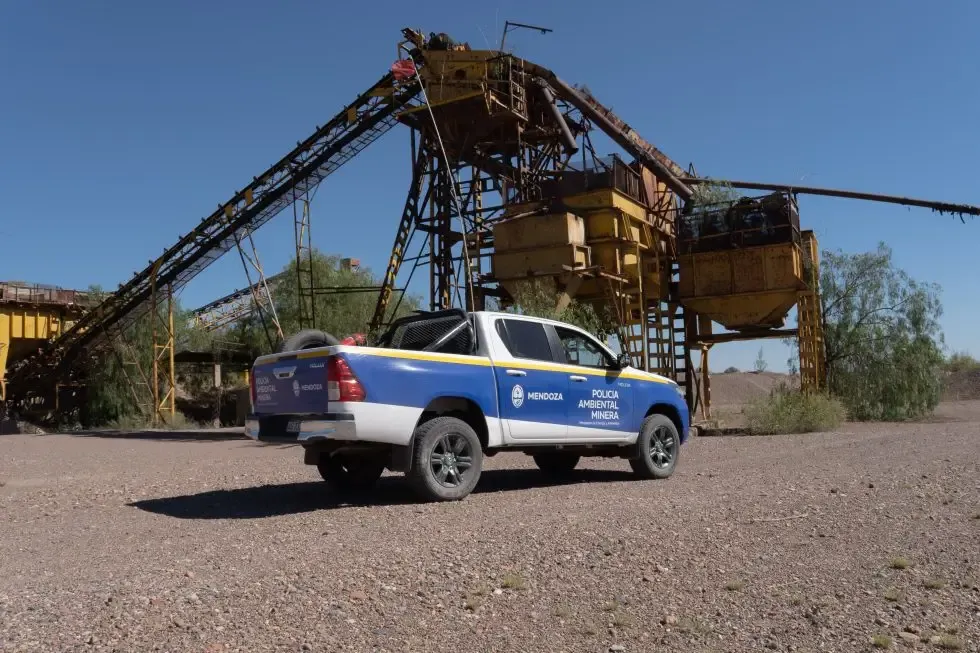
In recent months, the Mining Environmental Police have stepped up inspections, enforcement actions and sanctions across aggregate operations and quarries located throughout the province. These have not been isolated interventions. The recent timeline reveals a systematic, territorial and technically driven approach, marked by activity suspensions, preventive closures and formal demands for regulatory compliance in response to repeated violations.
From sporadic checks to permanent oversight
One of the most significant shifts evident in this process is a change in approach. Oversight has moved away from a model based largely on complaints or specific requests, toward a system of permanent control, featuring proactive inspections, simultaneous operations and comprehensive verification of environmental, safety and documentation requirements.
The actions have targeted quarries in rural areas as well as operations located in urban and peri-urban zones, where potential impacts on people, infrastructure and the environment demand stricter criteria. In several cases, repeated non-compliance — including lack of permits, irregular extraction fronts and basic safety deficiencies — led directly to immediate shutdowns, signaling a tougher enforcement stance.
A recent episode that encapsulates this policy shift occurred in December 2025, when the Mining Environmental Police ordered the preventive closure of a third-category mine in the El Carrizal area of Luján de Cuyo following a comprehensive technical inspection. Authorities identified safety breaches, inadequate signage and failure to comply with previous orders, prompting a preventive measure aimed at avoiding risks to workers and third parties. The case forms part of a broader pattern in which repeat offences have become a decisive factor in the application of more severe sanctions.
This incident adds to other enforcement actions carried out during the same period, including the suspension of operations at a quarry in Malargüe due to irregular extraction fronts and serious safety shortcomings, as well as a large-scale operation across 17 sites in Greater Mendoza that resulted in two effective closures.
As oversight intensified, secondary effects also emerged. Some measures affected third-category mines and quarries that have historically supplied provincial or municipal public works, generating operational tensions and forcing the State itself to reassess the timing, scope and sequencing of inspections. In practice, the oversight system advanced through a process of trial and error, adjusting criteria as unforeseen impacts on public infrastructure supply chains became evident.
Mineral traceability as an emerging pillar
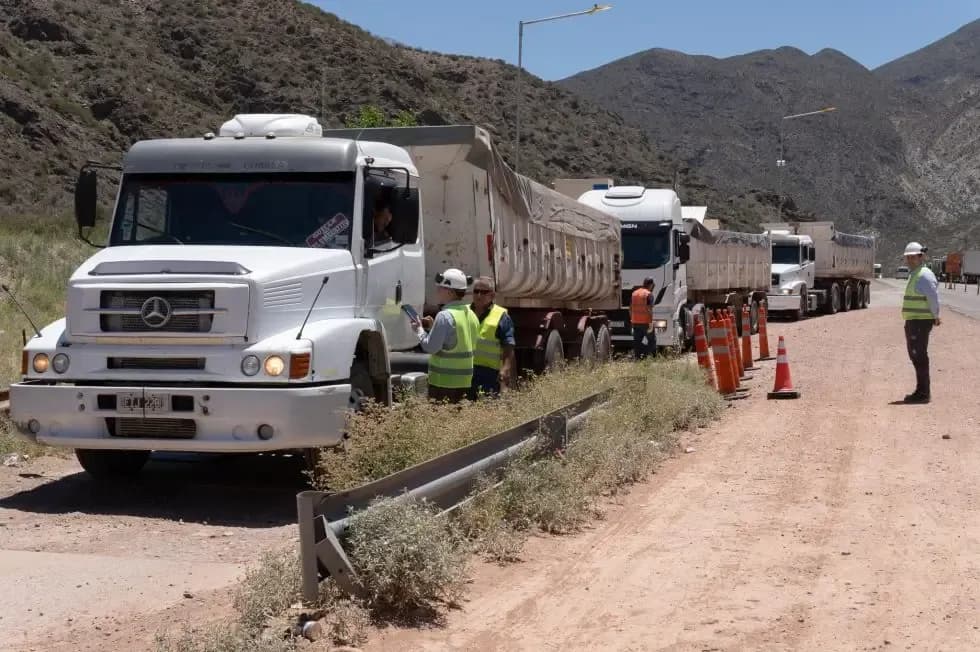
Another notable development in the new oversight scheme is the growing emphasis on the logistics chain. Roadside operations on provincial and national routes — checking mineral transport permits, load weights and associated documentation — have introduced a dimension that had long remained secondary: traceability from the extraction face to the final destination.
This is no minor issue. Organizing and formalizing the transport and documentation of aggregates and other third-category minerals helps reduce grey areas in extractive activity, improves related fiscal collection and strengthens the State’s capacity to monitor real production volumes. From a technical standpoint, it is one of the most challenging links in the chain to control, and at the same time one of the most sensitive.
Quarries as a testing ground for Mendoza’s model
In practice, quarries are now functioning as a testing ground for the control model Mendoza aims to apply to larger-scale projects. Procedures, technical criteria and mechanisms of inter-institutional coordination are being trialled here — mechanisms that will later need to hold when activity moves toward deeper exploration and, eventually, metal mining operations.
Coordination between the Mining Environmental Police, technical teams within the Ministry of Energy and Environment, municipalities and other provincial agencies is intended to standardize inspection criteria, improve follow-up on inspection reports and ensure that observations lead to effective corrective actions. The experience gained in third-category mining allows authorities to refine protocols, train inspection teams and strengthen territorial presence.
Putting existing operations in order before scaling up
In this sense, the implicit message of the process is clear: before authorizing new large-scale developments, the State seeks to bring order to the mining activity that already exists and represents millions of dollars in provincial GDP. Far from being marginal, third-category mining accounts for a substantial share of day-to-day extractive activity and of the conflicts linked to safety, environmental protection and territorial coexistence.
For a province attempting to rebuild its mining institutional framework after years of paralysis and conflict, this low-profile work is critical. It does not generate headlines, but it does define capabilities. And those capabilities — more than rhetoric — will determine whether Mendoza is in a position to sustain, over the long term, a mining development model with effective oversight.
In that context, quarries are not a side issue: they are the operational thermometer of Mendoza’s mining oversight model.