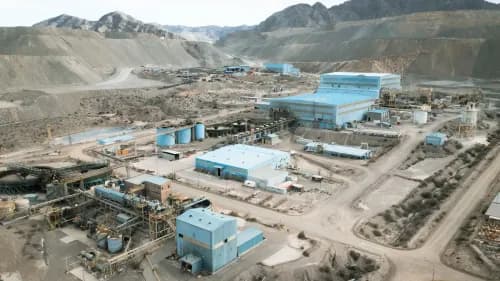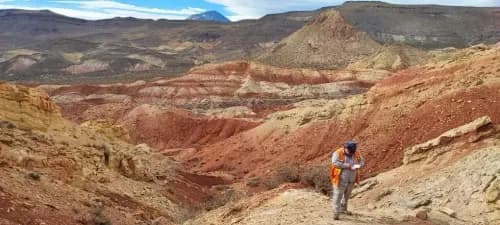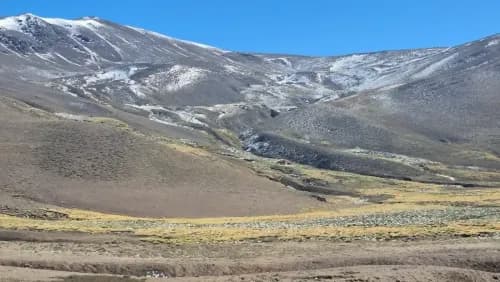
The President of the San Juan Mining Chamber (CMSJ), Iván Grgic, highlighted the close of an unprecedented 2025 in its history, with a succession of milestones achieved as decisive steps for the near future.
By Panorama Minero
Iván Grgic emphasized that this year’s achievements are the result of work processes initiated in previous years that now show tangible results. The head of the CMSJ noted that, unlike previous years when the focus was on only two or three projects, current growth is transversal, with progress distributed across departments, companies, and projects. In this context, he reviewed the advances in various initiatives, highlighting the diversity and simultaneity of these achievements.
In his remarks, the CMSJ president focused on the social impact of mining activity, highlighting the growth of local employment, the integration of suppliers, and the increase in social investment by companies, in addition to the role of mining trusts. Infrastructure advances were also emphasized, considered key not only for project development but also for stimulating local economies.
Another central aspect of the review was the coordination with the San Juan Government, recognizing the joint work in streamlining sectorial permits, improving trust fund management, digitizing the Mining Ministry system, and updating environmental assessment mechanisms.
In this context, the presentation of the Glacier Clarifying Law report was particularly highlighted, a technical and legal process that required intense collaboration between provincial and national teams and helped provide predictability for the development of new projects.
Finally, Grgic stressed that the achievements in 2025 should be seen as intermediate stages leading to further progress. With several processes still underway, he anticipated that 2026 could be a year of strong growth.
Interview with Iván Grgic – President of CMSJ
What are the challenges in training human resources for the mining sector?
The main challenge is improving educational completion rates. In San Juan, many people do not finish high school, which is a basic requirement for most jobs, not only in mining.
For this reason, for years the Mining Chamber has promoted, together with companies and the provincial government, programs to complete studies, such as the Fines Plan and other initiatives, to help more workers finish high school.
Strengthening this educational base is key to training qualified human resources and meeting the growing labor demand in the mining sector.
How society’s expectation is managed regarding project progress?
Social expectation is legitimate and is managed with clear and responsible information. Companies communicate, through the media, what stage each project is in, the type of progress being made, and the concrete employment generated, avoiding false expectations.
Moreover, they explain not only how many positions may arise but also what profiles are needed and when. Recruitment always starts in communities near the projects, and then expands to provincial, national, and eventually international levels.
In parallel, interested individuals are encouraged to prepare for future opportunities by completing high school, pursuing technical degrees, diplomas, or training courses available through universities and public agencies.
The central challenge is for each worker to identify the next step in their training and take it so they are ready when job opportunities open.
How is water usage addressed in a desert province?
The starting point is to recognize that water is a scarce resource and that a cultural shift is needed to value it and use it responsibly. This challenge is not only for San Juan but general, requiring greater social awareness.
This cultural change must be accompanied by updated legislation that allows better water management both in daily use and across all productive sectors, including agriculture, industry, and mining. The goal is to move toward more efficient and sustainable water use.
Additionally, San Juan has strengthened coordination with international organizations experienced in drought and desert contexts, incorporating innovation and technology to optimize water use, from management improvements to new monitoring and control tools.
The path is to deepen these policies to use water better and more efficiently, with clear rules and long-term technical solutions.
Project progress requires adequate infrastructure. Is there clarity on what’s coming?
Yes, there are already clear signs of larger-scale development; sectors such as employment, water, and service infrastructure, including hotels, are showing early growth alerts in the province.
As projects progress, each stakeholder will assess the pace of their investments according to emerging needs. In this process, coordination with external investors, not just provincial ones, may occur.
This scenario could represent an important opportunity for San Juan, in terms of both infrastructure and economic and social development.
What does the San Juan Mining Chamber expect for 2026?
2025 was a year of major milestones, but these milestones are the foundation for the next achievements. In 2026, we expect a year full of advances continuing the path started this year. It will depend on the progress of current projects and the possible arrival of new companies in San Juan, which could further boost the growth of the mining industry.