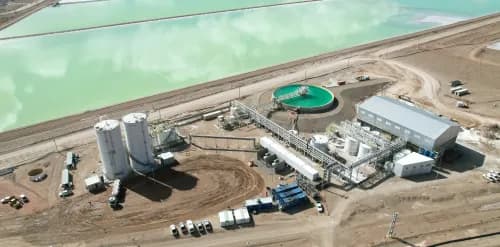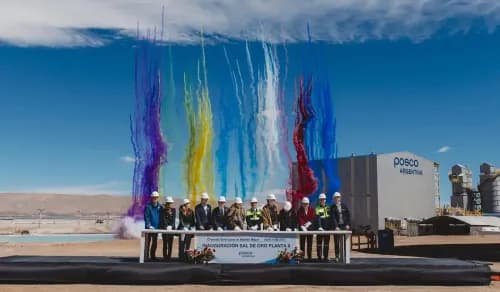
Argentina holds a central position in Rio Tinto’s global lithium strategy. With assets in production and expansion and new developments under construction, the company projects output of approximately 75,000 tonnes of lithium carbonate equivalent (LCE) in 2026 and expects to double that volume over the following two to three years, supported by the start of production at Rincón, scheduled for 2028.
By Panorama Minero
Rio Tinto currently has a presence across Catamarca, Jujuy and Salta, Argentina’s three lithium-producing provinces. The company is the only producer exporting lithium carbonate from all three jurisdictions, with a portfolio comprising Fénix, Güemes, Olaroz, Sal de Vida and Rincón, and continues to pursue its growth strategy in the country.
Investment decisions, however, depend on a combination of factors. Asset quality, predictability, partnerships, economic competitiveness and execution capabilities are among the variables considered when committing capital to projects that require investment over several decades.
Against this backdrop, cost competitiveness becomes a critical factor. The strategy is to maintain growth options within the portfolio while committing capital only when market conditions justify it and projects can achieve a competitive position. The objective is to develop operations capable of sustaining profitability across different market cycles.
Costs and market volatility
The development of this portfolio is taking place in a lithium market that Rio Tinto still considers immature, characterized by supply-demand imbalances, price volatility and the continued evolution of battery technologies.
Against this backdrop, cost competitiveness is a central consideration. The company’s objective is to position its South American projects in the lower quartile of the global cost curve through a model that integrates safety, quality, reliability, sustainability and efficiency, as well as knowledge transfer and the standardization of practices across operations at different stages of maturity.
The strategy is to maintain growth options within the portfolio while committing capital when market conditions justify investment and projects can achieve a competitive position. The objective is to develop operations capable of remaining profitable throughout different market cycles.
From this long-term perspective, Rio Tinto sees lithium as one of the pillars of its portfolio for the coming decades. The company projects global demand growth of more than 13% annually through 2035, driven not only by electric vehicles but also by stationary energy storage, the integration of renewable energy and demand associated with the expansion of data centers supporting artificial intelligence.
Three decades of DLE experience
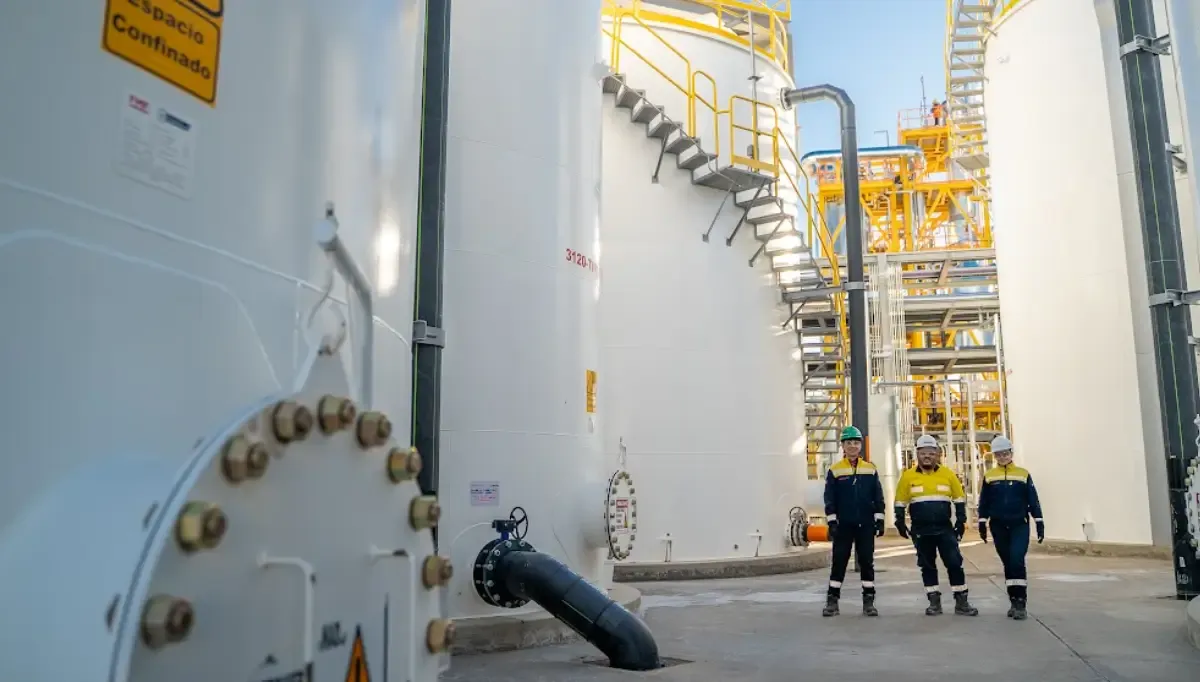
Direct lithium extraction (DLE) is another component of Rio Tinto’s strategy in Argentina. Fénix was Argentina’s first lithium project and the first in the world to use this technology, giving the operation nearly three decades of experience with DLE.
The operation continues to use a selective adsorption process based on resins, incorporating successive technological developments, to separate lithium from other impurities present in the brine.
Among the main advantages of DLE are processing speed and higher lithium recovery rates, with recoveries of around 80% to 90%, compared with approximately 50% in certain evaporation-based systems. The process can also be completed in roughly one day, compared with periods of a year or more under certain evaporation schemes.
At the same time, the technology presents other challenges. DLE plants are more complex and typically require more energy, meaning Rio Tinto considers that their competitiveness must be assessed across the entire process and according to the specific characteristics of each resource.
Rincón, a 60,000-tonne-per-year operation
That experience will be applied at Rincón, in Salta, which is being developed as an integrated commercial-scale operation. The project includes brine extraction through wells and a DLE plant designed to produce battery-grade lithium carbonate.
The approved design establishes annual capacity of 60,000 tonnes and an estimated 40-year mine life. Rio Tinto expects first production in 2028, followed by a ramp-up period of approximately three years.
The company expects Rincón to be positioned in the lower quartile of the global cost curve and to remain profitable throughout different market cycles.
Infrastructure remains a challenge for Argentina
Beyond geological conditions and the development of new projects, Rio Tinto identifies execution capability as one of the main challenges in turning Argentina’s mining potential into competitive production.
Infrastructure is central to that assessment. Railways, roads, electricity, water, connectivity and logistics capacity can directly affect project economics, particularly given the distance between many mining operations, industrial centers and ports.
According to industry estimates, road transportation costs in Argentina can be approximately three times the cost per tonne-kilometer of a more integrated logistics system such as Chile’s.
The availability of reliable and competitive power is another challenge, together with the transmission infrastructure required to supply remote mining regions. Some of Argentina’s major mineral resources are located far from the power grid and at high elevations, increasing the infrastructure requirements associated with their development.
For Rio Tinto, this issue becomes increasingly significant as large-scale lithium and copper projects advance simultaneously. In this context, the company sees a need to approach infrastructure from a broader perspective, through shared corridors capable of serving multiple projects rather than solutions developed exclusively for individual operations.