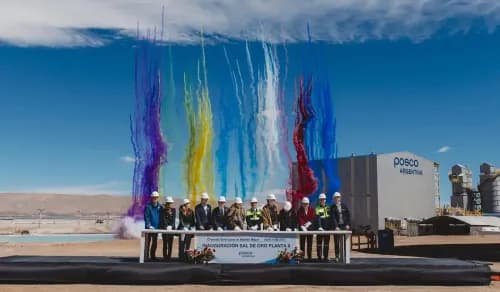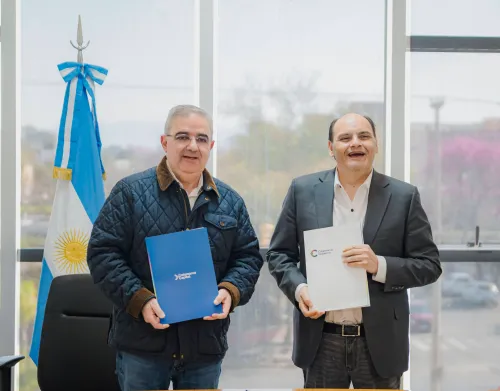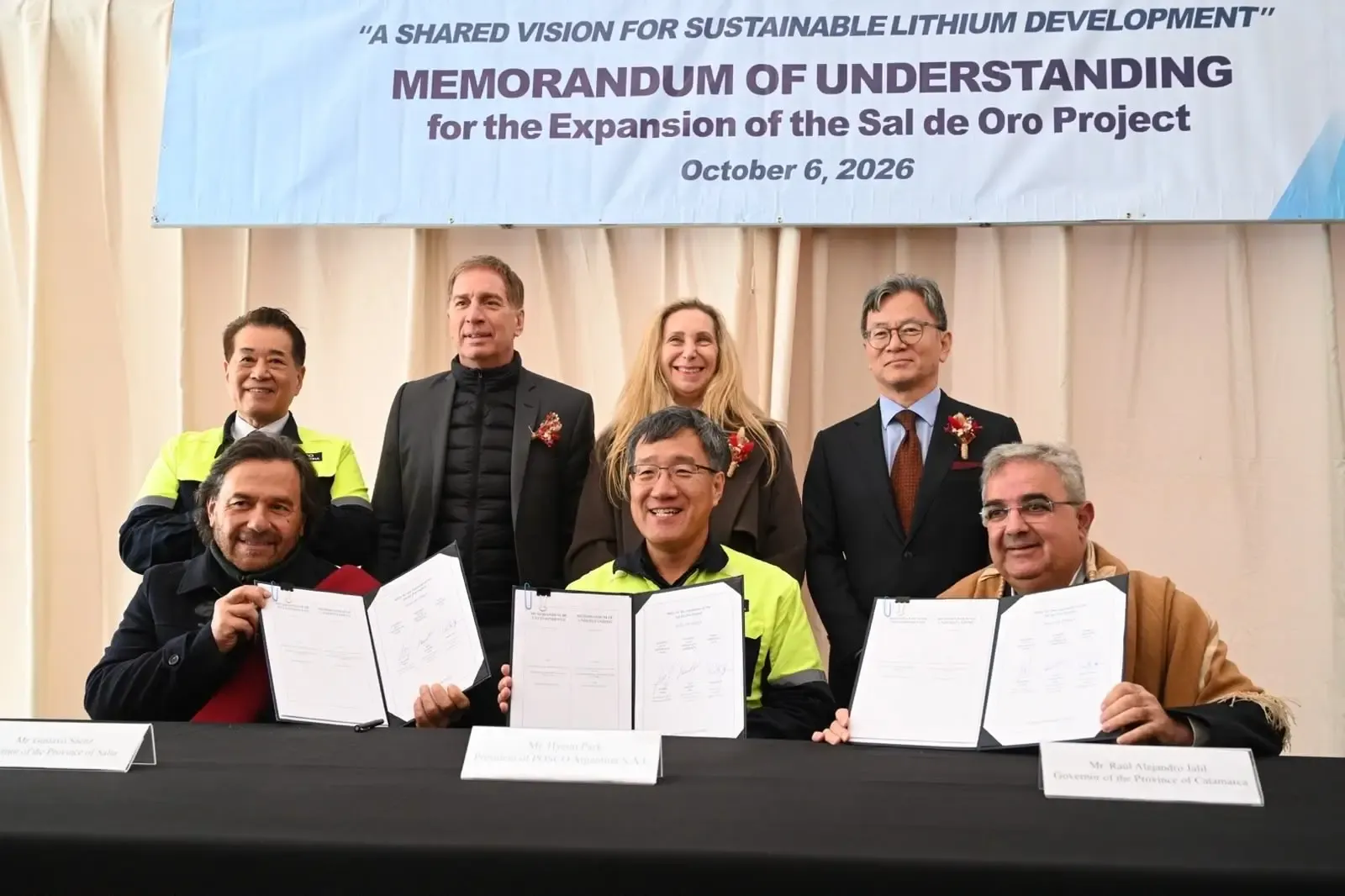
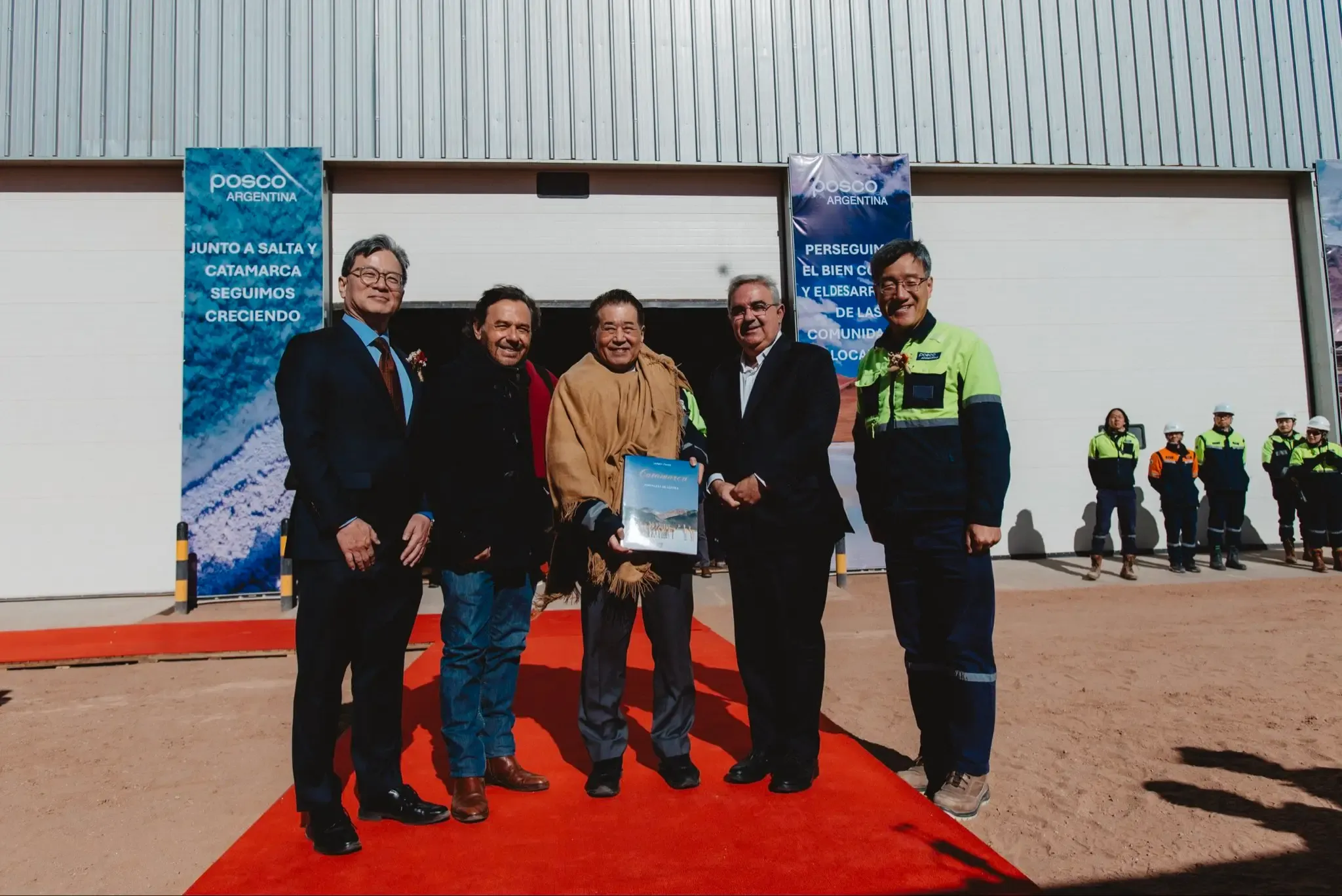
On the occasion of the inauguration of Plant II, and with Stages III and IV under way, Catamarca Governor Raúl Jalil and Salta Governor Gustavo Sáenz highlighted the progress that allowed them to move forward with this and other mining projects. Together with Jujuy, the three provinces make up the Lithium Roundtable.
By Panorama Minero
At POSCO’s inauguration, Governor Gustavo Sáenz highlighted that “mining in Salta and Catamarca has ceased to be a promise on paper and has become a transformative, concrete and tangible reality.” Sáenz stressed that “mining development is not measured solely in tonnes exported or cold numbers; it is measured in the quality of life of every worker, every local supplier and every family in the Puna.”
He recalled that, in 2018, when he and Jalil were taking office as governors, “this place was a conflict, and we decided to turn it into a great opportunity.” He highlighted the two fundamental pillars of mining: “environmental sustainability and social responsibility.”
Environmental Sustainability and Social Responsibility as Pillars
Sáenz emphasized that “there is no possible development without looking to the long term, nor legitimate progress if we turn our backs on the land and those who inhabit it.” He highlighted that mining in Salta and Catamarca has “two fundamental pillars: environmental sustainability and social responsibility.”
The Governor of Salta noted that the communities of the Puna, “long before lithium became the key to the global energy transition,” already inhabited the area. For this reason, he emphasized that “mining growth only makes sense if communities are not mere spectators of change, but true protagonists and beneficiaries of this great progress.”
RIGI as an Accelerator of Investment
For his part, Governor Raúl Jalil highlighted that “POSCO’s development made it possible to transform an area that had historically been a source of conflict between Salta and Catamarca into a space for cooperation and joint development.”
However, he emphasized that “there are always things to improve” and identified improving relations with suppliers and communities as “the great challenge.”
He mentioned that “when I went to POSCO a few years ago, the possibility of investing in more advanced technological processes” was an opportunity that the company is now taking advantage of, “although it is complex because of the logistics of other minerals.” He highlighted that the country is on the right track and the economic matrix is changing very abruptly.
Mining as a Tool for Comprehensive Territorial Development
In another part of his remarks, Jalil emphasized a comprehensive perspective on mining development: “mining is a non-renewable resource that we turn into tourism, roads and energy.” He noted that the start-up of production at these projects will generate more royalties, more exports, greater development of local suppliers, more local employment and more infrastructure works for the development of the entire western region of Catamarca.
Transformation of a Historic Conflict
Both governors agreed that the area where POSCO operates had historically been a source of conflict between the provinces. Sáenz recounted that, in 2018, when he and Jalil were serving as governors and mayors, “we decided not to resolve the conflict in the National Congress because we could not imagine a person from Catamarca voting in favour of someone from Salta on a boundary issue.” Instead, he said that they sought dialogue and consensus to transform the conflict into a cooperation zone.
Jalil, for his part, emphasized that “together with Gustavo, we turned a conflict into a great opportunity for all the people of Salta and all the people of Catamarca.” He also highlighted the role of other working teams: Flavia Royón, currently a National Senator, was Secretary of Mining of Salta; and Fernanda Ávila, currently a National Deputy for Catamarca, was Minister of Mining of Catamarca during the initial stages of negotiation and formalization of the project.
Later, through his social media accounts, Jalil again referred to the consensus between the provinces. In this regard, he summarized the result of that joint work: “The result of dialogue is this: for the first time, there is a cooperation zone between Catamarca and Salta that receives investment, produces lithium and creates new opportunities for our people,” he said. He highlighted that, together with Sáenz, “we decided to work together to provide legal certainty to Sal de Oro, without either province giving up the defence of its territory.” That agreement allowed POSCO to move forward, and today “the first project incorporated into the RIGI to become operational in Catamarca” is being inaugurated.
He also emphasized that “this path continues” and supported his political vision with a reflection on federalism: “When the provinces engage in dialogue, agree on clear rules and sustain a policy over time, we can transform our resources into development. That is the federalism Argentina needs.”