The Vicuña mining district, the most ambitious copper megaproject in the province of San Juan and in Argentina, has managed to normalize its logistics scheme after a period of jurisdictional uncertainty. Ron Hochstein, CEO of the project, confirmed that the dispute with the neighboring province over the use of access roads has been resolved. “We are returning to La Rioja,” he anticipated, “we have been able to engage in dialogue with the government and we are pleased to announce that the court order was lifted today. Our teams will assess the road tomorrow to determine its condition, but we will be able to use it again tomorrow.”
By Panorama Minero
During the opening of the first day of Expo San Juan Minera 2026 organized by Panorama Minero, Hochstein referred to the controversy that originated from a judicial measure restricting transit on a key road route for the project. “It was a complicated situation. An initial action was filed about two weeks ago, and the issue concerned a section of the road we use through the province of La Rioja,” explained the executive, clarifying that the section in question is vital for connecting the deposit.
The conflict was resolved largely due to pressure from local communities in the area. Hochstein emphasized that the resolution was the result of social demand, explaining that “this was not initiated by us, it was initiated as a grassroots community initiative, and I think that is one of the strong things we as an industry are really beginning to demonstrate: how we can benefit communities.” According to the executive, local residents expressed opposition to the restrictions out of concern for losing their jobs.
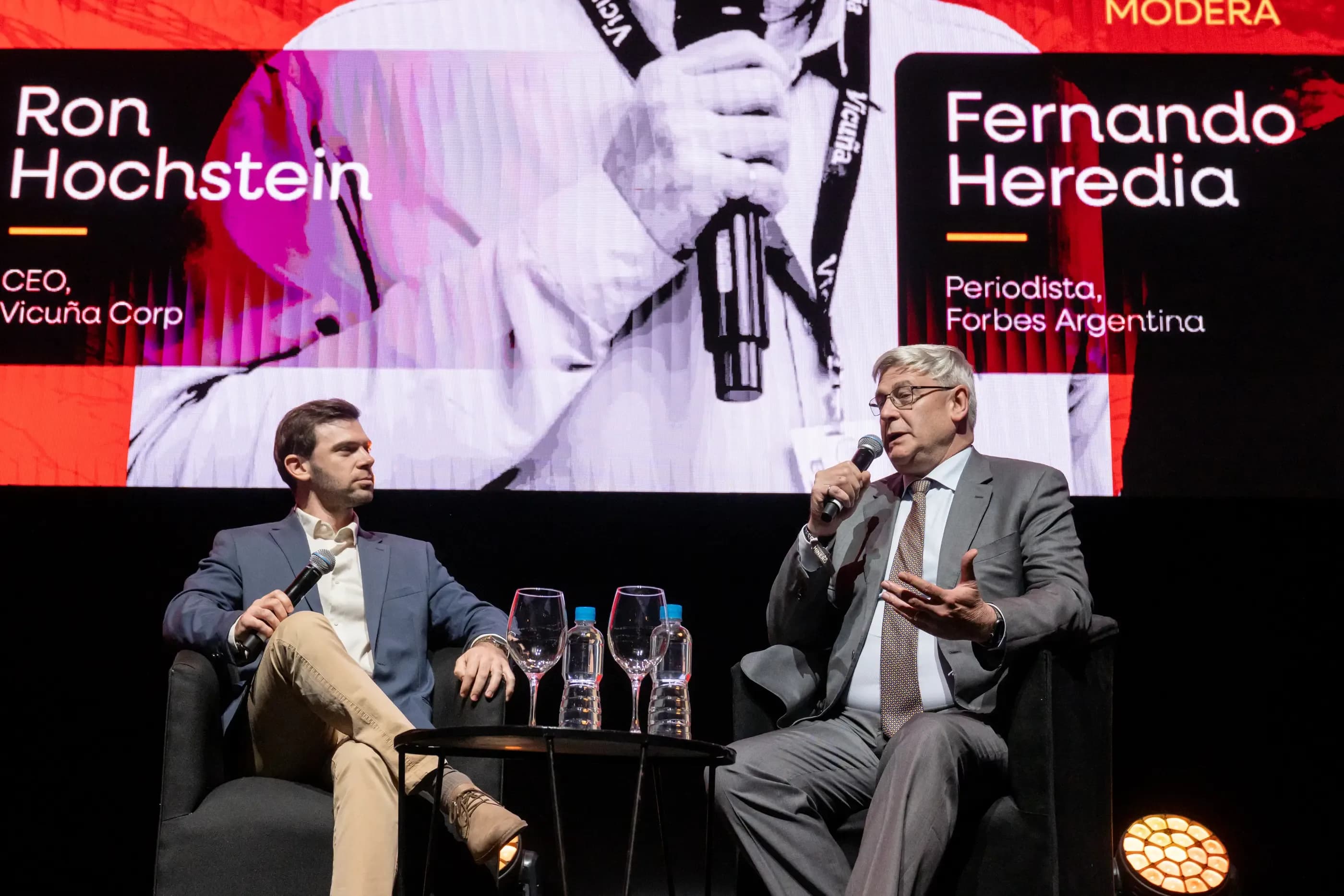
In terms of scale, the Vicuña project—which consolidates the Josemaría and Filo del Sol deposits—is emerging as a global-scale giant under the joint operation of BHP and Lundin Mining. “By combining these two deposits, this operation has a mine life of more than 70 years. It will be one of the five largest copper mines in the world, the third-largest gold mine in the world, and the second-largest silver mine in the world,” the executive stated regarding the geological potential of the district during a conversation with journalist Fernando Heredia.
During the discussion, it was highlighted that the initial investment required to launch production is unprecedented for the sector in the country. The executive detailed that “the first phase of construction amounts to US$18.1 billion and includes more than US$1.4 billion allocated to infrastructure.” This expenditure adds to what has already been invested during the feasibility stages: “We have invested US$800 million from our budget in engineering and in the infrastructure necessary to improve the roads,” said the global CEO.
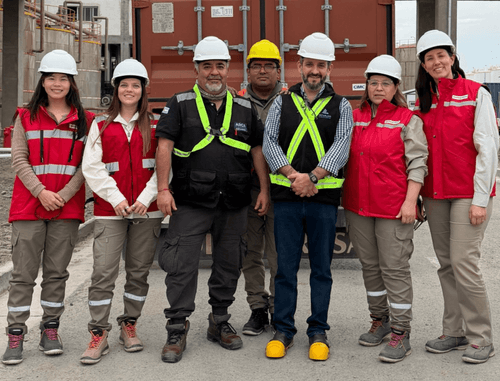
Currently, the project is undergoing an intense phase of technical deployment in the field to meet construction timelines. “We began preliminary earthmoving works about a week ago. We have several new trucks and operators, most of them from the province of San Juan,” the executive reported, emphasizing that engineering development is being carried out in parallel with drilling aimed at expanding mineral resources.
Export logistics for concentrates are a central aspect of the project’s engineering, cost, and transportation strategy. “Right now, in the first stage, we are considering transport through Argentina and Chile, because it is much closer and more accessible from the Pacific Ocean side rather than the Atlantic Ocean side,” Hochstein stated, explaining that this efficient route is key to ensuring the competitiveness of the metals extracted from the Andes.
“There is a significant amount of infrastructure associated with Phase 2 and Phase 3 of the project, including desalination plans, possible concentrate treatment facilities, concentrate pipelines, and so on,” the CEO added, outlining a comprehensive long-term vision for the mining operation. For the more advanced phases of the district, the plan contemplates highly complex civil engineering works that will transform the region.
A determining factor for shareholders to give final approval to the capital investment is the regulatory framework, Hochstein noted, emphasizing the importance of the Large Investment Incentive Regime (RIGI). “One of the key things we are waiting for in order to make that sanctioned decision is confirmation of our application, which was submitted in December of last year. That was one of the major factors that truly encouraged BHP to move forward,” he said.
Management’s immediate objective is to achieve the Final Investment Decision (FID) before the end of the current cycle. To that end, the company is “working so that the partners and shareholders, BHP and Lundin, can make the Final Investment Decision (FID) or construction decision for Phase 1 before the end of the year,” Hochstein stated, positioning 2026 as the pivotal year for the beginning of large-scale construction.
To support this transition, the company is engaged in an aggressive recruitment process for specialized personnel, according to the executive. “We are hiring a significant number of people right now. Our engineering company will double its staff next month,” he revealed. This growth in the technical workforce is the clearest indicator of the imminence of construction announcements for the San Juan district.
Finally, the executive highlighted the favorable environment offered by the provincial administration for the development of the industry: “We have two partners who want the project to move forward quickly, and quality is fundamental. It is an excellent moment, and I believe that San Juan, in many respects, is a mining province with enormous potential,” Hochstein concluded, anticipating significant announcements regarding infrastructure and definitive construction timelines over the next three months.