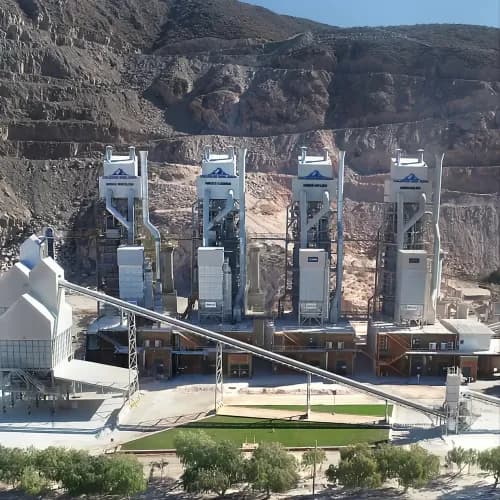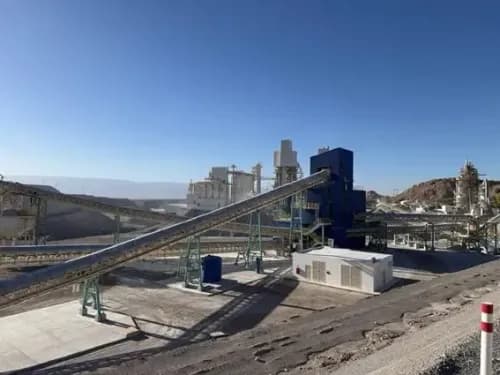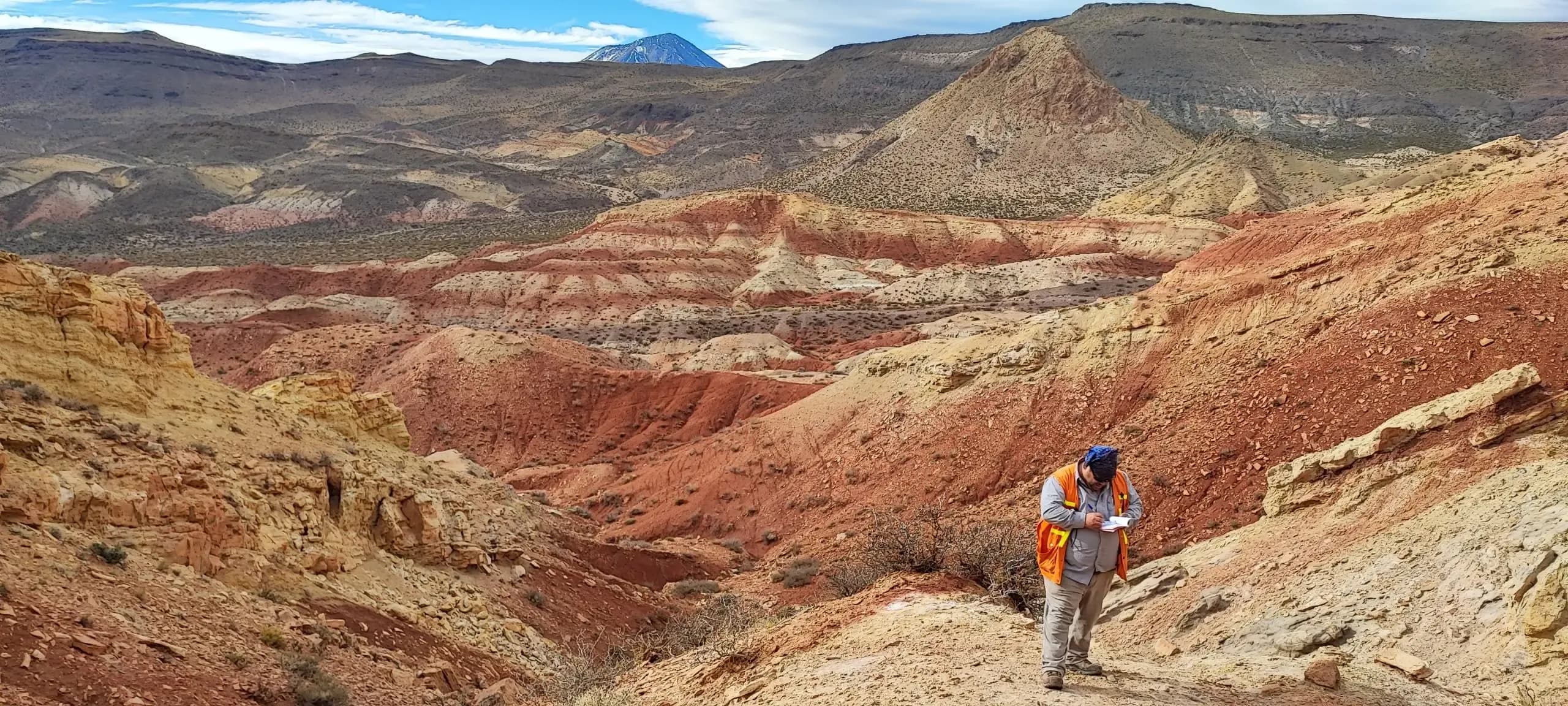
The Mendoza Legislature ratified the Environmental Impact Declaration (DIA) for the Cobre San Romeleo project in Malargüe. With this step, Joint Resolution No. 600/26 of the Directorate of Mining and No. 74/26 of the Directorate of Environmental Management and Oversight, dated 18 September 2026, becomes the definitive environmental authorisation for the mining stage. Its 70 mandatory articles establish the requirements for the next steps, many of which must be fulfilled before the company enters the site.
By Panorama Minero
The project owner is LABSA S.A., while Arex Mining S.A. is the operator. The company plans to process 40 tonnes of ore per day to obtain copper oxide, a raw material used to manufacture copper sulphate and copper oxychloride. These are agricultural fungicides, including formulations authorised for organic crops, such as Bordeaux mixture. The intended markets are agriculture in general and viticulture in particular.
An Oxide Deposit Using Ammoniacal Processing
San Romeleo is located at Puesto Agua de Isaac, in the San Romeleo ravine, Río Barrancas district. It lies approximately 160 km south of the city of Malargüe, at an average altitude of 1,700 metres above sea level. The mining property was first applied for in 1942 and recorded mining activity in 1967. The project proposes reactivating it as a mine, with a small-scale processing plant.
The reserves estimated by Maurici (1971) total 257,000 tonnes at an average grade of 1.29% copper, hosted in sandstones of the Diamante Formation (Upper Cretaceous). The principal minerals are chalcanthite, malachite, azurite, brochantite and chalcocite, with a limited presence of sulphides. The projected mine life is 20 years, with updated CAPEX of US$3 million and annual OPEX of US$837,000.
Mining will be carried out by open-pit bench mining, with benches between 2 and 4 metres high and monthly blasting of approximately 1,000 tonnes. Processing is based on ammoniacal leaching using ammonium carbonate in four closed reactors. The pregnant solution undergoes thermal decomposition, precipitating copper oxide. Ammonia and CO₂ are recirculated to regenerate the solution in a closed circuit. The product will be packaged in 200-litre drums.
This processing arrangement is what the DIA now requires to be developed to the engineering stage before construction can be authorised.
Requirements Before Any Activity Begins
Before commencing any work, the company must submit an updated Environmental Baseline Study. It must include a protocol for the rescue and relocation of small fauna and a wildlife-friendly traffic management plan.
The company must also establish environmental insurance, a surety bond, a bank guarantee or a remediation fund under Article 22 of Law 25,675. Evidence of this financial guarantee must be submitted to the project file five days before entering the site.
These obligations are supplemented by three plans subject to approval by the Mining Environmental Authority. The Environmental Monitoring Plan covers water, soil, air, flora and fauna. The Social Monitoring Plan must comply with Directorate of Mining Resolution No. 192/2024. The third is a Contingency Plan.
The DIA also makes mandatory the recommendations contained in the Final Consolidated Report of the Interdisciplinary Mining Environmental Assessment Commission (CEIAM), issued on 17 September 2026.
Water and Engineering Requirements Before Construction
Water will be supplied from an existing borehole on the mining property. The DIA requires the company to obtain a water-use permit from the General Irrigation Department (DGI), specifying the expected volume.
The borehole must be equipped to measure flow rates and static water levels, and must include a sampling point. The Municipality of Malargüe requested an assessment of the connection between the borehole and the spring at the settlement to ensure water availability and quality for local residents.
From a technical perspective, the resolution requires engineering designs for the spent ore pond, tailings storage facility and waste rock dumps, together with their risk assessments.
It also requires the piping and instrumentation diagram (P&ID) for the fluid transport system, a water balance for each piece of equipment, a description of the reagent dosing system and identification of all process and waste streams.
The requirements also include studies of leaching potential and metal mobility, a report on the behaviour of fine particles during rainfall or snowfall, and a noise and air quality study.
Finally, the company must georeference historical mine workings and submit the Mine Closure Plan.
Six Months of Construction Until Commissioning
Once these requirements have been fulfilled, the company’s schedule estimates six months from obtaining the permits to full operation. This period covers the rehabilitation of access roads and the quarry, construction of the plant and commissioning.
The works include upgrading 1,800 metres of existing mining track and constructing between 500 and 700 metres of new road.
The project also includes a prefabricated camp for 10 people, a workshop and storage shed, and a processing plant built on a terraced steel structure.
The spent ore storage area will occupy approximately 2,000 m² at the head of a ravine, with a 500-micron geotextile liner and a leachate retention dam. The total disturbed area is approximately one hectare.
During construction, the DIA requires leak-tightness testing and secondary containment for equipment and solution pipelines.
It also requires quality controls for impermeable liners, runoff and sediment management, and monitoring of surface water, groundwater and air at authorised locations.
Operations, Closure and Biennial Updates
During operations, the project will generate between seven and nine direct jobs.
If explosives are used, the company must comply with regulations established by the National Agency for Controlled Materials (ANMaC).
It must maintain DGI-approved industrial and sewage effluent management plans and comply with Malargüe Ordinance No. 2,377/2026 on light pollution.
For mine closure, a technical decommissioning plan covering all facilities is required, together with post-closure monitoring for at least five years and financial guarantees.
The DIA must be updated at least every two years. This period is calculated from the publication of the ratifying law in the Official Gazette.
With legislative approval, San Romeleo concludes an administrative process that has been under way since 2008.
It now enters a stage in which the schedule depends on approval of the engineering designs, studies and permits required by the DIA before construction.
Once these requirements have been fulfilled, the company’s estimated six-month period will begin, leading to the production of copper oxide intended for fungicides used in the wine industry.