The growth of mining in Mendoza will begin to place new demands on the provincial electricity system. Minister of Energy and Environment Jimena Latorre stated that copper projects will require electricity generation and transmission capable of guaranteeing a continuous and secure supply.
By Panorama Minero
The statement was made during a forum, where the official presented the provincial strategy to attract investment and reviewed progress in renewable energy generation, mining exploration in Malargüe and the development of PSJ Cobre Mendocino.
Latorre identified mining as one of the sectors that will need to be considered in Mendoza’s energy planning, alongside industrial activity. The issue arises as the province seeks to expand generation, strengthen transmission networks and consolidate a common agenda between energy and mining.
New Demand on the Electricity System
Latorre stated that mining projects advancing in Mendoza will require a continuous and secure power supply. The minister did not announce any specific infrastructure project for the sector, but included mining among the sources of demand that the expansion of the electricity system will need to address.
Copper projects require energy throughout the different stages of their development, but demand increases as they move toward construction and production. Continuity of supply is necessary to support processing plants, pumping systems, operational infrastructure and the services associated with a mining operation.
In this context, electricity availability is becoming one of the conditions that companies and the province will need to assess. It is not simply a matter of adding installed capacity, but also of having networks capable of transmitting electricity to areas far from the main urban and production centers.
Mendoza Targets One Gigawatt of Solar Capacity
The provincial energy strategy includes significant growth in renewable generation. According to Latorre, Mendoza has incorporated nearly 800 MW of solar capacity and aims to reach approximately 1 GW by 2030.
The minister noted that investments in generation were able to advance due to the availability of connection nodes and infrastructure conditions that made it possible to connect projects to the system.
The next challenge will be to expand that connection and transmission capacity. Solar generation can increase available supply, but for that energy to support industrial and mining growth, robust networks and sufficient capacity to transmit and distribute it will be required.
For this reason, Latorre stated that the province is investing in transmission networks to enable the incorporation of new generation and supply the growth in industrial and mining demand.
PSJ, the First Project to Raise the Need
Within the mining agenda, Latorre mentioned PSJ and the infrastructure requirements that projects located in the Andean region will have.
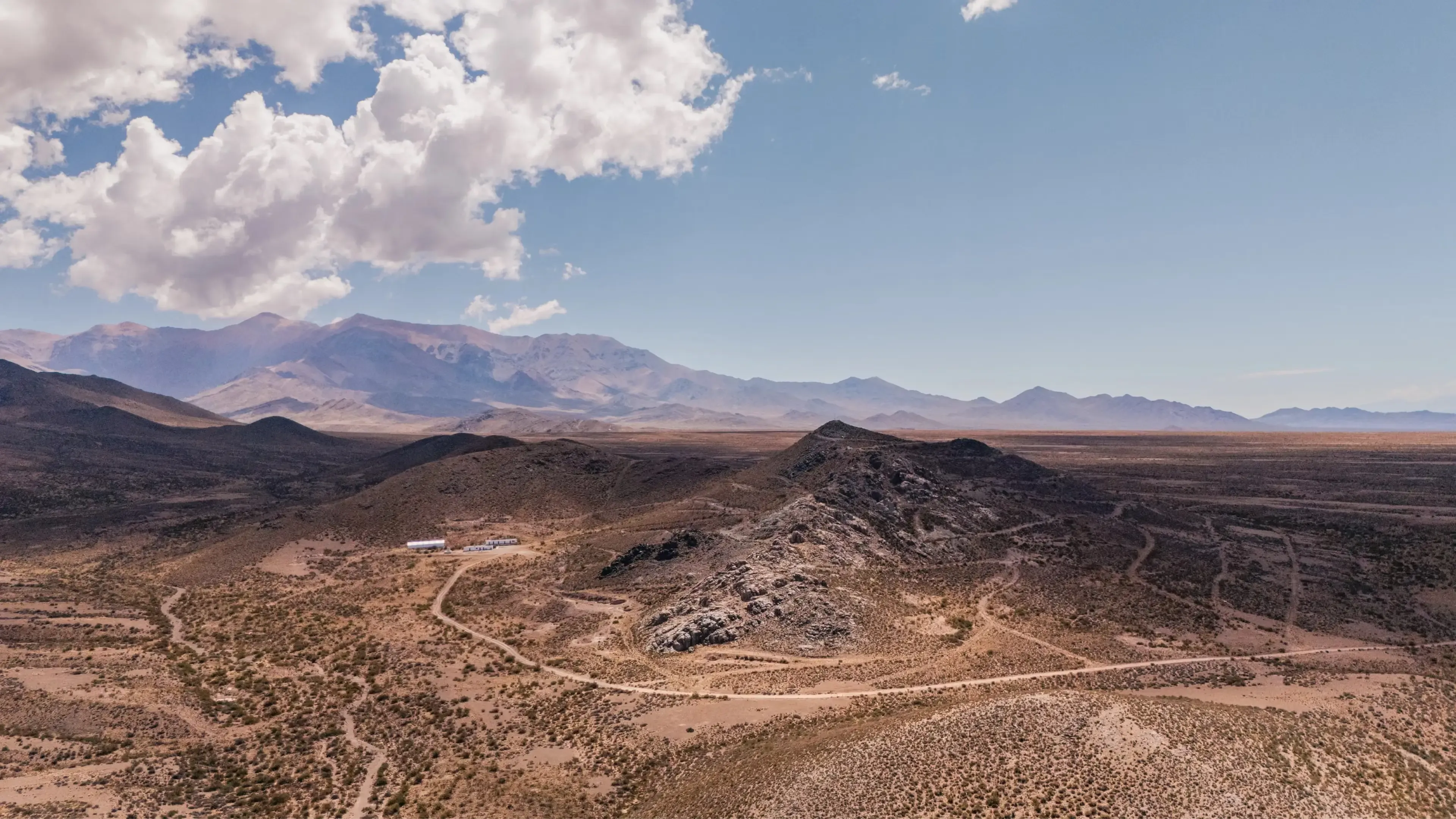
PSJ represents the first concrete case of a copper operation that will require a large-scale energy solution. The project, located in Uspallata, is advancing toward the definition of its engineering and will need a connection capable of guaranteeing supply during the production stage.
The need for energy becomes more relevant following the new production scale reported by the company. PSJ plans to process up to 42,000 tonnes of ore per day and reach production of 75,000 tonnes of contained copper per year, with a tailings filtration and water recirculation system.
The electrical connection to the project forms part of the infrastructure that will need to accompany this development. In this case, energy infrastructure is not a secondary component, but rather a condition for advancing from feasibility toward construction and production.
The MDMO Anticipates Future Demand
The minister also reviewed the progress of exploration in the Malargüe Western Mining District (MDMO) and highlighted the arrival of new companies and partnerships between international investors and local companies.
Unlike PSJ, projects in the MDMO are mostly at the exploration stage and do not yet generate energy demand comparable to that of a producing operation. However, the district’s development could change this scenario if drilling confirms resources and some initiatives advance toward pre-feasibility and feasibility studies.
Infrastructure development will need to accompany this process. Energy planning for Malargüe will not be linked solely to the current requirements of exploration campaigns, but also to the possibility that the district could eventually host several mining projects at advanced stages.
Mining and Energy Within the Same Agenda
Latorre linked mining development to the global energy transition. Electrification, energy storage and the incorporation of new generation sources require critical minerals, particularly copper.
Mendoza seeks to position its copper projects within this international scenario while simultaneously expanding its energy capabilities to attract investment and support new developments.
The presentation showed that the province is beginning to address energy and mining within the same agenda. Renewable generation, connection nodes and transmission networks are emerging as part of the platform that will need to support industrial and mining growth.
PSJ is the first project to raise this need on an immediate basis. The MDMO, meanwhile, anticipates future demand that will depend on exploration results and Mendoza’s ability to transform its geological resources into producing operations.