Grupo Calidra reported on measures implemented to improve energy efficiency and reduce emissions associated with lime production, including the modernisation of industrial equipment, the use of natural gas, the incorporation of renewable electricity and the utilisation of carbon dioxide generated during the calcination process.
By Panorama Minero
As part of World Energy Saving Day, observed on 21 October, the company presented information on its operations in Argentina and Chile, where it is developing initiatives aimed at optimising energy consumption in an industrial process that requires temperatures exceeding 900°C.
According to data released by Grupo Calidra, approximately 71% of emissions from its Southern Cone operations originate from the chemical process of calcination, while around 25% are associated with fuel consumption.
Mario Herrera Morata, Environmental Coordinator at Grupo Calidra, explained that calcination generates carbon dioxide emissions and that the company’s efforts focus on the components of the process that can be optimised.
Modernisation of Kilns and Industrial Equipment
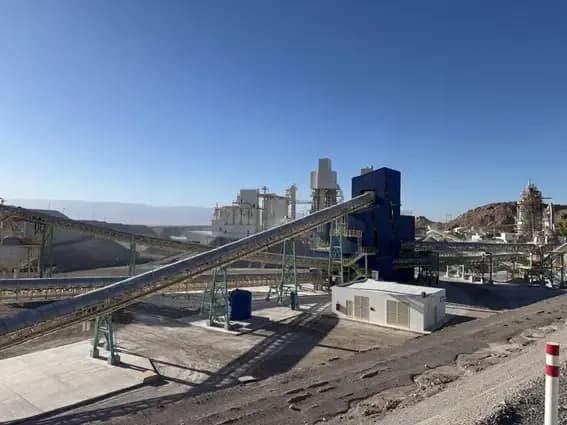
Among the technologies used by Calidra are Maerz double-shaft regenerative kilns, which utilise combustion heat to preheat limestone and reduce thermal losses.
At its plants in Argentina and Chile, replacing conventional blowers with high-pressure fans has reduced energy consumption associated with this equipment by approximately 20%. These fans supply the air required during combustion.
The company also reported changes to its fuel mix, with greater use of natural gas instead of petroleum coke due to its lower emission factor.
During 2025, natural gas accounted for 55% of Grupo Calidra’s fuel consumption across its continental operations, while petroleum coke represented the remaining 45%.
According to the company, the use of natural gas avoided more than 14,000 tonnes of CO₂ equivalent emissions compared with a scenario based on petroleum coke consumption.
Regarding electricity, Calidra’s 2025 Sustainability Report indicates that 58% of the electricity consumed came from renewable sources, the highest percentage recorded by the company over the past nine years.
Electrification of Equipment in Chile
Energy efficiency initiatives also include modifications to mobile equipment used at industrial facilities.
At the Noviciado plant, located in Santiago, Chile, Calidra replaced internal combustion engine forklifts with electric units.
According to the company’s assessment, over a five-year period, this equipment would generate 49% fewer CO₂ emissions compared with units powered by liquefied petroleum gas (LPG) and 65% fewer emissions compared with diesel-powered equipment.
The analysis also determined that the total cost of electric forklifts, including initial investment, energy and maintenance, was 45% lower than that of the alternatives assessed.
The company stated that it is considering the possibility of implementing similar solutions at its operations in Argentina.
Carbon Dioxide Capture and Reuse
Another initiative reported by Grupo Calidra involves capturing carbon dioxide generated during calcination for use in other industrial processes.
The company uses part of the CO₂ produced by its kilns to manufacture precipitated calcium carbonate (PCC), a lime-derived product used as an additive in paint manufacturing and in the paper and rubber industries.
According to its 2025 Sustainability Report, Grupo Calidra recorded 11,766 tonnes of CO₂ associated with PCC production using carbon dioxide generated in its kilns.
Herrera Morata explained that this procedure allows captured CO₂ to be incorporated into a new production process.
The initiative forms part of the company’s efforts towards its objective of achieving carbon neutrality by 2050.
Emissions Measurement and Environmental Planning
Grupo Calidra reported that it has been quantifying its carbon footprint since 1995 using the GHG Protocol methodology.
During 2025, the company also conducted a decarbonisation assessment in collaboration with the Inter-American Development Bank (IDB) and consultancy ERM, aimed at establishing a roadmap for emissions reduction.
The measures under consideration include improvements in energy efficiency, fuel substitution, equipment electrification, optimisation of industrial processes and the development of alternatives for capturing and reusing carbon dioxide.
According to the information presented by the company, these initiatives form part of its strategy to reduce emissions across the group’s industrial operations.