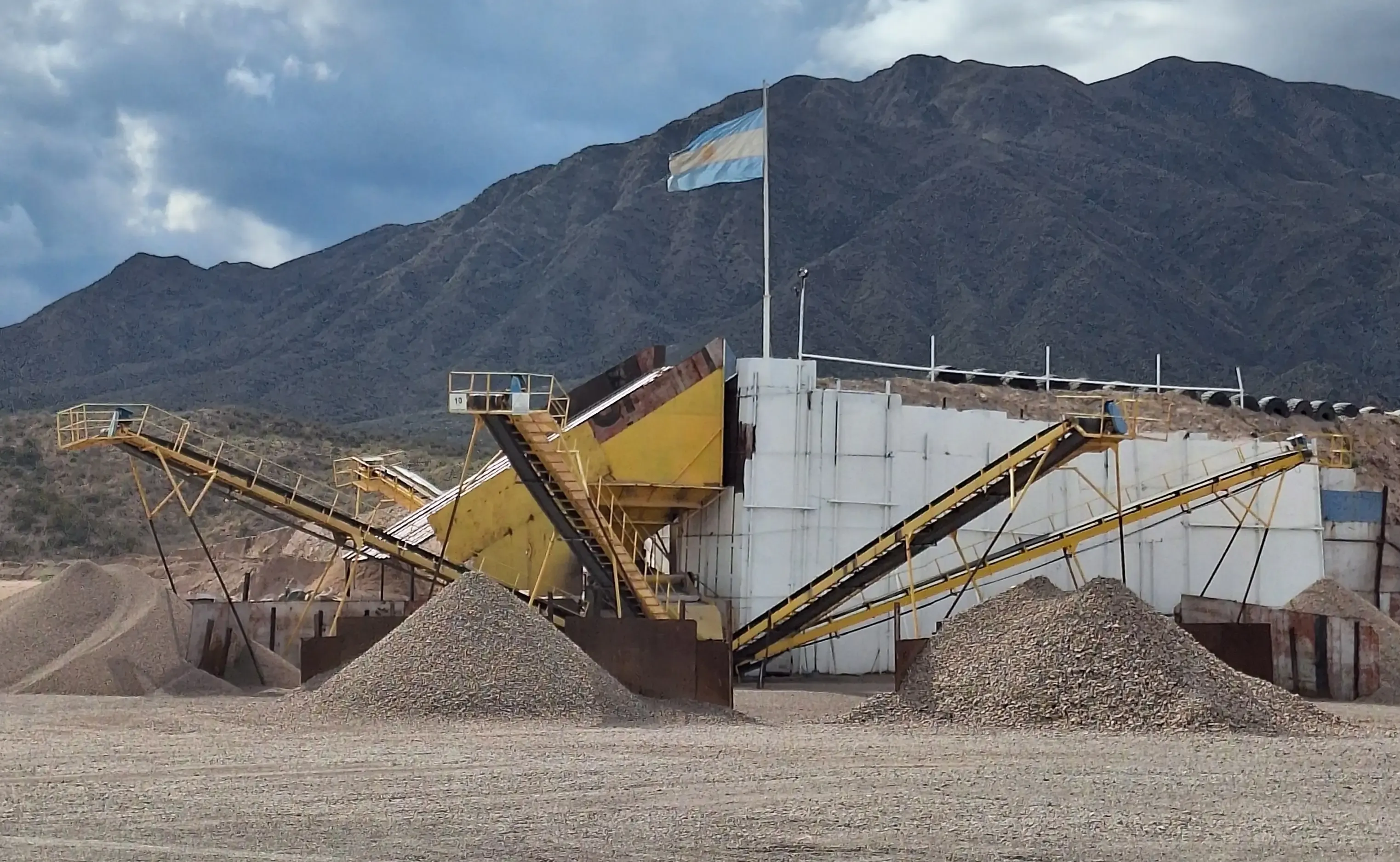
Renewable energy has begun gaining ground within third-category mining operations in Mendoza. In Cacheuta, the Brincalto quarry—also known as Cantera Javier Bianchi and operating since 2009—is moving forward with an investment close to US$100,000 to supply all of its facilities through solar energy. The project combines productive expansion, reduction of operational costs, and process modernization within a segment historically more associated with SME structures than with large-scale industrial developments.
By Panorama Minero
The initiative includes the installation of 128 solar panels rated at 630 W and 16 batteries of 5.1 kW, creating a system with close to 80 kW of installed capacity. The scheme will supply the entire quarry operation, including processing plants, offices, dining facilities, and operational infrastructure.
According to Facundo Bianchi, head of the operation, the project will begin taking shape with the arrival of structures and materials over the coming weeks, while full commissioning is expected between late June and mid-July.
The Weight of Energy Costs in SME Mining
The investment also comes at a time when energy costs have become one of the main operational components for both second- and third-category mining operations in Mendoza. In quarries and aggregate plants, electricity directly impacts crushing, classification, conveyor belts, pumping, lighting, and the overall functioning of industrial facilities, especially in operations moving toward greater mechanization and production capacity.
Currently, according to Bianchi, energy represents between 20% and 25% of the quarry’s operating costs. However, with the incorporation of a third production plant—which projects nearly a 100% increase in production capacity—the weight of the electricity bill could have risen to between 30% and 40% of the cost structure.
That scenario would also have required complementary electrical works, transformer replacements, new connections, and expansions of traditional energy infrastructure. According to the quarry representatives, the total cost of those adaptations was approaching the final value of the installed solar system itself.
“The solar panel option was an alternative from both timing and sustainability perspectives,” explained Bianchi when describing the technical and economic evaluation process carried out by the company.
The project was supported by the company Manager Electric, which participated in the supply and financing structure of the installation. The quarry currently employs approximately 15 people directly and around 30 linked to the company’s overall operations.
Sustainability, Control, and Requests for Incentives
Beyond the specific investment, Brincalto maintains that the incorporation of renewable energy forms part of a broader process of organization and professionalization within third-category mining in Mendoza, a segment that in recent years has begun facing greater levels of control, traceability, and operational requirements.
Within this context, Bianchi also emphasized the need to build stronger technical coordination between the private sector and mining and environmental authorities, especially to adapt regulations and procedures to the operational realities of Mendoza’s mining SMEs.
The quarry had already advanced other investments linked to operational control and formalization, such as the incorporation of its own weighbridge for load traceability and control. According to Bianchi, Brincalto was the second quarry in Greater Mendoza to implement this type of equipment.
Based on that experience, the company proposed the creation of specific tools to encourage investments in sustainability, energy efficiency, and formalization within SME mining. Among the alternatives mentioned were credit lines, tax benefits, deferred tax schemes, and incentive programs for operations incorporating solar panels, weighbridges, and traceability improvements.
“It’s true, we had to make the investment anyway, but we also wanted to give it visibility and reinforce the message that installing solar panels is the alternative, getting organized is the alternative,” Bianchi stated.