In an exclusive conversation with Panorama Minero, the VP Operations & Country Manager of Finning Argentina analysed the challenges and opportunities currently facing the mining sector.
By Panorama Minero
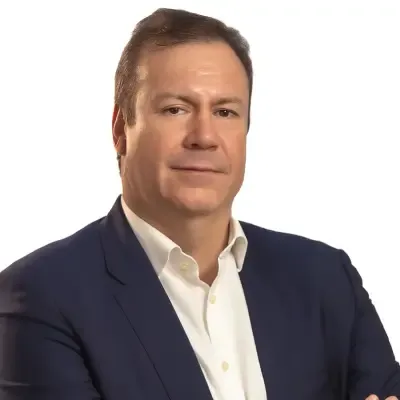
Enthusiastic about opportunities, committed to challenges, and at the helm of the leading company in the sale and maintenance of Caterpillar equipment, Germán Wilson analyses the inflection point Argentine mining is experiencing: the “discrete leap” that is approaching, the need to align capabilities, technology and talent, and why 2025 and 2026 are key years for preparation.
How do you see the future of Argentine mining in the coming years?
It is a situation of anticipation. The resource is there, and many conditions have been improving, from regulatory frameworks to investor interest. I believe we are at a moment that could be a turning point for the activity, but what lies ahead is not a continuation: it is a discrete leap compared to the current scale, and that requires preparation on all fronts.
What does that “discrete leap” mean in practice?
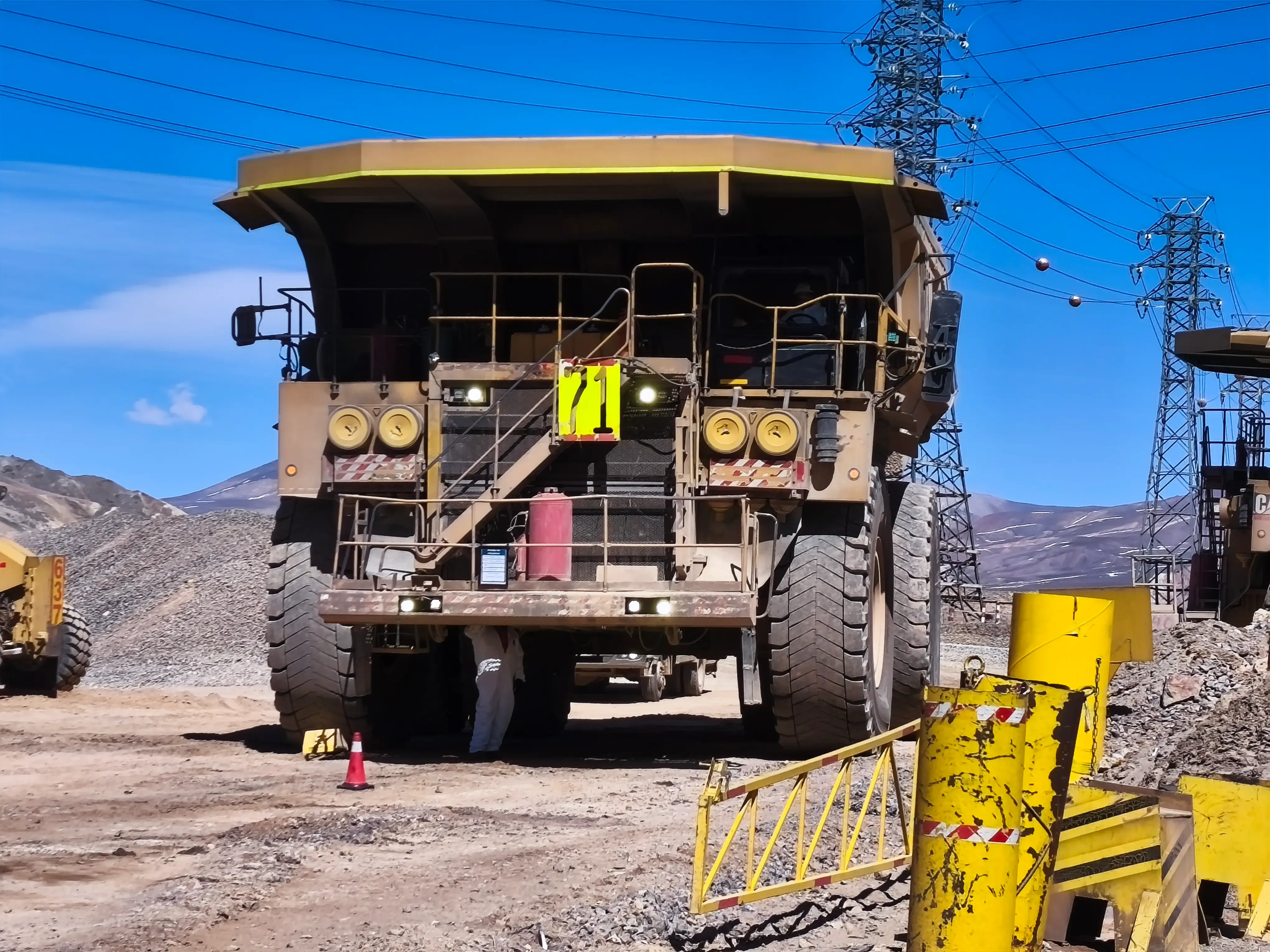
That the projects coming forward are of a different magnitude. They will require fleets that do not currently exist in Argentina, with different technology and a different scale of maintenance. They will also demand much more qualified personnel. If we do not use these years to prepare, when demand arrives we will likely not be ready.
You are a company with almost a century of history. What concrete challenges does this scenario pose for you?
Caterpillar is 100 years old and we, as its exclusive distributor, are 90. We operate in Chile, Canada, the United Kingdom and the Southern Cone. That gives us a mirror of what “the end of the book” looks like: what capabilities are needed and how a mature mining industry evolves. The challenge is to leverage that knowledge and adapt it to the local reality. That is why we say that 2025 and 2026 are years of preparation.
We are already moving forward with an investment plan across the different locations we have, strengthening our training team, and also incorporating technology that is already traditionally used in other countries, but which is still quite incipient here.
And in this preparation process, what are the main bottlenecks you encounter?
First, qualified personnel. There is already a shortage today, and as projects move forward, it will be even greater. And this must be addressed in advance because it is not simple.
A second area of action is the fleets required to operate these types of projects, with different sizes and different technology, which do not exist today in Argentina. So it is not only about the operator or the mine design, but also all the maintenance capabilities that we must have: from the standpoint of infrastructure, the different equipment needed to maintain these machines, and the knowledge.
A third point is how we develop our suppliers. We are a first-tier supplier to mining companies, but in turn we have other suppliers that are second- and third-tier, which are also relevant. In that sense, we are working with a very concrete and formal program to support our suppliers, from the standpoint of transferring safety standards, execution protocols, technologies and quality assurance; because when demand increases, they need to be able to keep pace with us. So it is an entire value chain that must prepare itself.
Another aspect is public–private participation.
Regarding this last point, public–private coordination, how do you envision it?
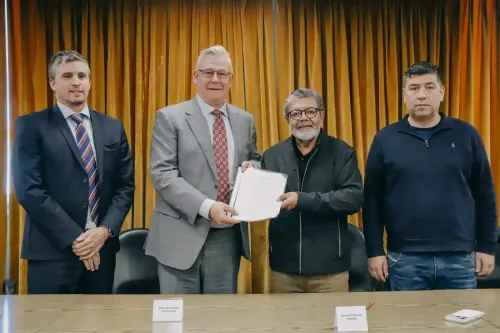
We are convinced that collaboration among the different stakeholders in the industry generates a virtuous circle. That is why we recently signed an agreement with the province of San Juan to work together on training, and another with Banco de San Juan to facilitate the financing of capital goods, in order to make it easier in the future not only for mining companies, but also for contractors and other companies, to access fleets with new technology, of the appropriate size and with the performance efficiency required.
How is Finning working to advance operational data management and the incorporation of more efficient and sustainable fleets in Argentina?
Today, equipment can already transmit an enormous amount of information. The question is how we generate joint platforms to manage that data and transform it into operational impact: better availability, fewer failures, and greater efficiency.
On the other hand, the profile of fleets. Today in Argentina there are no diesel-electric trucks, only diesel. New projects will demand trucks with lower environmental impact and prepared to evolve toward other technologies. At Finning, we are working on solutions such as DET (Dynamic Energy Transfer), with direct energy transfer through an arm, and also on autonomy: in Chile and Canada we already operate autonomous fleets, and all that knowledge will be brought to Argentina. These are complex projects that require expertise that is built along the way.
Returning to data, what role do artificial intelligence and machine learning play in that evolution?
A central role. All data collection goes through analyses that are often based on artificial intelligence. From there, recommendations are generated that are integrated into the maintenance and operations strategy. We have a monitoring centre in Chile that integrates fleet information and works with contract teams. It is not a pilot: it is something that already operates systematically and that, when Argentine mining scales up, we will be able to replicate. A new wave of projects means a different wave of technology.
Do you already offer data management platforms in Argentina?
Yes, starting with construction equipment, which is smaller equipment, and upward, we offer different platforms where our clients have access, for example, to VisionLink, where they can monitor efficiency, fuel consumption, and see whether there are signs of premature wear or any issue that impacts their maintenance strategy. That exists today in construction, without any problem.
When moving to large fleets, what is done is to deepen that exercise, establishing different types of contracts that allow the client to have a view of how they want to operate. These are platforms that are customized to the client’s needs and maintenance strategy. Fundamental issues such as fleet availability are absolutely critical, and that is worked on one by one, equipment by equipment.
What role does Finning play, beyond supplying equipment and data, in this process of technological leap in the sector?
The company’s DNA, by definition, is services. Our business is not only selling equipment; it is maintaining what we sell. The option our clients choose is not only because of Caterpillar as a brand, but also because of the value proposition we provide around the equipment: component rebuilds, support, availability, and maintenance solutions adapted to their operation.
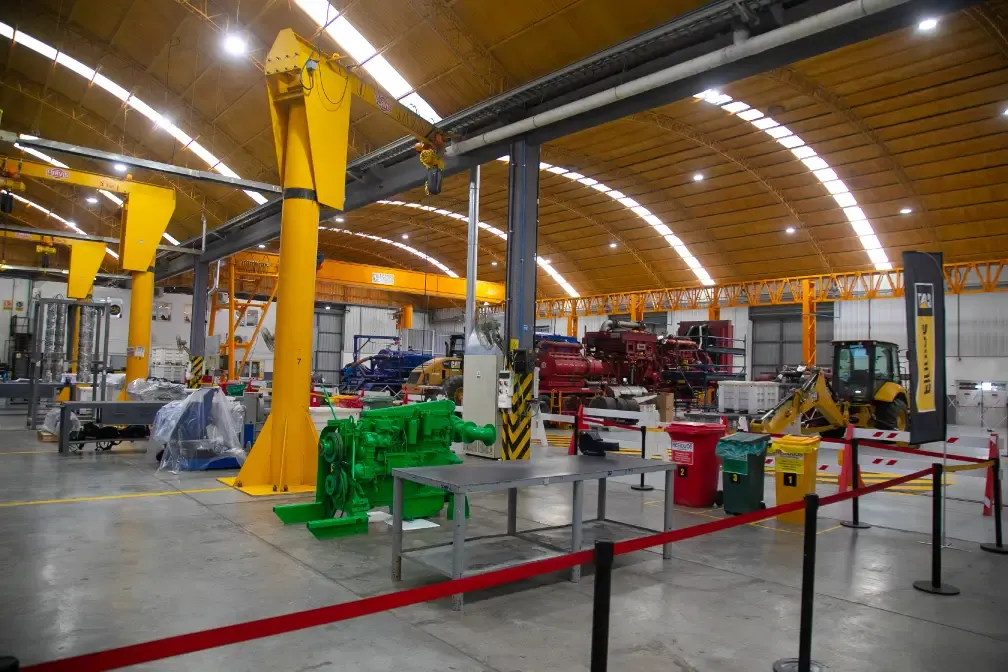
Everything we do in rebuilding, such as our Component Rebuild Centre in San Juan, is part of a circular economy logic: we extend the useful life of assets, reduce waste, and improve fleet efficiency. This has a direct impact on our clients’ costs and on the performance of the entire value chain.
How do services and the circular economy connect with the sustainability agenda?
Our global clients have a very clear sustainability agenda. Argentina today operates with standards that differ from those that will be required going forward, and there is a gap that we must close. Our role is to prepare ourselves to respond to those requirements, from technology to safety and environmental performance.
From a broader perspective, how does this mining potential connect with other sectors facing similar contexts, such as Energy and Oil & Gas?
There is very strong cross-pollination. We work in mining, energy, Oil & Gas and Construction. Vaca Muerta, for example, is growing at very high rates and forces us to think about national repair capabilities, branch networks and technician training.
It is a great opportunity. And we are convinced of that, which is why the parallel development of these different industries allows us to play an important role in the value chain. When we talk about electromobility, we already have energy equipment working across with mining equipment; and we have more than 15,000 construction machines in the country and in this sense, mining contractors are the ones that enable mining companies to develop all their projects.
It happens with Caterpillar globally; it happens with us nationally.
Returning to the “bottlenecks,” what place does the inclusion of women in trades and technical careers occupy in Finning’s agenda?
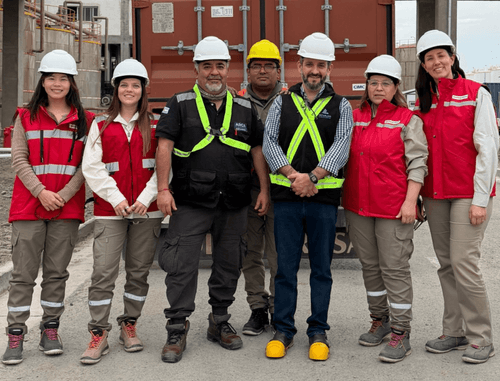
It is an ongoing and very clear conversation. If we already have a labour bottleneck, leaving 50% of the population outside the training map makes no sense. Talents are complementary. At Finning, we started the “Semillero” program, initially oriented toward Oil & Gas; in each edition at least 50% of participants are women, and many have already been hired.
On the other hand, we encountered cases of technicians who had completed their training and were waiting tables or working in fast-food restaurants. And we asked them, what happened? Didn’t you like the career? What is the reason? In many cases, the answer was “we haven’t had the opportunity.”
We have a clear view on this and are working proactively. We address it at different levels, even with boys and girls of school age. In this sense, we collaborate with an NGO that promotes early vocations, and from a very young age we run two workshops. The first is aimed at young people between twelve and thirteen years old, with the objective of keeping them in school and bringing them closer to the technical world in a simple and didactic way. The second is a more advanced vocational workshop, where we invite them to solve real industry problems—whether in mining or other sectors.
In both cases, the focus on attracting female talent is central, active and very clear.
Looking back a bit at 2025, what balance did the year leave and how does the future look?
It was a year of intense preparation. In San Juan, our Component Rebuild and Training Centre grew in activity and staffing, allowing us to project a stronger 2026–2027. We supported different clients at very early stages, from mine design and fleet profile to energy solutions. It has been a year of a lot of “ant-like” work to enable future growth.
Considering the entire sector’s potential, what do you see as the main challenge to reaching that level and truly being up to the task?
Everything is difficult. Aligning the right priorities jointly among authorities, clients and suppliers is difficult; when perspectives do not converge, time is lost and resources are wasted. However, there are opportunities that are significant.
It is difficult to collectively imagine the leap that is coming: Argentina still does not fully understand the magnitude of the change. If we do not work on that alignment, some links in the chain will be weak, and that can delay or put at risk projects that are strategic.
If the value chain were a football team, would you say a head coach is missing to organize the game?
Value chains align themselves around shared objectives. Around how we are able to understand what it means to support our clients’ needs and to do so from very early stages, something I believe is absolutely critical. And in that sense, we believe that creating a space for dialogue is essential.
A few weeks ago, in San Juan, we held a “Mining Day” where we brought together direct suppliers, suppliers of suppliers, mining companies and authorities. We are convinced that opening the game, generating virtuous circles of technology and knowledge transfer, is much more effective than seeking vertical coordination.
To close, what place does Argentina occupy in the company’s long-term strategy?
A central one. What is important to understand is that this evolution of mining activity in Argentina is step by step, and that stages are being completed, sending positive signals. We are committed to that future development from the standpoint of investment, commitment and human development, and therefore we feel part of that long-term vision.
We are present in the main industries of the country’s future: mining, energy and construction. We are betting on Argentina and the long term, and that is why our relationships are not transactional; they are long-term bonds where trust, stability and joint planning are key. If we do things the right way, Argentina’s future is bright, and we want to be enablers of that future.