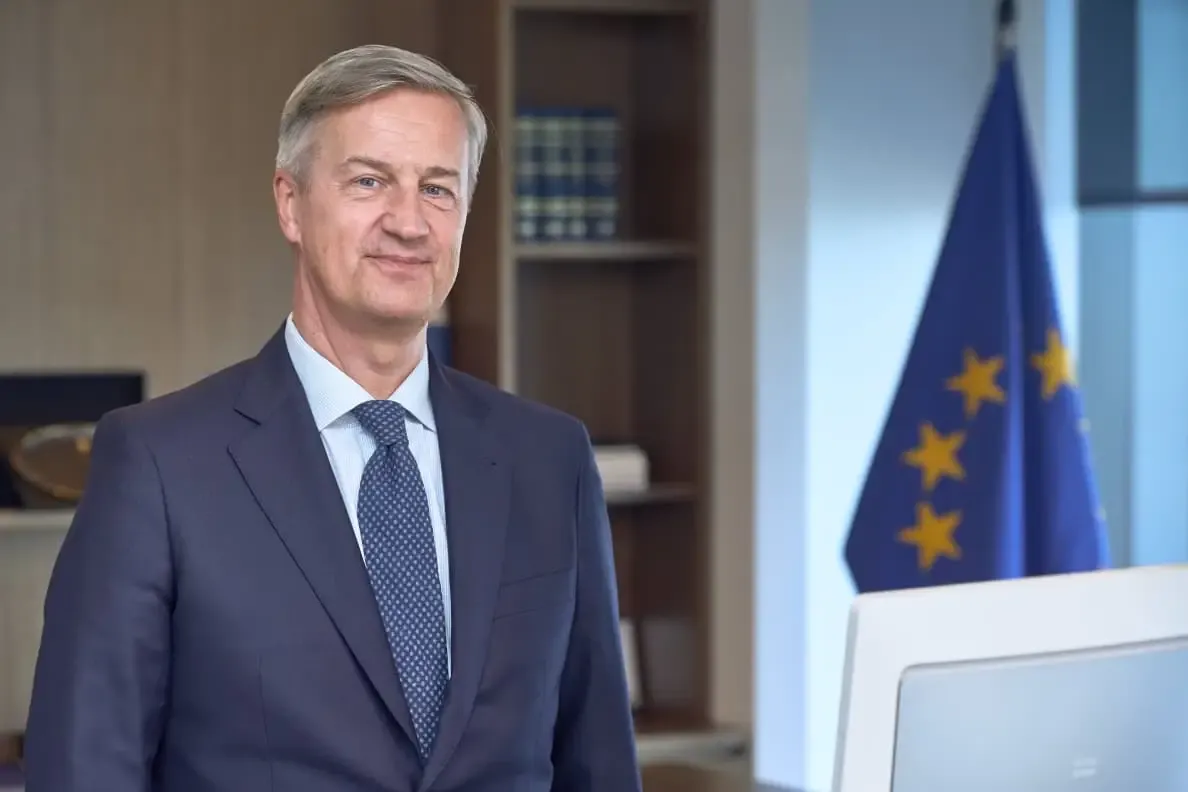
PANORAMA MINERO interviewed Mr. Erik Høeg, Ambassador of the European Union to the Argentine Republic. The diplomat expects a deepening of the commercial relationship based on Argentina’s critical minerals.
By Panorama Minero
In recent years, the European Union has shown growing interest in Argentina’s critical minerals. What can be expected in the coming years?
What we are seeing is not a temporary situation, but a structural trend. For Europe, critical minerals are essential for its economic, climate, and technological security. Without lithium, without copper, without these minerals, there is no energy transition, no batteries, no electric mobility, no semiconductors… in other words; there is no European industrial autonomy. And in such a competitive global context, where supply is concentrated in a few countries, the European Union needs to diversify its sources and build safe, sustainable supply chains.
Within this framework, Argentina stands out as a particularly reliable partner. It not only has enormous geological potential, but also solid institutions, democratic stability, and clear rules.
That is why, in the coming years, we can expect European interest not only to continue but to deepen. And above all, we will see more concrete cooperation tools and more investment opportunities. This includes working together on sustainable value chains, improving key mining infrastructure, and supporting provinces and companies in meeting high environmental standards, fostering good relations with communities, and ensuring safe working conditions.
In summary: the relationship between the European Union and Argentina will continue moving forward, and everything indicates it will grow increasingly strong.
After the signing of the MoU in July 2023, what has been achieved and what is still pending?
During this period, very concrete progress has been made. For example, we carried out several trade missions to Catamarca, Jujuy, Salta, and San Juan, which helped strengthen the direct connection between provinces, companies, and European financial institutions. We also accompanied a high-level delegation of Argentine authorities to Brussels during the European Union Raw Materials Week, where they were able to visit processing plants and learn first-hand how the European industrial ecosystem works.
In addition, we have been conducting continuous technical monitoring of the main lithium and copper projects through the CRM Facility: there, a team of specialists evaluates projects, identifies needs, and facilitates contact with European investors. And a very important point is that a new cooperation program worth 5 million euros has just been approved, which will begin in 2026 and will be entirely dedicated to the sustainable development of value chains in critical minerals in Argentina.
That said there is still much to be done. The needs are enormous, and several fronts remain open. If I had to mention one, I would say we need to continue strengthening investment attraction and, above all, advance in enabling infrastructure—energy, electricity transmission, railway transport—because without that foundation, projects cannot grow at the necessary pace.
Even so, we are optimistic: this is a priority issue, and we increasingly have more tools that allow Europe to provide sustainable solutions. A good example is the new Global Gateway Investment Hub launched in October 2025, a platform that helps mobilize European private investment through technical assistance, connections with financiers, and risk-mitigation instruments. All of this allows us to move forward more decisively toward long-term cooperation that benefits both partners.
Can we think about renewing/updating the current MoU in today’s new geopolitical context?
For now, a renewal has not been formally proposed. That said, the European Union is always open to dialogue: if the Argentine authorities believe it makes sense to update it and present a concrete proposal, we would evaluate it with full openness.
At the same time, it is worth remembering that the current MoU already provides a broad and solid framework. Its priorities—sustainability, capacity building, research and innovation, good governance, infrastructure—remain fully relevant and aligned with the European strategy on critical minerals.
In that sense, it is a flexible agreement, which still has plenty of room to continue deepening and delivering results without the immediate need for a formal update.
What does the European Union’s “360-degree approach” means, and how can it impact the financing of concrete projects, including infrastructure works?
When we speak of a “360-degree approach,” we mean that the European Union does not look only at the mining project itself, but at everything that surrounds it and makes it possible. That includes: the quality of governance, environmental management, local talent development, energy availability, electricity transmission, railway infrastructure, and relations with communities.
This broad approach has a direct impact on financing. Why? Because it allows many more instruments and actors to be mobilized: European development banks, technical cooperation, funds for enabling infrastructure, and even risk-mitigation tools to attract private capital.
In practice, a 360-degree approach reduces risks, improves project quality, and creates real conditions for investment—including infrastructure investment—to arrive, materialize, and remain over time.
In addition to the MoU, what relationship or engagement activities do you carry out with other actors in Argentina’s mining sector, both national and international, such as multilateral development agencies (IDB, CAF, World Bank)?
The European Union works with a truly broad ecosystem. In Argentina, we maintain ongoing dialogue with national authorities, mining provinces, business chambers, local communities, civil society organizations, and the academic sector. That diversity of actors is essential for having a comprehensive view of the sector.
At the European level, we coordinate very closely with the embassies and development agencies of the EU Member States. We do this under the Team Europe approach and, in particular, through a dedicated working group on critical minerals, where we align positions and priorities.
And internationally, collaboration with organizations such as the IDB, CAF, and the World Bank is very close, especially on sector governance, enabling infrastructure, and sustainability standards.
The goal of working this way is simple: to ensure coherence, avoid duplication, and above all, maximize the impact of all these initiatives for the benefit of the country.
What cooperation can be seen in academic and scientific fields regarding the mining industry?
Academic and scientific cooperation is one of the pillars of the MoU, and this is already reflected in concrete actions. For example, there are regional programs that fund and facilitate joint work between the geological services of the European Union and Latin America. Within this framework, SEGEMAR —as part of ASGMI— can benefit directly from technical exchanges, training, and shared research projects.
In addition, the new 5-million-euro cooperation program that will begin in 2026 will include specific activities in vocational training, research, and technological innovation. The idea is to promote stable links between European and Argentine institutions, and to ensure that this knowledge translates into a more modern, sustainable mining industry with greater added value.
Any final comments?
Yes, simply to emphasize that for the European Union, Argentina is a strategic partner in a sector that will define the global energy and industrial future.
Our approach is very clear: to strengthen sustainable value chains, promote responsible investment, generate added value in the country, and build long-term cooperation.
And along these lines, the EU is fully committed. We will continue supporting this process with vision, concrete tools, and financing, because we want this partnership to grow and benefit both sides.