After decades of infrastructure delays, National Route 7 is entering a new stage. The National Government confirmed the award of a 329.09-kilometre section of the corridor in Mendoza under a 20-year concession scheme, with four toll stations and projected investment of more than US$300 million.
By Panorama Minero
The works cover Mendoza’s main overland connection with Chile and a route that is already part of regional mining logistics. Lime produced in San Juan is transported through Cristo Redentor to Chilean mining operations, while the corridor is also among the alternatives that Argentine copper projects considering an export route to Pacific ports will need to assess.
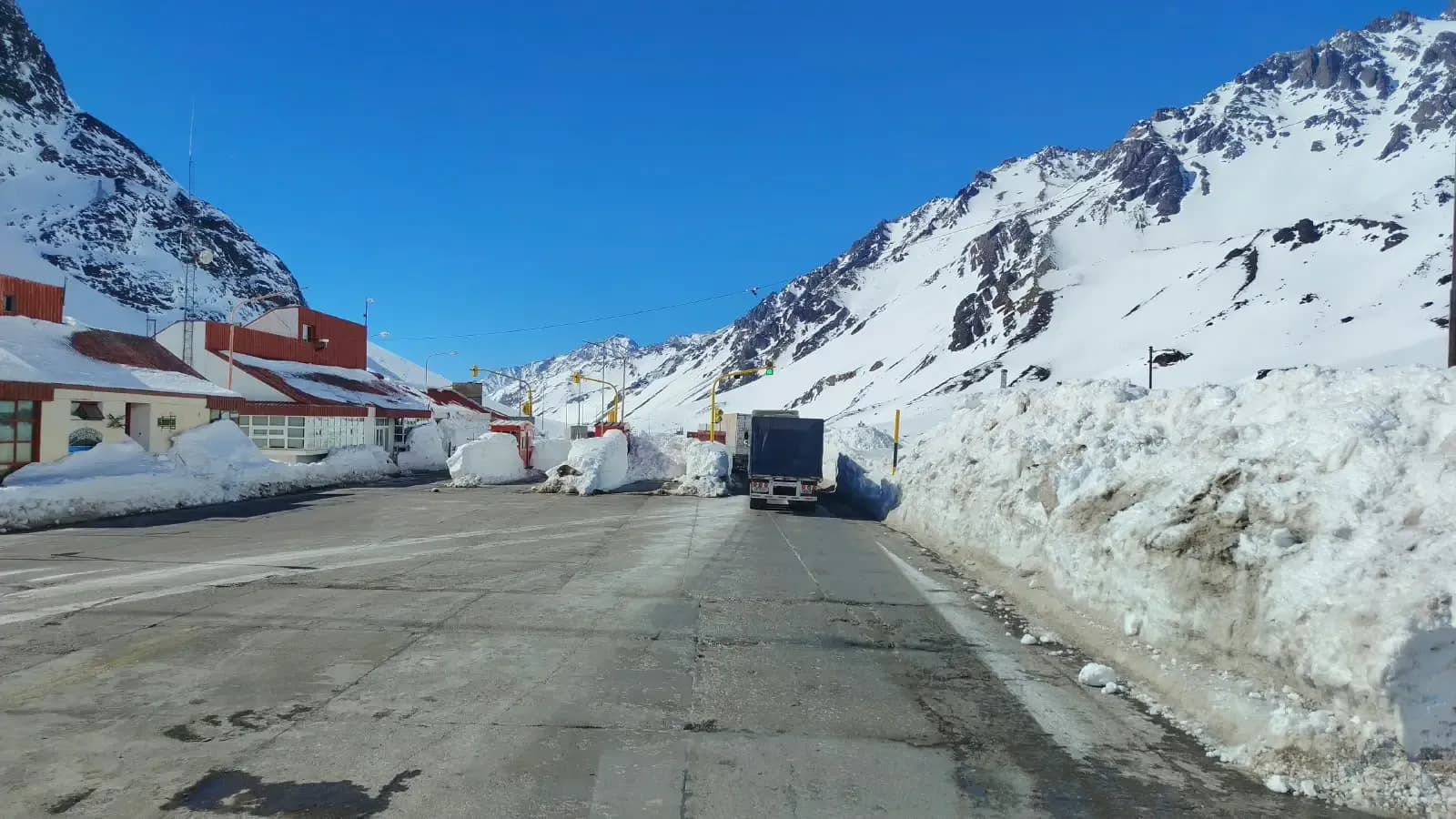
The concession also comes after a winter that once again exposed the limitations of the international connection. Cristo Redentor remained closed for 34 consecutive days, highlighting concerns over the reliability of infrastructure that will need to accommodate freight traffic that could increase over the coming years.
329 Kilometres, 20 Years and Four Toll Stations
The concession was awarded to the consortium formed by Laugero Construcciones S.A., Green S.A. and Corporación Del Sur S.A., and comprises two sections: 146.82 kilometres from the San Luis-Mendoza provincial border to the Palmira Bypass, and another 182.27 kilometres from the junction with National Route 40 to the Chilean border.
The new scheme provides for four toll stations along the corridor. The existing Desaguadero and Las Cuevas stations will remain, while two additional stations will be introduced at San Martín/Palmira and the access to Potrerillos.
The consortium’s bid included a toll rate of ARS 3,090.25 plus VAT per station, 22% below the maximum established in the tender specifications and more than 10% below the second-lowest financial bid. The scheme also incorporates an adjustment formula linked to cost trends and the route’s maintenance requirements.
The reported amount corresponds to the toll rate submitted as part of the bidding process and does not yet makes it possible to determine how much a heavy mining transport vehicle will actually pay to travel the entire corridor, as the available information does not detail the toll structure applicable to each vehicle category.
A modernization of the toll collection system is also planned. The proposal aims to progressively incorporate electronic payment mechanisms, automated license plate recognition and systems designed to reduce stops at toll stations, which are particularly relevant on a route with significant freight traffic.
US$300 Million and an Initial 24-Month Work Program
The consortium projects investment of more than US$300 million over the 20-year concession period, financed through a combination of equity, bank financing and revenues generated by tolls.
The program establishes an intensive initial stage during the first 24 months, with works targeting some of the corridor’s most critical sections.
Planned works include the reconstruction of deteriorated concrete slabs in the high mountains, structural work on the Uspallata Bridge, improvements to horizontal and vertical road signage, lighting at intersections and junctions, and the adaptation of Route 7 to connect with the Palmira-Agrelo Bypass.
This last project will allow part of the heavy traffic to be diverted toward the Potrerillos area without passing through the urban area of Greater Mendoza, integrating the new road infrastructure into the operation of the international corridor.
A Mining Route Even Before Copper
The relevance of these works to the mining industry does not depend on future copper production. Route 7 is already part of a mining supply chain between Argentina and Chile.
Lime produced in San Juan uses the Mendoza corridor to supply operations on the other side of the Andes. The most recent closure of Cristo Redentor provided a clear illustration of this movement: among the first trucks able to cross the pass after 34 days, many were carrying San Juan lime destined for Chilean mines. That cargo had remained waiting throughout the entire interruption.
This demonstrates that conditions on Route 7 already have an impact on an active mining supply chain. The new concession, maintenance and investment scheme will be implemented on a corridor that currently transports supplies to one of the world’s leading mining industries.
Another challenge could be added to this existing flow over the coming years.
Copper Is Also Beginning to Look Toward the Pacific
Argentina’s major copper projects will need to define their logistics chains before entering production. For Mendoza and part of San Juan’s Andean mining industry, the proximity of Chilean ports keeps Cristo Redentor among the potential alternatives.
Distance works in the corridor’s favor. Reliability remains one of the variables that projects will need to address before making a final decision.
The planned investments could address several of the shortcomings accumulated by Route 7: deteriorated road surfaces, maintenance, signage, bridges, lighting and the operation of certain critical points.
However, the overall reliability of Cristo Redentor also depends on variables that extend beyond a road concession.
The corridor crosses high-mountain areas exposed to snow, wind and avalanche risk. Apart from prolonged closures caused by weather conditions, much of the route has only one lane in each direction and limited capacity to maintain traffic flow in the event of accidents involving heavy vehicles.
Additional challenges include the capacity of border facilities, the accumulation of trucks during closures and the time required to restore normal traffic flows after each reopening.
The concession therefore opens a new stage for the 329 kilometres of Route 7 in Mendoza. Four toll stations, more than US$300 million in committed investment and an initial works program will be implemented on a corridor that accumulated infrastructure needs for decades.
The difference is that today the debate finds Cristo Redentor already performing a specific mining function through the movement of San Juan lime to Chile, while potentially facing additional future demand if part of Argentina’s copper production ultimately seeks an export route to the Pacific. The concession begins to address the route itself. The corridor’s ability to support a new scale of freight traffic will depend on how much it manages to resolve over the coming years.