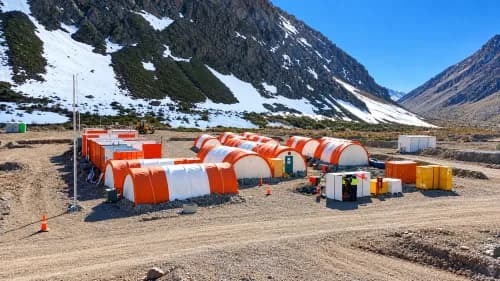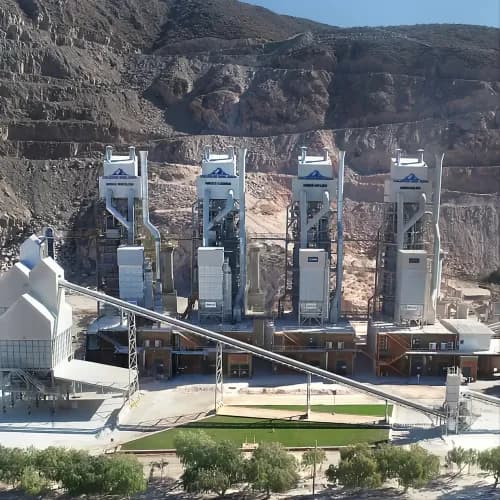
The Government of Salta and mining company Rio Tinto are strengthening a joint working agenda aimed at consolidating the Rincón Lithium project as a cornerstone of mining, productive, and territorial development in Northwestern Argentina (NOA).
By Panorama Minero
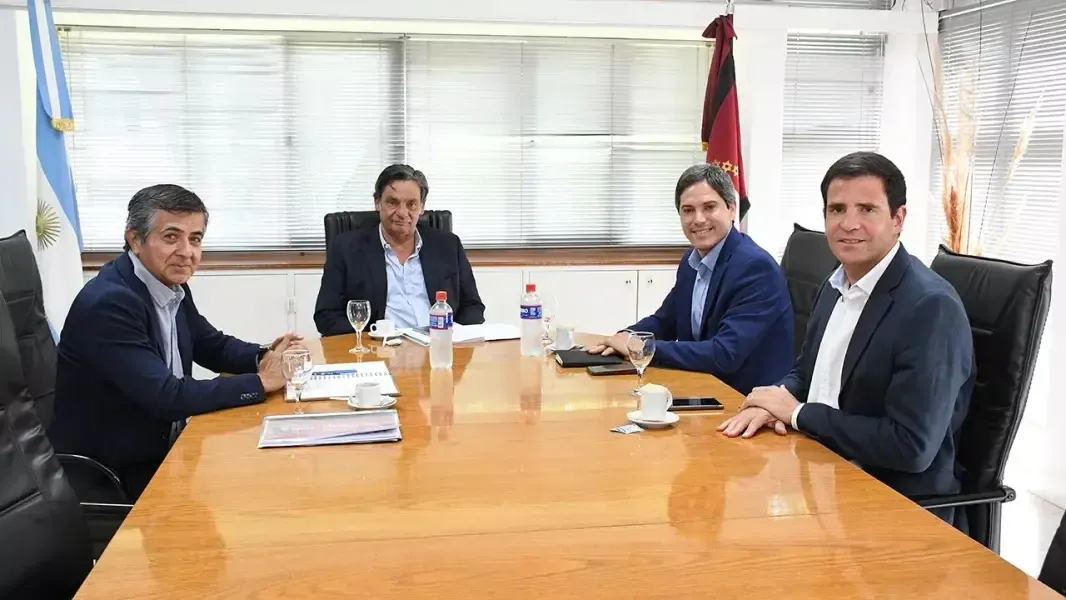
The meeting brought together Ignacio Lupión – Minister of Production and Mining of Salta –, Gustavo Carrizo – Secretary of Mining of Salta –, Ignacio Costa – General Manager of Rio Tinto Lithium Argentina –, and Carlos Carrillo – Head of External Affairs of the company.
The parties agreed on the importance of continuing to move forward with a framework that combines institutional predictability, large-scale private investment, and stringent environmental standards.
In this context, they reviewed the different stages of the project and the main milestones planned for 2026 and 2027, the year in which the company expects to reach a production capacity of 25,000 tonnes of battery-grade lithium, with the objective of achieving full production of 50,000 tonnes by 2028. The dialogue made it possible to address key aspects related to infrastructure, regional integration, and interprovincial coordination, in a region that occupies a strategic position in the supply of critical minerals for the global energy transition.
This was the first meeting held by Ignacio Lupión with mining company authorities since assuming office in December as the newly appointed Minister of Production and Mining, with the stated purpose of strengthening the agri-mining framework and “creating the conditions for private activity to invest, create, and produce more and better,” as the minister stated at his inauguration.
During the meeting, Lupión reaffirmed the Government’s comprehensive vision of mining policy, with a focus on local job creation, strengthening the productive fabric, and developing concrete opportunities for communities in the Puna region, under clear rules for investment and high environmental standards.
The Rincón Lithium project contemplates the construction of a battery-grade lithium carbonate plant with a capacity of between 50,000 and 53,000 tonnes per year, with the start of full production estimated for 2028 and a projected mine life of 40 years, providing long-term predictability for both the private sector and the producing provinces.
Rio Tinto with the Governors of the Lithium Triangle
Public–private coordination was also expressed at a high institutional level through the meeting held in December 2025 by the governors of Salta, Gustavo Sáenz; Catamarca, Raúl Jalil; and Jujuy, Carlos Sadir, with Rio Tinto’s global Board of Directors, marking the first institutional visit of the company’s top leadership to Argentina. The meeting confirmed progress on the Rincón Lithium project, which involves an investment of US$2.5 billion and was the first lithium initiative approved under the Large Investment Incentive Regime (RIGI) in mid-2025.
The roundtable included the participation of Dominic Barton, Chairman of the Board of Rio Tinto, and Jérôme Pécresse, CEO of Aluminium & Lithium, together with provincial authorities and regional executives. The exchange focused on investment conditions, the status of operations, and the potential of the NOA as a territorial platform for the production of critical minerals in an international scenario marked by the acceleration of demand for lithium for batteries and energy storage.