Panorama Minero toured an operation that produces 5% of the world’s copper and has transformed the development of Antofagasta.
By Panorama Minero
Minera Escondida is celebrating its first 35 years of production. Located in the heart of the Atacama Desert and operated by BHP, the mining complex is not only the world’s largest copper producer, but also a sophisticated industrial operation with a significant impact at both the local and international levels.
Autonomous haul trucks and drilling rigs, large-scale open pits, and facilities producing copper cathodes and concentrates are among the defining features of Minera Escondida. These are complemented by Puerto Coloso, the exclusive use of desalinated water, an operation employing thousands of workers, and an electricity supply sourced entirely from renewable energy.
Discovered in the early 1980s*, Minera Escondida is operated by BHP (57.5%), together with Rio Tinto (30%) and JECO (12.5%). It is not only Chile’s largest copper producer, but also the largest worldwide: with production of 1.26 Mt of copper, the operation accounts for 25% of Chile’s copper supply and 5% of global supply.
Logistics on a Massive Scale
A total of 30 daily flights connect Santiago and Antofagasta: the airport itself has become a symbol of the magnitude and scale of the mining industry, and of Minera Escondida in particular.
From Antofagasta to the mine, a distance of 170 km, the vastness of the Atacama Desert resembles a lunar landscape, with paved roads providing access to the mining complex in approximately three hours. In keeping with the scale of this infrastructure development, the continuous presence of power transmission infrastructure along the route is equally striking.
The Mining Operation, Step by Step
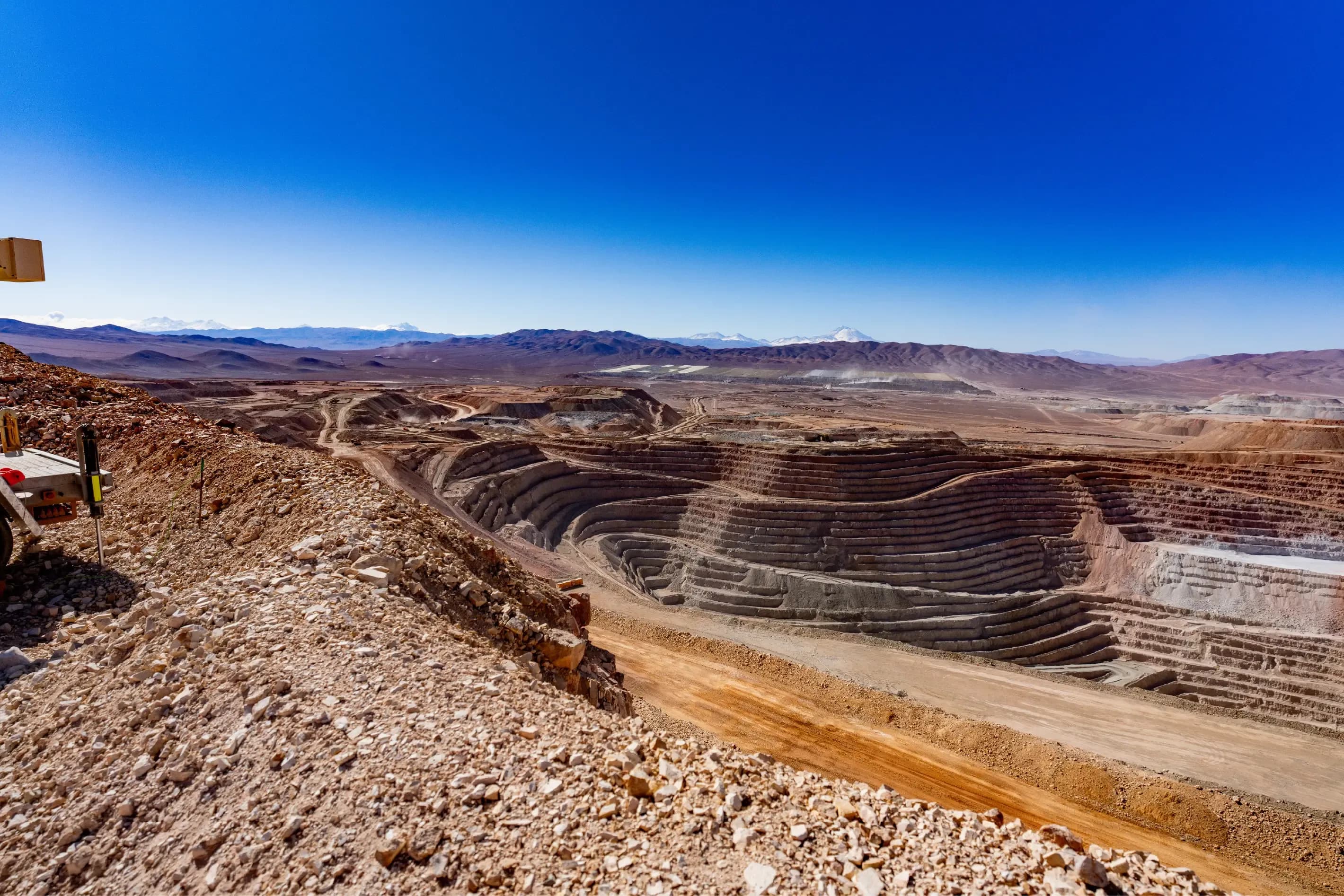
The scale of Minera Escondida is impressive: the operation comprises two open pits, with the main pit measuring 3.5 km long, approximately 2 km wide and 900 metres deep. Using a football analogy, Minera Escondida is the Maracanã of copper.
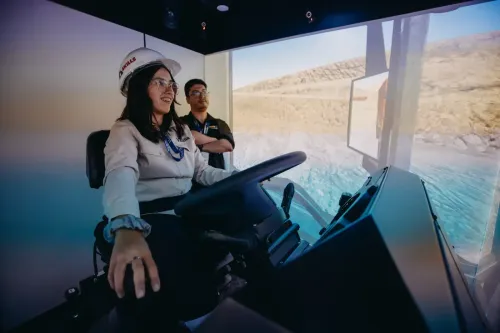
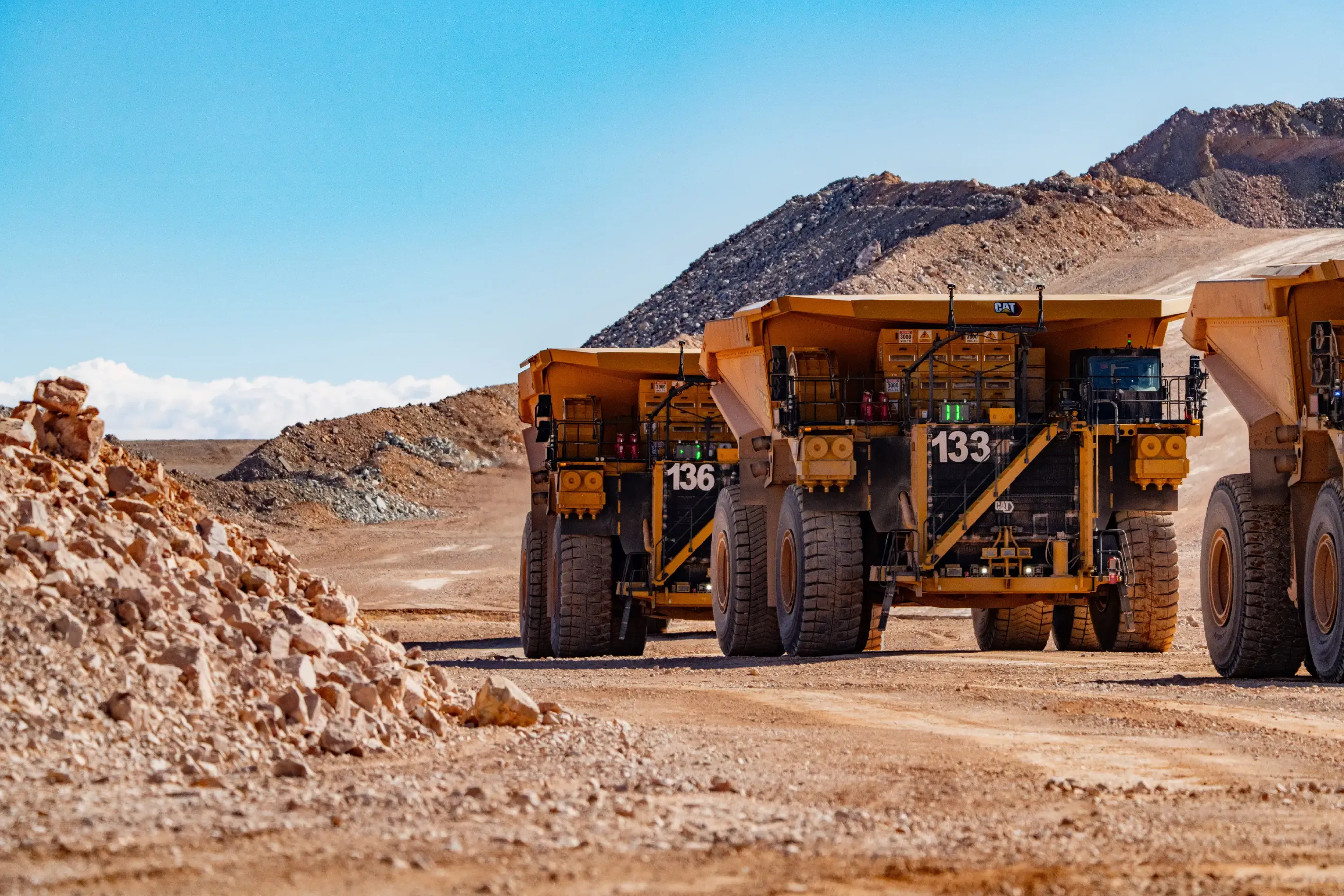
Mining operations include drilling—with 11 remotely operated drill rigs—blasting, haulage by truck—Escondida has more than 170 haul trucks, 33 of them autonomous—crushing, and subsequent metallurgical processing.
Minera Escondida's metallurgical flowsheet follows two different routes, corresponding to sulphide and oxide ores. In the case of sulphide ore, the material undergoes a concentration process at large-scale processing plants before being transported via a concentrate pipeline to Puerto Coloso, in Antofagasta.
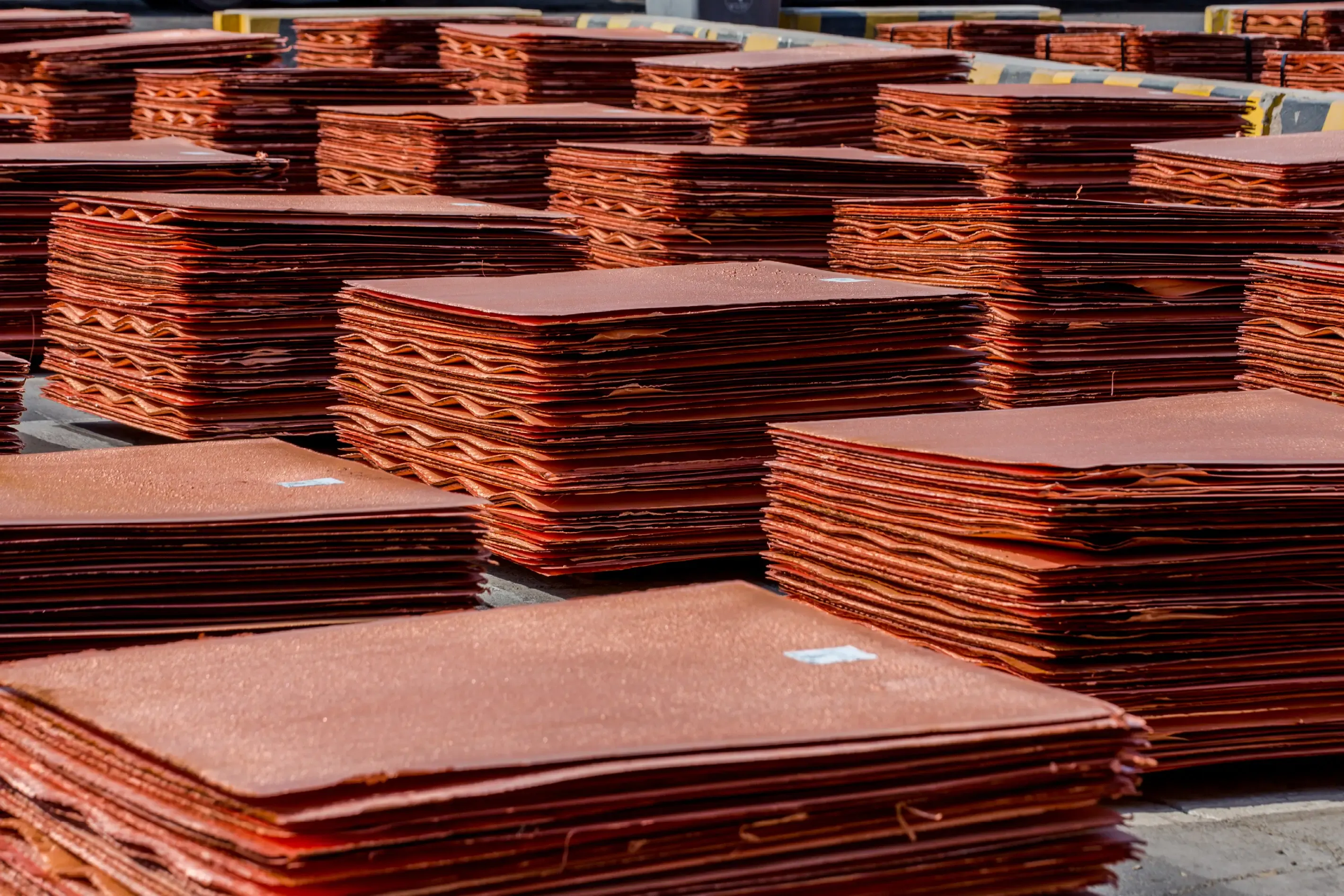
For oxide ores, a hydrometallurgical process is used, producing copper cathodes through leaching and electrowinning (EW).
Puerto Coloso and Desalinated Water
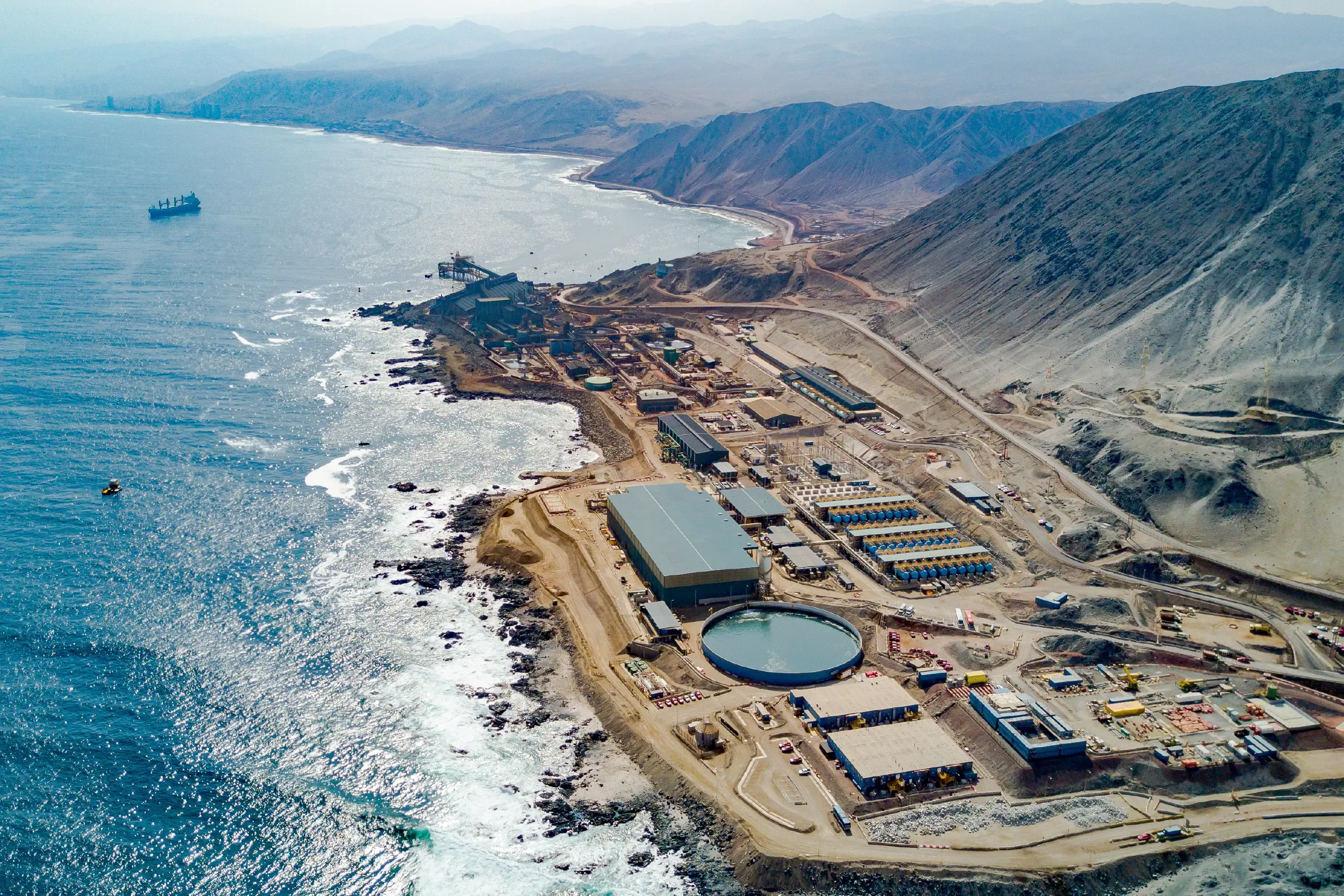
The Puerto Coloso facilities perform two critical functions. First, its two desalination plants eliminate the need to use freshwater in the production process. Desalinated water is pumped to the mine site over a distance of 170 km and to an elevation of more than 3,000 metres. The facilities have a combined capacity of 3,800 litres per second, supporting concentrate production. Desalination has enabled the operation to completely eliminate its reliance on continental aquifers for operational use.
Second, Puerto Coloso serves as the shipping terminal for the copper concentrate produced at Escondida, which is subsequently transported to smelters and refineries across the Asia-Pacific region.
Employment and Female Participation
Minera Escondida's workforce comprises 10,000 people. This includes more than 4,000 direct employees, together with approximately 6,000 contractor employees working for companies that provide goods and services to the operation.
Female participation at Minera Escondida is above mining industry averages, with women accounting for 45% of direct employees. More specifically, women hold 51% of leadership positions.
Supplier Development and Fiscal Impact
The scale of Minera Escondida's operations translates into approximately US$5 billion in purchases of goods and services. Of this total, 15%—US$700 million—is sourced exclusively from Chile's Antofagasta Region (Region II).
The mining complex managed by BHP generated more than US$4 billion in taxes and royalties for the calendar year ended June 30, 2025.
Next Steps
With the aim of maintaining the competitiveness of an operation that has already completed 35 years of production, Minera Escondida has outlined a long-term investment plan of approximately US$10 billion over the next decade.
The plan includes operational improvements across several areas, including optimization of concentrator plants and leaching processes, as well as new infrastructure aligned with the requirements of an operation that has a production horizon extending for several decades, supported by 26,000 Mt of mineral resources.
Antofagasta's Transformation and the San Juan Case
Before the construction and commissioning of Minera Escondida, Antofagasta was already a region with a long-established mining tradition. However, the scale ultimately achieved by the operation profoundly transformed Region II, driving economic and social development, infrastructure expansion and a significant increase in fiscal contributions.
Minera Escondida's presence helped consolidate Antofagasta as a world-class mining services hub.
What could happen in San Juan? Vicuña presents numerous parallels with Minera Escondida: production systems, equipment and various operational aspects allow comparisons to be drawn between the two developments. Beyond the differences in scale, Antofagasta's experience provides a concrete reference for the transformative potential of a major copper district in terms of infrastructure, suppliers, employment and regional development.
(*) “On March 14, 1981, Drill Hole 6 intersected 1.51% copper at a depth of 240 metres. The rotary drill bit had intersected Escondida’s main high-grade copper orebody. The deposit was three kilometres long and one kilometre wide, with ore grades averaging 2.5% copper and reaching as high as 5% in isolated areas.” (The Big Fella – The Rise and Rise of BHP Billiton, Peter Thompson & Robert Macklin, 2009)