Mendoza’s Ministry of Energy and Environment and CONICET signed a collaboration agreement to conduct research and experimental tests on minerals from the province, focusing on copper resources. The agreement covers four processes: grinding, gravity separation, flotation and physicochemical characterisation, and has an initial duration of two years.
By Panorama Minero
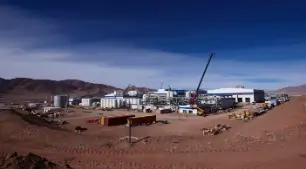
The work will be carried out at the Mining Directorate’s laboratory and pilot plant, which are currently being rebuilt and equipped, and will serve two purposes: training personnel for the industry and analysing samples collected by the Mining Environmental Police during inspections.
Implementation and Contributions from Each Party
The work will be undertaken by the Mining Directorate and the Laboratory of Extractive Metallurgy and Materials Synthesis (MesiMAT), which forms part of CONICET’s Interdisciplinary Institute of Basic Sciences (ICB). The ICB will act as CONICET’s implementing unit, while the Mining Directorate will perform this role on behalf of the Ministry. CONICET will provide specialised personnel, facilities and scientific equipment. The Ministry will provide physical space, equipment and supplies.
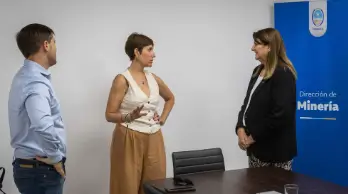
The Minister of Energy and Environment, Jimena Latorre, said that the agreement “formalises many years of work”. She explained that the Mining Directorate “has historically had its own laboratory and a pilot plant, which are now being brought up to standard, rebuilt and equipped”. The Director of CCT CONICET Mendoza, Andrea Pattini, indicated that the agreement formalises an existing relationship between the ICB and the Mining Directorate. She also noted that it is one of 176 collaborative arrangements established by the organisation with public entities in the province over the past two years.
The work plan organises these four processes into a sequence ranging from sample preparation to the evaluation of alternative concentration methods.
The Testing Programme
The first stage will focus on standardising operating protocols to ensure that tests are conducted under comparable conditions. This will be followed by grinding tests to assess the degree of mineral liberation and preliminary gravity separation tests using shaking tables. A dedicated line of work will focus on flotation to concentrate copper minerals. The work will include qualitative and quantitative analytical determinations to identify the mineral species present and characterise the samples, with the results compiled in joint technical reports.
The agreement also provides for exchanges between CONICET researchers and Mining Directorate professionals, the production of scientific publications and the development of new lines of research related to mining activities.
From Training to Regulatory Oversight
Latorre outlined two uses for the facilities. One is to train secondary school and tertiary education students preparing to work in the mining industry. The other is regulatory oversight, enabling “our technicians and mining police officers to validate and study the materials collected during each environmental inspection conducted by the Mining Environmental Police”.
This second application provides in-house analytical capabilities to a regulatory oversight structure that the province has been strengthening. The Mining Environmental Police (PAM), which operates under the Mining Directorate, is implementing a 250-hour specialist training programme for inspectors, including a dedicated mining module.
In the south of the province, the Malargüe branch inspected 155 lorries between January and September 2026, recording a 94% compliance rate with documentation and conditions required for mineral transport. PAM operations combine documentation checks, physical inspections of loads and digital record-keeping. Under the agreement, laboratory analysis of materials collected during inspections will complement these activities.
The Same Processes That Define the PSJ Processing Plant
Grinding and flotation are also central to mineral processing at PSJ Cobre Mendocino, the Uspallata project approved under the Large Investment Incentive Regime (RIGI), with a total investment of US$891 million.
The company signed a preliminary agreement with Metso for the supply of its processing plant, which includes crushing, grinding, flotation and tailings filtration. The plant will have a processing capacity of up to 42,000 tonnes of ore per day, with an already approved water requirement of 141 litres per second.
The Mining Directorate is restoring its metallurgical testing capabilities just as the province’s main copper project is defining the equipment for its concentrator.
The agreement with CONICET brings together three areas of provincial mining policy: the restoration of the Mining Directorate’s laboratory and pilot plant, the professional development of the Mining Environmental Police and technical training for the industry. It focuses on the same four processes that underpin copper processing, over a two-year period during which PSJ Cobre Mendocino will finalise the specifications of its processing plant.