The Government of Mendoza has allocated ARS 137 million to the Trust Fund for the Development of Malargüe and the Pata Mora Logistics and Services Hub and the Promotion of Mining Activity, with the funds earmarked for strengthening the Directorate of Mining. The measure was established by Decree 2162/26, signed by Governor Alfredo Cornejo and countersigned by Minister of Energy and Environment Jimena Latorre and Minister of Finance Víctor Fayad.
By Panorama Minero
The funds come from revenue collected under the Mineral Transport Permit system, established by Law 8434 and the Mining Procedures Code. This revenue is specifically earmarked for oversight and inspection of the sector, meaning that mining activities provide the resources the province uses to supervise them.
How the Funds Will Be Allocated
The decree establishes that the amount must be allocated exclusively to four areas:
-
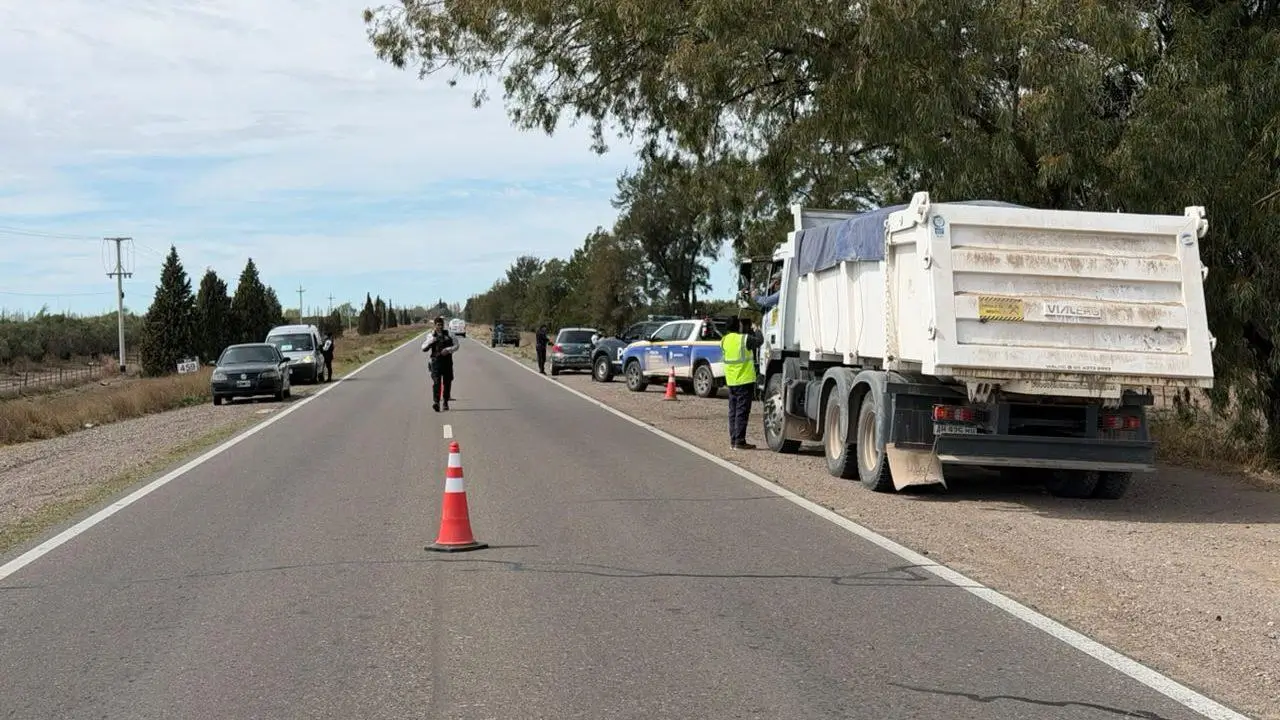
Oversight and inspection: Operations conducted by the Mining Environmental Police on roads and at processing plants.
-
Environmental traceability: Maintenance of digital systems used to monitor Environmental Impact Declarations (DIAs).
-
Equipment: Technical equipment, vehicles and supplies for inspectors throughout the province.
-
Sector modernisation: Digital self-service platforms and mandatory training programmes.
The first of these areas, inspections on roads and at processing plants, focuses on the same regulatory instrument that generates the revenue.
From the Quarrying Law to the New Mining Code
Law 8434, enacted in June 2012 to regulate the extraction of third-category quarry materials, classified the transportation of material without the corresponding transport permit as an offence.
The same legislation established a Special Mining Fund financed by fees collected from Mineral Transport Permits, a percentage of royalties and revenue from fines. The latter were earmarked exclusively for the purchase of inspection equipment.
The system took its current form under the Mining Procedures Code, enacted in June 2024 to replace the 1945 code, which regulates transport permits under Articles 191 to 199.
The permit is mandatory for the transportation and commercialisation of minerals and stone materials throughout the province. It applies to all participants in the value chain, including production, transportation, commercialisation and industrial processing.
The mining authority issues the permit at the request of the interested party for each mining right or project.
It must specify the mineral, origin, destination, producer, transport operator, vehicle and emergency contact details. It remains valid until the material is received at its destination or the declared means of transport changes.
The Code also provides for permits covering samples intended for scientific purposes, internal permits for movements within the same project that do not involve public roads, and recognition of permits issued by other jurisdictions for interprovincial transportation.
As part of the same reform, the provincial legislature amended Traffic Law 9024. Transporting minerals without the required permit became a very serious offence, allowing authorities to retain the driver's licence.
The Mining Environmental Police enforce the system through joint operations with the National Gendarmerie, Provincial and National Road Authorities, the National Road Safety Agency and Mendoza Police.
During these inspections, road authorities weigh trucks using mobile weighbridges to compare the tonnage declared on the permit with the actual weight.
An operation on National Route 7, involving the National Transport Regulation Commission (CNRT) and Rural Police, resulted in 20 infringement reports.
At processing sites, an inspection of 17 aggregate quarries in Greater Mendoza led to the suspension of activities at two facilities.
This system of fee collection and enforcement is now being implemented through a financial mechanism that the province already had in operation.
A Trust Fund with a Mining Mandate
The trust fund was established by Decree 2488/22 to promote the development of Malargüe and the Pata Mora logistics and services hub. Its First Addendum was approved by Decree 730/2025.
Its current name includes the promotion of mining activity.
The decree requires the contribution to be allocated to that purpose, to strengthening the mining authority and to fulfilling the objectives of the trust mandate.
The trustee is Mendoza Fiduciaria S.A.
The funding process operates as follows:
-
Revenue collected from transport permits enters the Provincial Treasury.
-
The General Treasury transfers the funds under the 2026 Budget.
-
The trust fund allocates the resources to the Directorate of Mining.
Although the trust fund bears the names of Malargüe and Pata Mora, the resources are intended to support inspections throughout the province.
This geographical scope reflects the expansion of Mendoza's mining portfolio across different regions.
Oversight of an Expanding Project Portfolio
In recent years, Mendoza has added new exploration areas subject to prior environmental assessment through the Malargüe Western Mining District (MDMO) and the Mendoza Northern Mining District, while also advancing the PSJ Cobre Mendocino project in Uspallata.
Each environmental approval establishes conditions that the relevant authority must monitor over time.
The digital systems used to monitor Environmental Impact Declarations and the additional inspection resources covered by the decree are intended to support this ongoing supervision.
The ARS 137 million contribution brings together three elements that previously operated separately:
-
A fee collection system that the 2024 Mining Code extended across the entire mining value chain.
-
A trust fund originally designed to promote development in the southern part of the province.
-
A mining authority responsible for ensuring that inspection and oversight capabilities keep pace with the growing portfolio of projects.