The research aims to restore degraded land and re-establish ecosystems using native flora.
By Panorama Minero
In the arid and semi-arid regions of San Juan, the legacy of historical mining activity presents significant environmental challenges. Faced with degraded land and soils affected by both metallic and non-metallic mining, an interdisciplinary team from the National Institute of Agricultural Technology (INTA) has developed a nature-based biotechnological strategy: phytoremediation using native species combined with the preparation of specially conditioned substrates.
Leading this initiative is Dr Gonzalo Roqueiro, who holds a PhD in Biological Sciences and serves as Research Area Coordinator at INTA San Juan. He leads and is a member of Renovaterra, INTA San Juan’s environmental management team.
This scientific group brings together six professionals and research fellows — including Pablo Monetta, Luis Bueno, Belén Heredia, Manuel Rodríguez, Marcelo López and Roqueiro himself — with backgrounds in biology, biochemistry and agricultural engineering.
For the past eight years, Renovaterra has been researching and implementing comprehensive solutions to transform environmental liabilities into functional, self-sustaining ecosystems.
The Challenge of Metallic Mining: The Marayes Plant Case
Environmental liabilities generated by metallic mining represent one of the most complex scenarios for remediation because of the presence of heavy metals and the extreme chemical degradation of soils.
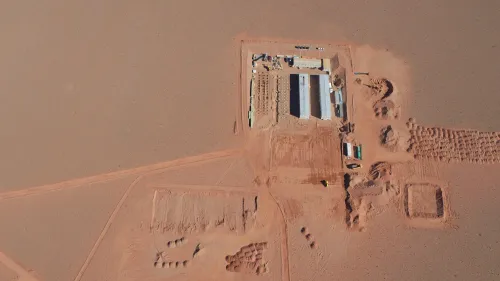
A representative example of the team’s work is the Marayes Plant, a former abandoned gold mining site.
The site is the focus of doctoral and postdoctoral research conducted by Belén Heredia under the supervision of Dr Gonzalo Roqueiro.
Studies at the Marayes Plant revealed extreme soil conditions: highly acidic soils with pH values ranging from 2.0 to 2.5, far removed from the optimal range for plant growth, which generally lies between 6.0 and 7.5 or 8.0.
Phytoremediation in these metal-contaminated environments serves two ecological purposes.
First, it seeks to restore vegetation cover as closely as possible to the conditions that existed before mining operations.
Second, it aims to achieve effective remediation of the substrate.
Certain native plants possess the physiological ability to absorb and accumulate heavy metals through their roots, progressively reducing the toxicity retained in the soil and stabilising the environment without the need to remove large volumes of earth.
The Advantages of Native Flora over Exotic Species
A fundamental principle of Renovaterra’s approach is the exclusive selection of plant species native to the area where restoration is to take place.
The team has catalogued the diversity and abundance of local flora to establish a seed bank representative of San Juan’s ecosystem.
The native species selected for remediation include:
- Algarrobo and Acacia: Woody species that provide structure and contribute to nitrogen fixation.
- Jarilla macho and Jarilla hembra (Larrea cuneifolia and Larrea divaricata): Characteristic shrubs of arid scrubland, with exceptional resistance to extreme conditions.
- Retamo and Chinisque: Shrubs adapted to nutrient-poor soils and severe water scarcity.
Regarding the temptation to use fast-growing exotic species — such as eucalyptus or certain varieties of non-native reeds, traditionally recognised for their ability to absorb water and contaminants — Dr Roqueiro emphasises the serious risks associated with this practice.
Introducing exotic species into fragile environments such as San Juan’s deserts can generate an undesirable secondary environmental impact.
In addition to disrupting the ecological balance, exotic plants require substantial water resources and continuous care to prevent them from drying out, making the project economically and operationally unsustainable over the long term.
By contrast, native flora has evolved over thousands of years under the region’s abiotic stresses, including prolonged droughts, intense solar radiation and extreme temperature fluctuations.
This natural adaptation gives native plants greater tolerance to withstand the chemical stress caused by mining contaminants while establishing themselves efficiently with lower resource requirements.
Non-Metallic Mining and the Innovation of “Smart Soils”
Addressing environmental liabilities associated with non-metallic mining requires a coordinated process that considers the physical and biological properties of the land as well as plant nutrition.
In this area, the INTA San Juan team has developed the concept of smart soils, or tailor-made substrates, through work led by researchers Pablo Moneta and Luis Bueno.
The procedure begins with a detailed physicochemical characterisation of the degraded soil to identify nutritional and structural deficiencies.
Using this information, the team designs a specific substrate incorporating local agro-industrial waste, promoting a circular economy model.
One key ingredient used in these formulations is alperujo, a by-product of olive oil production that is abundant in San Juan and, in many cases, presents a waste management problem for producers.
The conditioned substrate performs several functions in the receiving soil:
- Improving physical structure: It increases moisture retention and soil profile aeration.
- Providing balanced nutrients: It addresses deficiencies in nitrogen, phosphorus and organic matter, which are essential for vegetation.
- Restoring biological activity: Through composting trials, an active microbial matrix is incorporated to restore soil biological activity and facilitate symbiotic interactions between roots and microorganisms.
Field Logistics, Ecological Density and Self-Sustainability
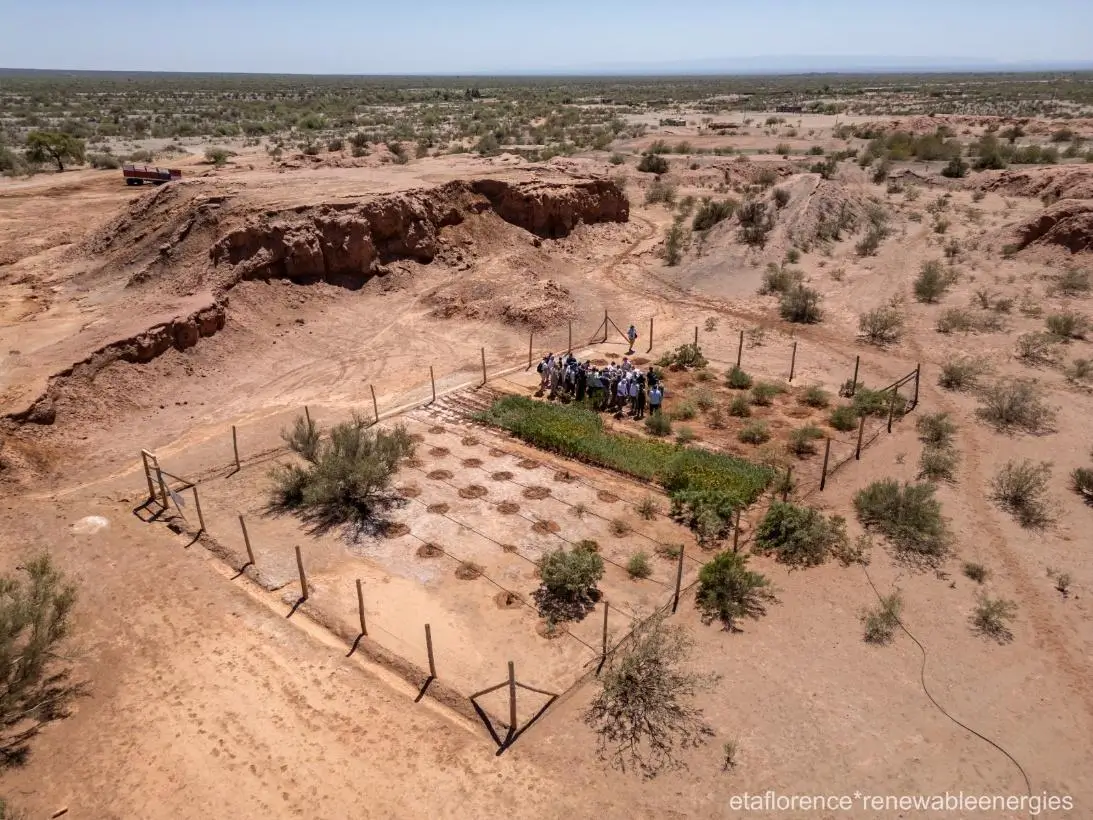
The practical implementation of INTA’s phytoremediation approach follows a rigorous logistical protocol divided into chronological phases:
- Nursery phase (3–4 months): Seeds collected from native flora are germinated and grown in nurseries under controlled conditions for three to four months, until the seedlings are sufficiently established for transplantation.
- Soil conditioning: While the seedlings are being raised, the smart substrate is incorporated into the degraded land to prepare the planting bed.
- Temporary irrigation system (first two years): Once the seedlings have been transplanted, an efficient irrigation system, using hoses and water reservoirs, is installed to provide minimal supplementary watering. This support is maintained during the first two years to ensure root establishment and initial plant survival.
- Irrigation removal and natural succession: After 24 months, the irrigation system is completely removed. From that point onwards, the native flora sustains its own growth, allowing the ecosystem to continue its natural process of revegetation and ecological succession.
The Renovaterra team also places particular emphasis on studying ecological density, or the carrying capacity of the environment.
Before planting, reference areas or neighbouring native vegetation are analysed to determine the maximum number of individual plants that the ecosystem can support per unit of area — for example, establishing a projected limit of 10 plants per 20 square metres.
This approach prevents excessive vegetation density and ensures that the soil’s water and nutrient resources are sufficient to support the ecosystem’s long-term survival.