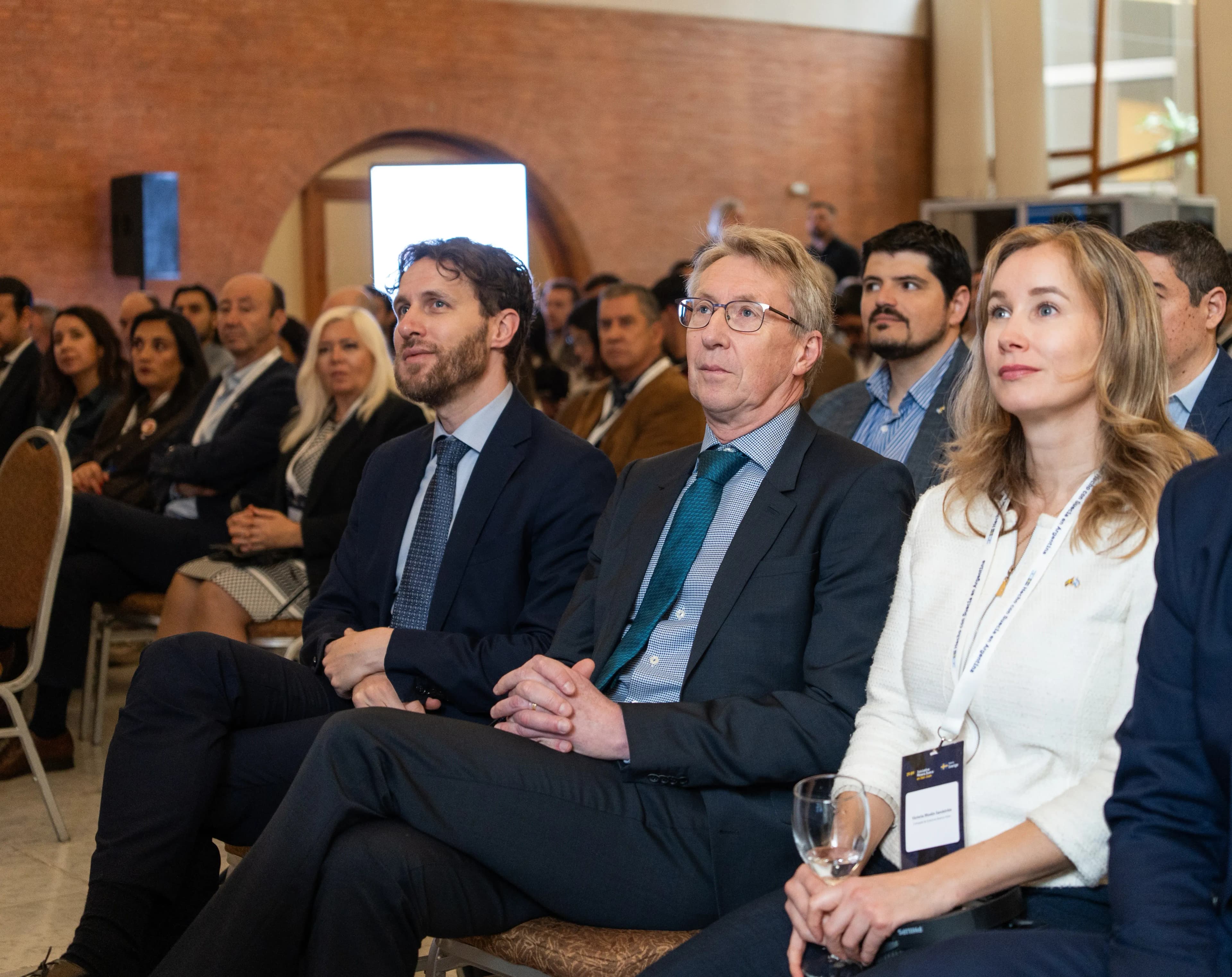
Torsten Ericsson, Sweden’s Ambassador to Argentina, discussed opportunities for Swedish companies and the contribution of technology, training and mining expertise.
By Panorama Minero
How important is San Juan currently for Sweden in terms of mining-related business and cooperation?
This is the fourth time we have held the seminar within the framework of the Swedish Mining Initiative. For me, this is my third visit to San Juan and the second with a business delegation, but it is the first time we have had such a large delegation, which also includes representatives from Swedish public agencies involved in promotion, financing, cooperation and research.
This is no coincidence. There is strong interest in mining development in Argentina, and I believe San Juan occupies a central position, with several large-scale investments and other long-standing projects that are embarking on new stages of investment. Sweden is a mining country, and we have much to share in terms of experience, the integration of social and environmental aspects, sustainability and cutting-edge technologies, which are currently used both in Swedish mines and in major mining projects around the world.
To what extent can the experience developed by the Swedish mining industry, for example in water management, be applied in Argentina?
I believe it can be transferred, but not directly.
I do not believe that a model from a distant country can simply be copied and applied in another without adaptation. However, we share some challenges. Mining in Sweden, as here, takes place under demanding climatic conditions, in our case mainly because of the cold.
Other aspects are different. Here there is water scarcity, whereas that is not the situation in Sweden’s main mining regions. However, there are other factors in common. For example, mining regions are often located far from major cities, which creates challenges in attracting and training workers and professionals.
In addition, mines are large-scale operations that not only create jobs, but also require electricity, telecommunications, water and services for workers and their families, such as schools. In this sense, mining requires the support of society and, at the same time, can generate benefits for society.
I believe that this perspective has been incorporated into mining development in Sweden, and it is an experience that we can share.
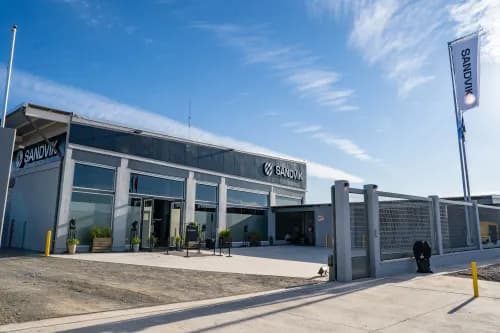
Companies such as Epiroc, ABB and Sandvik reflect the level of technological development achieved by Sweden. What opportunities do you see for Swedish companies as mining grows in the future?
I am convinced that mining will grow across much of the world as a consequence of the needs associated with the energy transition and the further development of artificial intelligence. We will need greater connectivity, which implies greater demand for copper, and more batteries, which require lithium.
We are also seeing greater demand for gold in the current context of instability surrounding the dollar.
I believe this trend will continue and that Argentina has greater potential to increase its mining production than many other countries.
How important are training and human capital as automation and new technologies advance in mining?
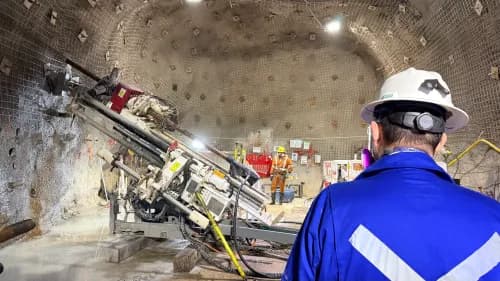
They are very important. Electrification and automation contribute to this transformation and offer major advantages, particularly in underground mining. In Sweden, there are already mines where virtually no people work in underground areas. When everything is operating properly, workers do not need to remain inside the mine, but can operate from surface facilities or remote locations using computers and control systems.
Of course, if a vehicle inside the mine develops a problem, personnel need to enter to carry out maintenance work. But in this sense, mining work is changing in a positive way because it has traditionally involved highly demanding and hazardous manual tasks. I believe this transformation also broadens mining’s ability to attract more people.