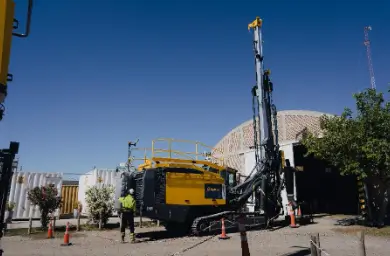
Jaguar Uranium plans to undertake its first diamond drilling campaign at Huemul, in southern Mendoza, comprising 3,000 metres across 15 holes between September and December 2027. This will mark the beginning of a phased 20,000-metre drilling programme, with a total investment of US$13.73 million, culminating in a prefeasibility study scheduled for May 2030.
By Panorama Minero
An intermediate milestone will be the publication of a Mineral Resource Report under the US Securities and Exchange Commission's (SEC) S-K 1300 standard in April 2029. Ahead of the first drill hole, the 2026/2027 season will focus on surface geology, radiometric surveys and geophysics, which will be used to build the three-dimensional model that will define drilling targets.
The schedule places the first drilling campaign almost a year later than the company had anticipated in September, when it indicated that drilling would take place between late 2026 and the first half of 2027. Work this summer will be limited to activities that do not involve ground disturbance.
Radiometric Surveys and Geophysics for a Polymetallic Target
Until April 2027, a six-person team will conduct geological mapping supported by satellite imagery. The team will also collect approximately 1,000 rock and soil samples manually and carry out prospecting using two portable scintillometers, with a budget of US$401,580.
Until 20 December, a drone equipped with a gamma-ray spectrometer will fly at low altitude along predefined survey lines to delineate radiometric anomalies. Between January and March 2027, magnetometry and induced polarisation (IP) surveys will be added, involving eight people, together with a structural survey conducted by two consultants.
The combination of methods reflects the nature of the mineralised system. Radiometric surveys target uranium, while IP detects disseminated sulphides, an indicator of copper mineralisation. These two datasets, together with structural information, will feed into the project's first 3D geological model.
Logistics will be based at an operational facility in the city of Malargüe, with two vehicles using the existing road and track network, satellite communications and access agreements with surface landowners.
The season will not involve constructing roads or drilling platforms, or undertaking drilling. Field activities will be limited to the installation of IP electrodes, which are inserted at shallow depths and removed once each survey line has been completed.
What Surface Exploration Revealed
Previous sampling involved 200 rock and channel samples across the Huemul–Agua Botada district, which covers more than 27,000 hectares.
Final results returned values of up to 8.54% copper, 2.27% uranium, 708 g/t silver and 1.27% vanadium. These are selective samples collected from outcrops showing visible mineralisation. They are useful for identifying targets but do not represent average grades or constitute a resource estimate.
For drilling design, the most significant finding is a four-kilometre copper-bearing trend at surface between the Uryco and Rosa sectors. The 2027 campaign will seek to establish whether this continuity is associated with uranium and how the mineralisation behaves at depth.
Historical production provides a reference point. Huemul was Argentina's first uranium-producing mine, an underground operation run by the National Atomic Energy Commission (CNEA) between 1955 and 1975.
Over those 20 years, approximately 130,000 tonnes of ore were processed at the Malargüe plant, with historical head grades of 0.21% uranium, 2% copper and 0.11% vanadium.
The operation focused on uranium for the country's nuclear programme. Copper and vanadium are the additional metals Jaguar intends to incorporate into its evaluation.
Three Stages Leading to Prefeasibility
Between July and September 2027, the company will select drilling targets and determine the locations of drilling platforms and access routes, avoiding wetlands, watercourses, springs and sites of archaeological significance.
The first campaign, comprising 3,000 metres of core drilling, has two objectives: confirming known mineralisation at depth and testing new targets. It will involve 20 people and cost US$1.65 million, within an initial stage budget of US$2.54 million.
The second stage will depend on those results. It prevents 7,000 metres of drilling between May and November 2028, with a budget of US$3.85 million, two rounds of metallurgical testing to assess recoveries, and an initial resource estimate to be incorporated into the April 2029 S-K 1300 report.
The third stage increases drilling to 10,000 metres between May and November 2029, with a budget of US$5.5 million, leading to a prefeasibility study to be prepared between November 2029 and May 2030.
The programme totals US$12.48 million before contingencies. Including a 10% contingency allowance, the overall budget reaches US$13.73 million.
Each stage depends on the results of the preceding one, and the dates for the second and third stages are indicative.
As an indication of the programme's scale, the company reported cash holdings of approximately US$19 million in September and expected to allocate around 75% of that amount to fieldwork in Argentina and Colombia.
S-K 1300 is the SEC's disclosure framework for mining properties. By adopting it, Jaguar will report Huemul under US market standards from its first resource estimate.
Environmental Requirements Before Drilling
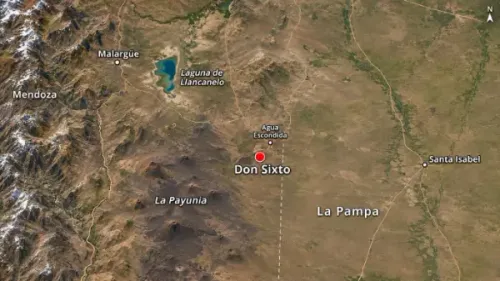
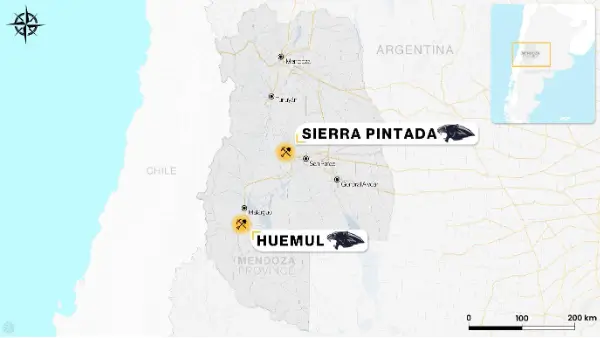
Huemul is located in the Agua Botada area, at elevations of between 1,700 and 2,000 metres above sea level, approximately 50 kilometres south of the city of Malargüe, with access via National Route 40. It forms part of the Malargüe Western Mining District (MDMO).
Baseline studies ruled out the presence of glaciers, periglacial landforms and permafrost, and found no overlap with protected areas. Radon monitoring conducted after remediation of the historic mine recorded background levels consistent with the local geology.
Most regulatory requirements relate to water. At the time of the survey, only two of the seven planned surface-water sampling points had flowing water.
The area has no wells or previous hydrogeological records, and the local population obtains water from streams and springs.
The Mining Environmental Authority assessed the baseline update as partially compliant and requested four items: hydrogeological characterisation, identification of wetlands and their management guidelines, complete analytical water reports, and evidence that air-quality measurements are representative.
The Mining Environmental Police described the contingency plan as "complete, verifiable and operational" and requested that it be updated at each stage.
Jaguar has committed to submitting the hydrogeological study, wetland survey and updated contingency plan before drilling begins in 2027.
This means that the surface geological campaign and water studies must be conducted simultaneously during the same field season.
A Historic District Assessed Under Modern Standards
The Huemul project schedule includes the development of a three-dimensional (3D) model using radiometric and induced polarisation (IP) surveys during the summer, together with the completion of water studies before September 2027.
An initial 3,000-metre drilling campaign is then planned to verify at depth the results obtained from surface exploration and historical mining records from the National Atomic Energy Commission (CNEA).
The programme also includes a broader drilling phase totalling 20,000 metres which, subject to favourable results, would enable the company to advance towards reporting mineral resources under SEC standards in 2029 and preparing a prefeasibility study in 2030.
Copper represents a central component of the mineralised system.