Jaguar Uranium completed an initial program of 200 rock samples at the Huemul project in Malargüe, Mendoza, as part of a campaign aimed at validating and expanding historical information on surface uranium, copper, and vanadium mineralization. The company also reported the identification of a potential 4-kilometer copper trend in the Uryco area while awaiting laboratory results that will determine the next stages of exploration.
By Panorama Minero
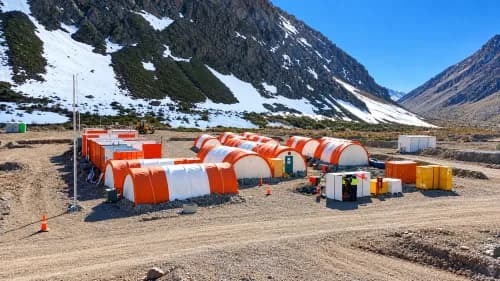
The field campaign was conducted over a two-week period at the Huemul project, a land package covering more than 27,000 hectares in the department of Malargüe. According to the company, the work included rock sampling across several priority targets within the district, mapping of mineralized outcrops, and evaluation of historical areas associated with former mining operations.
The company stated that preliminary field observations are generally consistent with historical records from the project, which reported average grades of approximately 0.21% uranium, 2.0% copper, and 0.11% vanadium. However, Jaguar emphasized that these historical figures have not yet been verified under current reporting standards and remain subject to validation through laboratory analysis.
One of the highlights of the program was the identification of visible uranium and copper mineralization in several outcrops near the former Huemul mine, as well as sampling of historical waste dumps that, according to visual inspections and previous records, contain uranium, copper, and vanadium mineralization.
The company stressed that no conclusions can yet be drawn regarding continuity, grade, or economic potential until assay results are received and further technical analysis is completed.
Uryco and the Identification of a Potential Copper Trend
As part of the program, Jaguar Uranium also advanced work in the Uryco area, located in the southern sector of the project.
The company reported that strike-extension sampling identified a potential copper mineralization trend approximately four kilometers long at surface.
According to Jaguar, field observations are consistent with the scale previously suggested by historical work and support the concept of a more extensive mineralized system within the district.
The program remains at an early exploration stage and has not yet included drilling activities. Current efforts are focused on surface geochemical validation and the definition of future exploration targets.
A District with a History of Production
The Huemul project is centered on what was Argentina’s first uranium-producing mine. Operations began in 1955 and remained active until 1975 under the management of the National Atomic Energy Commission (CNEA).
Historical records cited by the company indicate that approximately 130,000 tonnes of ore were processed at the Malargüe plant during that period.
The district hosts sandstone-hosted uranium, copper, and vanadium mineralization and is considered by the company to be significantly underexplored using modern exploration methods.
In parallel with the recently completed sampling program, Jaguar Uranium has already initiated a broader exploration strategy for Huemul, structured in phases and spanning a twelve-month technical horizon.
The plan includes an estimated investment of US$1.1 million and contemplates prospecting, geophysical surveys, detailed geological mapping, geochemical sampling, and airborne radiometric surveys using drones equipped with gamma spectrometric sensors designed to detect uranium, potassium, and thorium anomalies.
The technical plan also includes the integration of all data into three-dimensional geological models for target generation and a future diamond drilling campaign of approximately 2,000 meters distributed across an initial ten drill holes, along with trenching activities and QA/QC protocols for quality control.
Advancement toward more intensive exploration stages, including drilling, remains subject to compliance with additional environmental and technical requirements established under the Environmental Impact Declaration (DIA), including updates to the Environmental Baseline Study, operational details, and observations related to contingencies and road access development.
Critical Minerals, Financing, and Corporate Strategy
The advancement of Huemul is also linked to the emerging international landscape surrounding critical minerals.
In its statement, the company connected the project to the framework agreement signed between the United States and Argentina to secure strategic mineral supply chains, as well as the cooperation agreement signed with Mendoza’s Ministry of Energy and Environment in March 2026.
According to Jaguar Uranium, Huemul’s historical production profile could make it eligible for future international financing initiatives focused on critical minerals, including programs supported by EXIM Bank and the International Development Finance Corporation (DFC), although these remain subject to evaluation processes.
The project hosts uranium, copper, and vanadium within the same district—three minerals considered strategic for both the energy transition and industrial and nuclear supply chains.
Behind the exploration program is also a broader corporate strategy focused on financing early-stage exploration through international capital markets.
Jaguar Uranium debuted on the NYSE American in February 2026 through a transaction designed to raise approximately US$25 million to accelerate geological campaigns, technical studies, and data generation on historical uranium assets across South America.
The structure included the issuance of approximately 6.25 million Class A shares, together with warrants and other financial instruments, following a model commonly used by junior mining companies focused on revaluing historical assets through exploration and expanded geological knowledge.
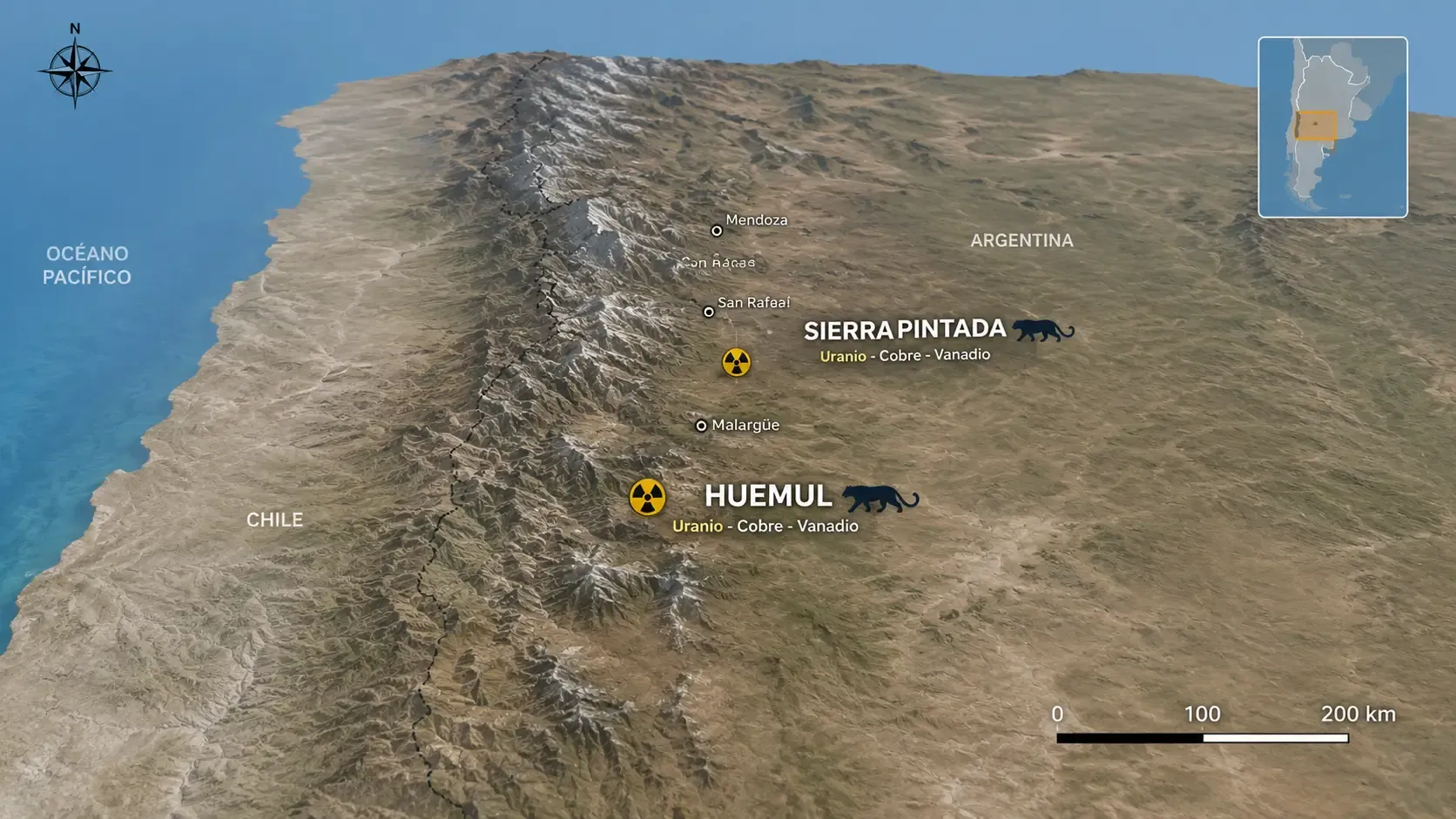
Within this strategy, Mendoza plays a central role. In addition to Huemul, Jaguar is also targeting Sierra Pintada, the country’s last uranium-producing district, as it seeks to position itself in areas with a history of production, existing infrastructure, and a long-standing connection to Argentina’s nuclear industry.
While analytical results are still pending, the initial campaign at Huemul allowed Jaguar Uranium to complete a first surface validation program on one of Mendoza’s historic uranium districts. The identification of new mineralized areas and a potential four-kilometer copper trend now begins to define the project’s next technical step: transforming preliminary observations into verifiable geological information.