Environmental approval for the construction of the access road marks a technical milestone for the anchor project of MDMO I, but leaves open the question of what the state-linked corporation will do once the work is completed.
By Panorama Minero
In the Malargüe Western Mining District I (MDMO I), on-the-ground activity is beginning to show clear differences among the projects included in the first phase of the provincial scheme. For now, only one project is expected to reach the drilling stage: El Perdido, operated by the Canadian company Kobrea. At the same time, however, another key development is moving forward—one that plays a different but strategic role: El Seguro, the copper project that served as the district’s anchor and is now owned by Impulsa Mendoza.
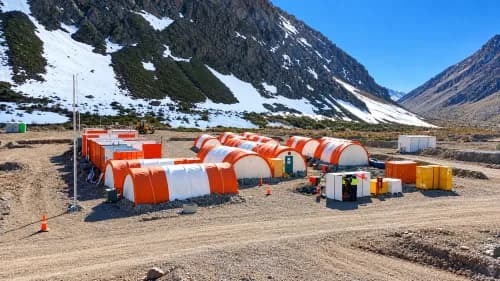
The Mining Environmental Authority has recently approved the start of construction of the access road to El Seguro, a central piece of productive infrastructure aimed at ensuring connectivity, logistics, and oversight in an area that until now has lacked adequate road access. This is no minor step: the road is a basic prerequisite for any further exploration activity and a structural component of the district’s original design.
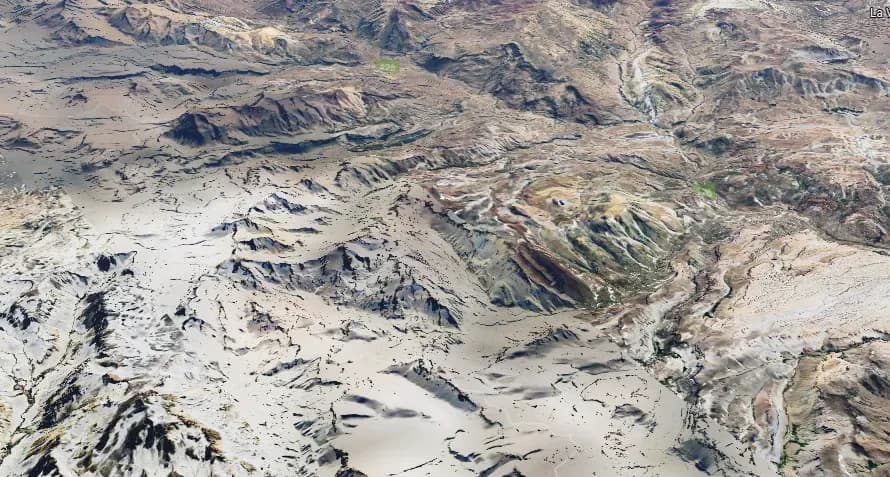
The El Seguro project falls within a copper porphyry and associated metalliferous structures exploration scheme, located in a high-mountain sector of the Malargüe department. From a geological standpoint, the area is particularly significant because it is crossed by two major metallogenic belts: the Jurassic Magmatic Arc and the Miocene–Pliocene Magmatic Arc. The latter is considered world-class and represents a direct continuation of the belt that hosts deposits such as El Teniente and Los Bronces in Chile.
Within this context, exploration efforts are aimed at improving the technical understanding of the mineral system, with indications of magmatic pulses linked to copper–gold mineralization, iron and copper skarns, and polymetallic veins.
From a territorial and operational perspective, El Seguro is located in the Andes mountain range, approximately 30 kilometers northwest of Las Loicas. Current access is via Provincial Route 226 to Puente Amarillo, from where an additional 10 kilometers must be traveled westward on foot or by mule due to the lack of tracks suitable for 4x4 vehicles.
The project encompasses three mining properties—Fausto, Gitana, and Yeso—and is developed in an area with no prior infrastructure, which explains why road construction is considered the fundamental condition for any subsequent direct exploration work.
An anchor project since the origin of MDMO I
El Seguro is not just another project within the district’s portfolio. It was acquired by Impulsa Mendoza from the Mendoza-based company Agaucu even before the Malargüe Western Mining District I was publicly announced, although it was already well advanced in the design phase within the state-owned company.
In this sense, El Seguro was conceived from the outset as an institutional and technical reference point to help organize mining development in the area.
It is a copper exploration project, a mineral considered strategic worldwide due to its central role in the energy transition and electrification. Its early incorporation into Impulsa Mendoza’s framework explains why it is now progressing under a different logic than the privately operated projects within the district.
The road as a prerequisite
The approved project includes a total alignment of 26 kilometers, comprising the refurbishment of the access to Puesto Alaniz—part of which has already been completed—and the construction of 20.6 kilometers of new road. This infrastructure will enable safe access to the project area and ensure minimum conditions for future work.
Within this framework, the construction of a bridge over the Pachico stream stands out as one of the key technical stages of the route, as it will ensure corridor passability and prevent operational interruptions. Nevertheless, sources close to the project acknowledge that execution sequencing and timelines will need to be adjusted as construction progresses.
The initiative is part of the Productive Roads program promoted by the Government of Mendoza through an agreement between Impulsa Mendoza and the Provincial Directorate of Roads. The comprehensive plan envisions intervention over a total of 460 kilometers in the southern part of the province, combining maintenance of existing roads and new alignments, with the aim of supporting productive development and strengthening the State’s presence in areas with low connectivity.
A contrast with El Perdido
While El Perdido is on track to become the first project to carry out drilling within MDMO I—with an estimated investment of US$5 million for a campaign that combines road construction and drilling—El Seguro is, for now, advancing solely in terms of infrastructure.
This difference is not coincidental. Although Impulsa Mendoza is incorporated as a joint-stock company, it is a state-owned enterprise that responds to the administration in office and follows a different institutional logic. Road construction appears as a necessary and consistent step aligned with its territorial planning role, but it leaves a key question unanswered: what will happen to the project once this stage is completed?
An open future and several possible scenarios
Once the road is built, the logical next step from a technical standpoint would be exploratory drilling. However, this involves a significant investment that would be difficult for a state-owned company to undertake on its own, particularly in a context of budgetary constraints and multiple management priorities.
Within this framework, several possible scenarios are being discussed in the sector for El Seguro: seeking a private partner to take on exploration, establishing a public–private partnership, or even an eventual sale of the project—an alternative that has already been considered in previous stages of the state company’s history.