Catamarca: Lake Resources announced EIA for phase one of Kachi lithium project

3 mins min reading
Catamarca: Lake Resources announced EIA for phase one of Kachi lithium project
Share:

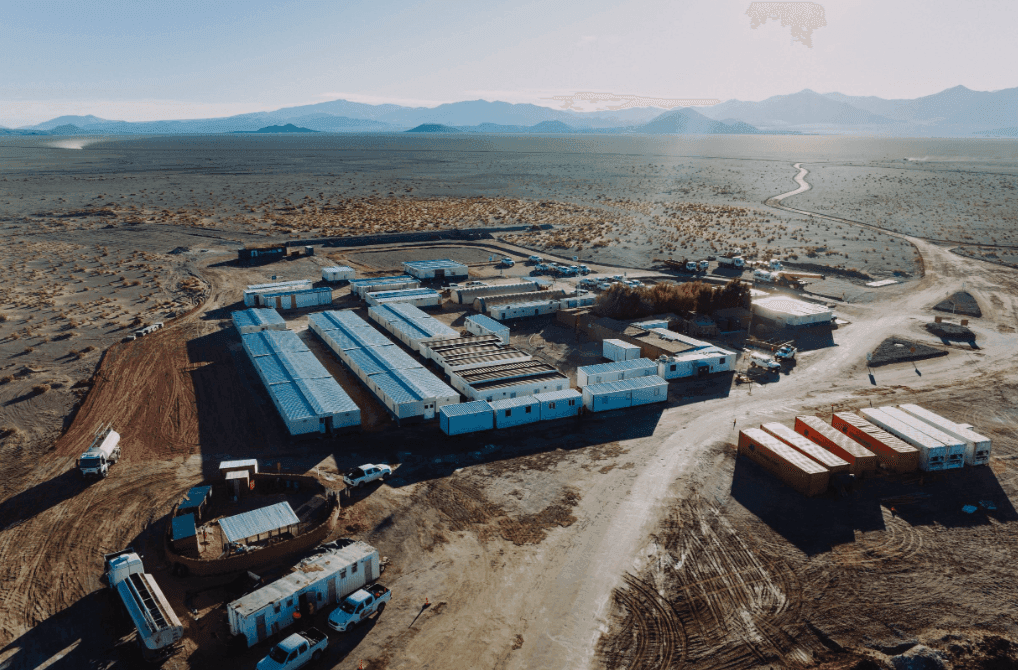
Australian company Lake Resources announced on Tuesday the submission of the Environmental Impact Assessment (EIA) for phase 1 of the Kachi lithium project, located in the Argentine northwest region. The assessment was submitted to the Catamarca Ministry of Mining and, as stated, "marks an important milestone for the project as it represents the culmination of extensive fieldwork and community engagement achieved over the past three years”.

By Panorama Minero

According to the company's estimates, the development plan for Kachi is designed to minimize freshwater consumption and maintain the hydrogeological system as close as possible to baseline conditions, with consumption lower than 2.5% of the average annual natural groundwater replenishment to the basin.

The Production EIA, submitted in accordance with Lake's operational timeline, is a legal requirement under Argentina's mining and environmental regulations and is intended to demonstrate that due attention has been given to the potential impact of mining operations on the environment and the local community.

The evaluation was prepared by Knight Piésold, a global engineering consulting firm, in accordance with General Environmental Law No. 25,675, National Law No. 24,585 on Environmental Protection for Mining Activity in Argentina (Annex III), the Nation's Mining Code (Title 13, Section 2), SAA Provision No. 74/2010, and MM Resolution No. 1014/2023.

The EIA is based on the production scenario presented in the Definitive Feasibility Study presented last December, under an operation in which lithium brine is extracted through production wells, pumped to the Direct Lithium Extraction (DLE) plant for recovery, and then reinjected into the subsurface through injection wells. The ion exchange process, developed by their partner Lilac Solutions, "requires a fraction of the water needed for production from evaporation ponds," being an alternative technology to that conventionally used in brine operations.

Lake has also incorporated a zero liquid discharge unit that further reduces freshwater consumption by approximately 75%. "The injection of spent brine allows Lake to design a system that maximizes lithium recovery while maintaining the hydrogeological system as close as possible to baseline conditions during operations," they stated. They also anticipate lower solid waste production compared to traditional evaporation ponds and hard rock projects.

Following the submission, Lake Resources CEO David Dickson commented, "The timely submission of the EIA underscores our commitment to conducting operations in a manner that prioritizes environmental care and fosters collaboration with our neighboring communities. Kachi is a testament to our adoption of a prudent and innovative approach to lithium brine extraction, aiming for sustainable and responsible lithium production. We look forward to bringing future employment and economic growth to Catamarca Province, thus contributing to the global energy transition."

Published by: Panorama Minero

Category: News

Illustrative image for the news: “We see an opportunity driven by the growth of the mining sector” | Panorama Minero

“We see an opportunity driven by the growth of the mining sector”

With extensive operations in Mexico and the United States, Grupo México Transportes outlines how technological evolution, artificial intelligence, and logistical integration are redefining freight rail transport. In conversation with Panorama Minero, its CEO, Bernardo Ayala, explains the scope of these innovations and their potential in Argentina.

Read more

Join our mining community!


Subscribe to our newsletter for exclusive news, insights, and updates on the mining industry and Panorama Minero's latest initiatives.

Illustrative image for the news: Epiroc Accelerates the Transition Toward Smart Mining in the Southern Cone | Panorama Minero

Driven by automation, digitalization and electrification, mining in the Southern Cone is entering a new stage of modernization. Epiroc presented its regional roadmap, highlighting how interoperability, agnostic solutions and people-centered support will be key to accelerating the transition toward more efficient, safe and competitive operations.

Illustrative image for the news: Two Decades of the Country’s Largest Gold-Exporting Operation | Panorama Minero

Celebrating 20 years of uninterrupted production, Veladero stands as a cornerstone of San Juan’s economy and one of Argentina’s most significant mining operations. During Argentina Gold, Silver and Copper 2025, its General Manager reflected on the milestones achieved, the challenges of operating in the Andes, and the long-term commitments guiding the project’s next stage.

Illustrative image for the news: Uranium Gains Appeal Amid the Global Energy Transition | Panorama Minero

In a global context that increasingly demands safe and sustainable energy sources, uranium is once again emerging as a strategic resource. Experts from the nuclear energy sector analyzed its role in the energy transition and emphasized the need to revive domestic production to reduce external dependence.

Illustrative image for the news: “We see an opportunity driven by the growth of the mining sector” | Panorama Minero

With extensive operations in Mexico and the United States, Grupo México Transportes outlines how technological evolution, artificial intelligence, and logistical integration are redefining freight rail transport. In conversation with Panorama Minero, its CEO, Bernardo Ayala, explains the scope of these innovations and their potential in Argentina.

Illustrative image for the news: The Engines of National Growth Point to Greater Complementarity | Panorama Minero

In an exchange that brought together key actors from the country’s productive apparatus, leaders from the mining, industrial, agricultural and energy sectors presented shared assessments on infrastructure, tax burdens, financing and the regulatory framework. The discussion highlighted broad agreement on the need for predictability and reforms that enable sustained growth.