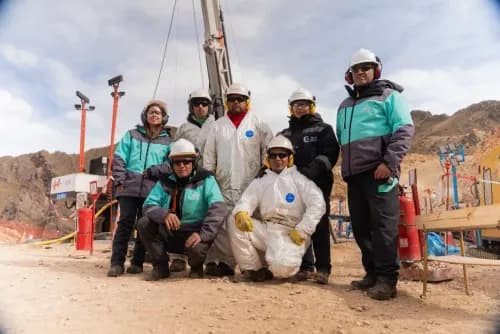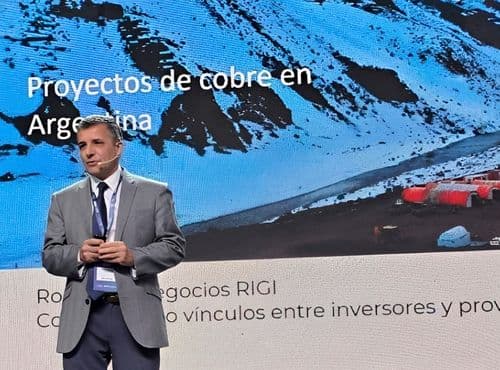
Juan Manuel Léaniz, representative of Siete Cimas Pro, highlighted the importance of avalanche risk management in protecting workers and ensuring the operational continuity of mining projects in the Andes.
In the face of extreme snowfall, technical snowpack assessment, specialised monitoring and controlled avalanche triggering help reduce risks, clear access routes and prevent further delays and operating costs.
By Panorama Minero
The development of economic projects in mountainous areas, particularly in mineral exploration and mining operations, requires a rigorous assessment of terrain conditions.
Juan Manuel Léaniz, representative of Siete Cimas Pro — a professional working-at-height safety division whose name pays tribute to the peaks of the Ansilta mountain range — points out that any productive activity in mountainous environments requires proper identification and management of inherent hazards.
Given that geographical characteristics and mountainous terrain make it impossible to eliminate risks entirely, the technical strategy focuses on identifying and minimising them through preventive measures.
In this context, engaging specialised safety services is not an optional expense but an investment aimed at protecting workers and safeguarding the operational continuity of projects.
The Impact of Extreme Snowfall on Mining Activities
Exceptional weather phenomena, such as Super El Niño, have caused massive and unusual snow accumulation throughout the Andes.
These accumulations create unstable snowpacks on slopes overlooking access roads to mining projects and their camps.
This situation disrupts schedules across the mining sector. Exploration campaigns, which begin between August and September, experience severe delays because snow blocks access routes.
Large-scale mining developments, such as the Altar and Los Azules projects, face logistical delays.
Successive snowstorms cover roads again just as crews make progress clearing them, increasing operating costs and requiring continuous assessment of terrain stability.
Technical Assessment Procedures for Avalanche Risk
To address the danger of snow avalanches, technical prevention teams act as an advance operational unit before personnel or machinery are authorised to enter a particular area.
The procedure begins with a detailed assessment of the topography, analysing slope gradients and the underlying ground on which the snowpack rests.
During inspections of potentially unstable slopes, strict personal safety protocols are applied:
-
Monitoring with avalanche transceivers (ARVA): The specialist entering the assessment area carries an electronic avalanche transceiver (ARVA) secured to their body and operating in transmission mode. At the same time, an observer positioned at a safe distance operates a second device in receiving mode, enabling the assessor to be located immediately if buried by an avalanche.
-
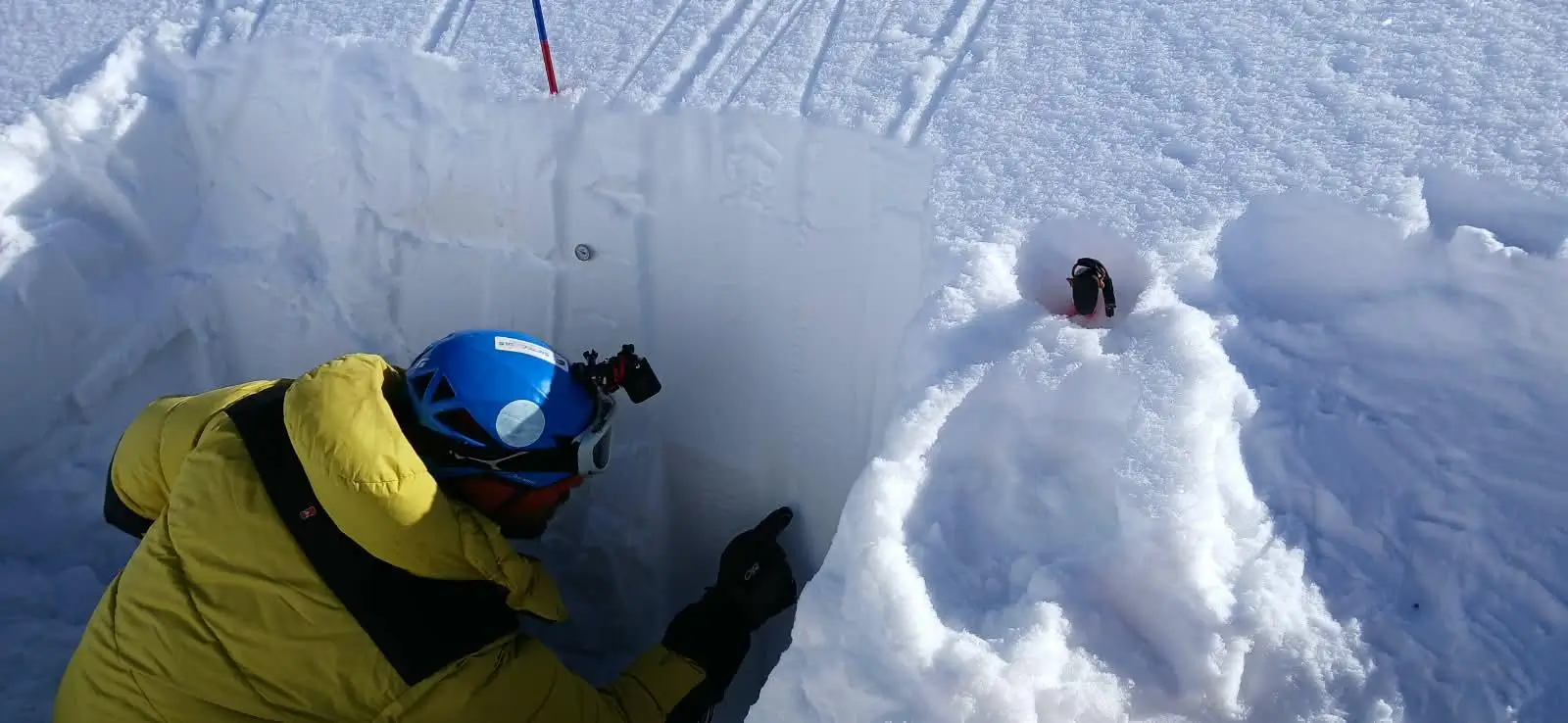
Excavation of snow pits: To examine the internal structure of the snowpack, pits measuring approximately two metres by two metres are excavated, with the aim of reaching as deep as possible, ideally down to the ground or underlying surface.
-
Physical analysis of the snowpack: The different snow layers are identified within the pit, with assessments of density, crystal type, moisture content and the degree of cohesion between layers. Mechanical compression and shear tests are also carried out to determine the level of instability and the risk of collapse.
Active Mitigation and Protection of Operational Continuity
When field assessments reveal a high level of danger threatening access routes or camps, prevention takes priority and movement through the affected area is prohibited.
Where reopening an access route is essential, active mitigation measures are implemented through controlled avalanche triggering.
Since companies cannot wait weeks or months for the snowpack to stabilise or melt naturally, deliberately triggering an avalanche under controlled conditions makes it possible to determine when the event occurs.
Once the avalanche has been triggered and the danger on the slope has been neutralised, heavy machinery can enter the area to remove the accumulated snow and debris from the road.
These procedures are based on methodologies promoted by international snow safety institutions — including Canadian, North American and European standards — adapted to the operational requirements of modern mining to ensure sustainable and safe operations in high-altitude mountainous environments.