The MARA project, which integrates the Agua Rica deposit with Alumbrera’s infrastructure, reported on the participation of Catamarca-based companies in its value chain and new contracting opportunities planned for the coming months. Over the past two years, more than 380 suppliers and contractors from the province have participated in activities associated with the project.
By Panorama Minero
Between January and September 2026, Alumbrera made payments totalling ARS 23 billion to suppliers from Catamarca, representing a 47% increase compared with the amount paid throughout 2025.
Meanwhile, between January 2025 and September 2026, Agua Rica procured goods and services from 244 companies based in Catamarca, generating a combined turnover of ARS 99 billion.
Nicanor Elizondo, MARA’s Community Relations Manager, stated:
“We are proud that our project has a tangible impact on communities. Every local company participating in our value chain has the opportunity to strengthen its capabilities, expand its activities and create new employment opportunities.”
Participation of Companies from Andalgalá
Among the examples of local contracting is ALGI Construcciones y Servicios, a company from Andalgalá involved in the construction of irrigation channels in El Potrero as part of MARA’s community infrastructure programme.
The initiative was requested by the local irrigation consortium, with MARA providing funding for labour costs. The works are intended to improve water infrastructure and require the hiring of workers and complementary services.
Luisa Ramos, Head of ALGI Construcciones y Servicios, explained that the activity also generates demand for companies providing catering, sanitary facilities and occupational health and safety services.
“It creates a chain of development. Not only does the producer benefit from having water for irrigation, but workers also benefit because they receive a salary every month, as do the companies that provide us with support services, such as meals, toilets and occupational health and safety services at the worksites. All of this has an impact on businesses throughout the district,” she stated.
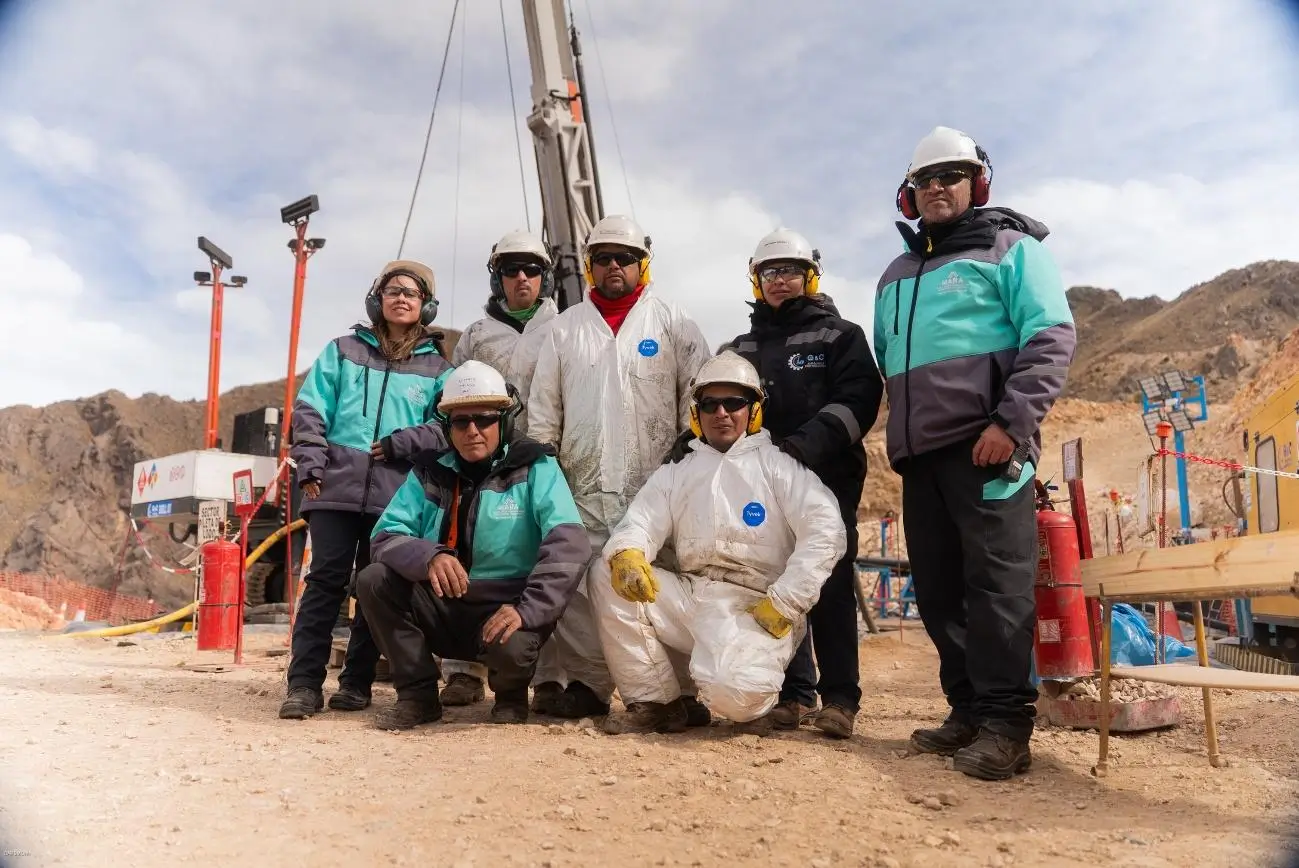
Another example is G&C Perforaciones, a company originating from the Minas Capillitas Indigenous Community.
According to MARA, their collaboration resulted in the creation of 160 jobs, with 82% of the workforce coming from Catamarca.
The partnership also included training for young people, practical field experience and the development of local suppliers of specialised containers.
New Contracts Planned for 2027
MARA holds meetings every two months with mining supplier chambers from Andalgalá, Belén, Santa María and the provincial capital.
The meetings rotate between locations and allow contracting requirements to be presented 90 days in advance.
Within this framework, Alumbrera plans to contract 20 types of services between the final quarter of 2026 and the third quarter of 2027.
The identified categories include freight transport, electrical works and earthmoving.
Demand is also projected for 2027 across 12 categories of goods and supplies, including plant spare parts, lubricants and hardware supplies.
For its part, Agua Rica presented its contracting strategy for Phase 3 of exploration, covering infrastructure works, earthmoving, construction and maintenance of roads and platforms, drilling and support services.
The planning is based on a survey of 186 Catamarca-based companies, aimed at identifying available capabilities and facilitating their participation in future procurement processes.
MARA is also considering the possibility of local companies forming temporary joint ventures to compete for larger contracts.
Development of the MARA Project
MARA is a copper, molybdenum, gold and silver project located in western Catamarca and owned by Glencore.
Its development involves mining the Agua Rica deposit using existing infrastructure at Alumbrera.
According to company information, Alumbrera resumed operations in 2026, while Agua Rica remains at the advanced exploration stage.
MARA’s projected average production exceeds 200,000 tonnes of copper in concentrate annually during its first ten years.