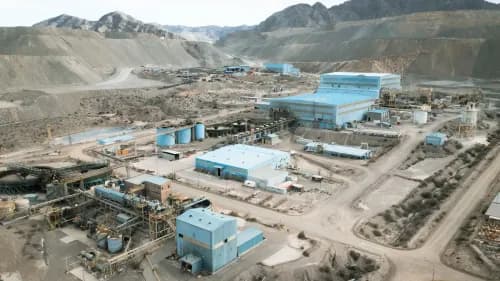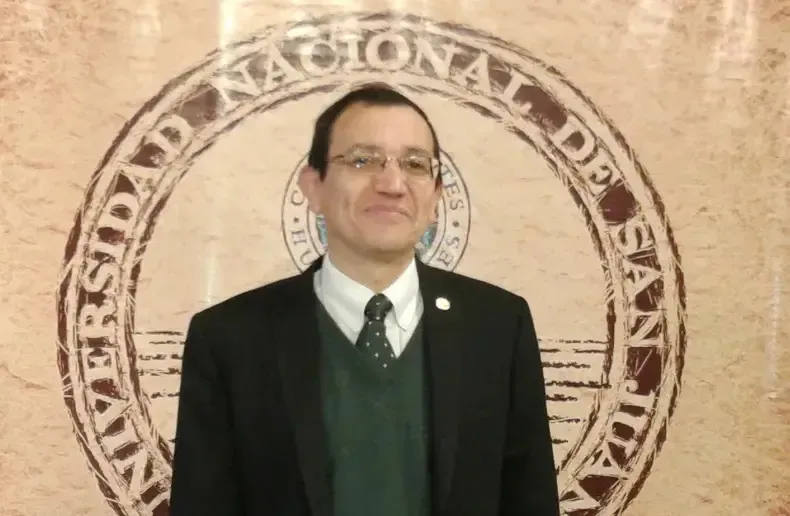
Marcelo Bellini, Director of the Mining Research Institute at the National University of San Juan (UNSJ), highlighted the activities planned to celebrate the institution’s 80th anniversary on September 18 and emphasized the growth in Mining Engineering enrollment, driven by the expansion of copper projects and increasing demand for workers across the sector.
Bellini also explained the strategies implemented jointly by UNSJ and mining companies to prevent students from dropping out after entering the workforce. He also reviewed new scientific projects, including the Nanotechnology Laboratory applied to mining, an urban mining initiative, and copper leaching tests requested by projects such as Los Azules and Vicuña.
By Panorama Minero
The Mining Research Institute of the National University of San Juan is experiencing a period of strong momentum and growth as it prepares to celebrate its 80th anniversary. The institution’s director, engineer Marcelo Bellini, outlined the activities scheduled for September 18, the official anniversary of its founding.
The commemorative activities will begin in the morning with an academic presentation session, during which both Institute researchers and students working on their postgraduate theses will present their scientific projects to their peers and the San Juan community through oral presentations and poster sessions. The main institutional ceremony will take place in the afternoon to celebrate the Institute’s eight decades of history. The institution currently has a staff of 60 people, including between 45 and 47 active researchers.
In the areas of education and technology, the Institute works jointly with the Department of Mining Engineering to prepare future professionals for a labor market offering immediate employment opportunities. Bellini recalled that during the early stages of major local mining operations such as Veladero, Gualcamayo and Casposo, difficulties emerged as companies began hiring students who were in the final years of their degree programs. This rapid entry into the workforce, combined with demanding work schedules, led some students to significantly extend their studies or even drop out of university altogether.
To address this issue and raise awareness among students, faculty members have emphasized that failing to complete a university degree places limits on professional advancement. Without an engineering degree, workers face a career ceiling and may only progress to supervisory positions, without access to higher-level roles such as department head, superintendent or project manager.
This message has resonated with both students and mining companies, which recognize the importance of having qualified graduates and provide financial support to students so they can complete their degrees and enter the industry equipped with the latest scientific and technological knowledge. In parallel, UNSJ and its Faculty of Engineering are implementing a degree completion program designed to support students who have only a few courses remaining, providing them with academic guidance and short-term financial assistance.
The resurgence of copper projects and the prospect of new investment have generated a sharp increase in interest in these degree programs. Compared with previous periods, when only 10 to 20 students enrolled each year, recent admission cycles have seen an enrollment surge, with around 600 applicants and nearly 200 students ultimately admitted after passing the entrance course.
Although not all of them are expected to graduate, the projected graduation of 30 to 40 engineers over the coming years will help meet future workforce demand from mining operations across the province.
At the scientific level, the Institute continues to expand. In March, it inaugurated a Nanotechnology Laboratory Applied to Mining, while an innovative Urban Mining program focused on recovering metals through electronic waste recycling was recently approved.
The institution is also refurbishing an area to conduct laboratory-scale copper ore leaching tests using sulfuric acid solutions for the production of copper cathodes. It has already received requests for studies from major local projects such as Los Azules and Vicuña.
These significant advances are taking place amid a major challenge for the institution: attracting young professionals and permanent laboratory technical staff has become increasingly difficult, as graduates tend to choose employment in the private mining sector rather than careers in university research.