Nicolás Bareta, Head of Mining at AISA Group, outlines progress at Carbonatos Profundos, planned investments and the strategy to expand development of the mining district located in Jáchal, San Juan Province.
By Panorama Minero
What does the Carbonatos Profundos project involve, and what are its main differences compared with the historic Gualcamayo operation?
The Carbonatos Profundos project (DCP) involves the underground development of an orebody discovered between 2010 and 2012, located approximately 700 metres below Gualcamayo's former underground mine. Unlike the historic operation, which began as an open-pit mine at Quebrada del Diablo, extracting oxidised ore, before adding underground mining in the QDD Lower sector, Carbonatos Profundos contains refractory ore with a high sulphide content.
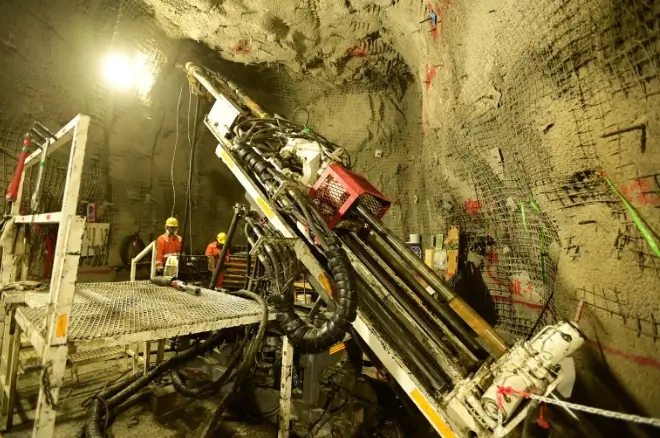
This geological and metallurgical difference requires an innovative technological change. While the historic Gualcamayo operation relied on conventional heap leaching, the new deposit requires a new processing plant incorporating grinding and pressure oxidation (POX) autoclave technology. It also expands the underground sublevel caving method with more than 70 additional kilometres of tunnels and galleries, while integrating a 100% renewable energy supply and projecting a mine life of more than three decades.
Following intensive exploration campaigns and drilling at the deposit, the Gualcamayo district has 3.36 million ounces of proven and probable reserves certified under international standards such as the JORC Code or NI 43-101. These results were supported by more than 40,000 to 45,000 metres of diamond drilling. We are talking about a comprehensive geological inventory exceeding 7 million ounces in remaining resources.
What are the main lessons learned throughout Gualcamayo's operating history, and how could they be applied to the development of Carbonatos Profundos?
The most important operational lesson is to approach mining with a countercyclical, long-term perspective. During periods of high prices, companies should reinvest aggressively in exploration and reserve development to avoid being exposed to market fluctuations.
At Gualcamayo, exploration has always paid off. A deposit originally expected to operate for 6.5 years and produce 1 million ounces has exceeded 3 million ounces of production and now has more than 7 million ounces in total resources.
From a technical perspective, the team learned that connecting existing underground infrastructure to new orebodies saves years of work and kilometres of development. This was demonstrated by linking Carbonatos Profundos to the QDD Lower ramps through exploration tunnels.
Furthermore, the local adaptation of the sublevel caving method demonstrated that developing local suppliers and personnel, with more than 95% of the workforce coming from San Juan, provides the foundation for maintaining operational competitiveness and the community's social licence to operate.
To what extent can the experience of Gualcamayo's workforce be applied to Carbonatos Profundos? What new technical and professional profiles will the project require?
Historically, Gualcamayo operated as a major training ground for large-scale underground mining and the sublevel caving method, which was adapted by technicians and workers from San Juan, who now account for more than 95% of the workforce.
This experience is directly transferable to the new underground mine, supported by a second generation of local employees who ensure cultural and operational continuity.
However, the technological transition required by Carbonatos Profundos will involve recruiting specialists in refractory sulphide metallurgy, particularly engineers and qualified operators experienced in pressure oxidation technology (POX/autoclaves), complex grinding and tailings management.
Specialists will also be required in photovoltaic power plant management, advanced geometallurgical modelling and deep underground ground support engineering.
Is a second application to join the RIGI being considered? What investments would it cover, and what factors would determine its submission?
Yes. AISA Group has confirmed that it will submit a new project under the RIGI through Minas Argentinas. The initiative was formally announced by its CEO and founder, Juan José Retamero, during a meeting in Madrid with President Javier Milei.
This second application forms part of a US$1.5 billion investment programme that complements the first RIGI approval granted in January 2026 for Carbonatos Profundos.
Its main objective is to transform Gualcamayo into a district-wide platform for exploration, reserve replacement and long-term mineral resource growth. It seeks to encourage prospecting across the 40,000-hectare concession area, of which only approximately 4% has been extensively explored to date.
The submission will depend on estimating the reinvestment cash flows required in comparison with other investment opportunities within the group, as well as projected cash flows from secondary heap leach recovery and future production at Carbonatos Profundos.
As external factors, we always consider legal certainty, the efficiency of permitting procedures and the competitiveness of exploration costs.
What does the G50 Plan involve? What are its main objectives, and what implementation timeframe is envisaged?
The G50 Programme is a comprehensive strategic initiative developed by AISA Group and Minas Argentinas to position and develop Gualcamayo not simply as an individual mine, but as a large-scale mining district capable of producing minerals and generating value over the coming decades.
The initiative complements the Carbonatos Profundos project, which forecasts exports of US$26.5 billion between 2030 and 2055, and seeks to integrate deep underground mining with brownfield exploration, new geological targets and the development of the entire concession area.
In terms of timing, the programme establishes an initial stage covering 24 to 36 months, focused on accelerating the assessment and classification of remaining resources to add new ounces to the short-term production profile.
In parallel, exploration and progressive development of new areas across the district will continue over the coming decades.
What stage of development has Carbonatos Profundos reached, and what are the next milestones regarding technical studies, engineering and permits?
Carbonatos Profundos has completed the prefeasibility stages and is currently finalising and defining its feasibility study. The project has already obtained approval under the RIGI, with projected investment exceeding US$665 million, including the construction of a photovoltaic power plant.
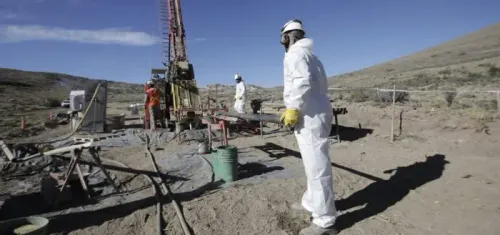
At the site, more than US$20–26 million has been invested in an underground exploration tunnel, over 45,000 metres of diamond drilling have been completed, and a metallurgical pilot plant equipped with an autoclave has been inaugurated at the mine. This work has been complemented by testing in Canada involving more than 170 tonnes of samples.
The next immediate milestones include awarding the main engineering contract to advance basic and detailed engineering, a process that will continue through late 2027 and the first half of 2028.
This will be followed by applications for specific sectoral permits, finalisation of the financing structure and construction, with the aim of beginning commercial production around 2030 or 2031.
What metallurgical process is envisaged for treating ore from Carbonatos Profundos?
The ore at Carbonatos Profundos is refractory and predominantly sulphide-bearing, meaning it cannot be treated using the conventional direct leaching process employed historically.
The proposed processing flowsheet will incorporate a new grinding stage and pretreatment through pressure oxidation (POX/autoclave).
This autoclave circuit will oxidise and break down the sulphides before the material enters a conventional carbon-in-leach (CIL) process to recover both gold and silver.
It will be the first industrial autoclave used in Argentina's mining industry and one of the few in South America. The development will also include a new tailings storage facility and optimisation of the existing elution and adsorption, desorption and recovery (ADR) systems.
What investments are estimated for developing the Carbonatos Profundos infrastructure?
Total projected investment in the development of Carbonatos Profundos amounts to approximately US$1 billion over the mine's operating life. Of this amount, around US$600–660 million corresponds to direct capital expenditure recognised under the RIGI for the construction and initial development stages.
It should also be considered that this investment framework is supported by more than US$300–400 million in existing operational infrastructure at the deposit, including roads, electricity networks, water supply facilities and accommodation camps.
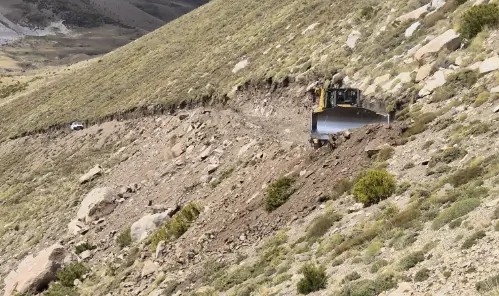
The main works include more than 70 kilometres of underground tunnels and galleries, with 20 to 25 kilometres of priority development required to access the orebody; the new grinding plant and POX autoclave; the tailings storage facility; and the Calicanto photovoltaic power plant.
The latter will provide a 100% renewable and self-sufficient energy supply from the second year of construction. The programme also includes the expansion of accommodation camps.