The bill introduced by the senator from Catamarca requires a minimum investment of US$50 million in eligible assets and excludes benefits for existing mining operations.
By Panorama Minero
National Senator for Catamarca Flavio Fama, together with Senator Natalia Gadano, has introduced a bill seeking to amend the Bases Law (No. 27,742) and extend eligibility under the Large Investment Incentive Regime (RIGI) to investments aimed at prolonging the operating life of mines already in production, through the incorporation of new reserves.
According to the proposed legislation, investments intended to incorporate new economically recoverable mineral reserves would qualify as Large Investments, “even when they do not result in an increase in installed production capacity”.
Under the current regulations, increases in production capacity are the main criterion for determining the eligibility of expansions to existing projects.
Requirements and Minimum Investment
The minimum investment in eligible assets would be US$50 million. At least 40% of this amount, equivalent to US$20 million, would have to be invested within the first two years following notification of approval for admission to the regime.
Companies would be required to submit a sworn declaration, supported by a technical report, indicating the estimated end-of-mine-life date for the existing project if the proposed investments were not undertaken.
They would also have to submit a specific investment plan, a baseline production plan and an incremental production plan, together with a separability and traceability plan.
What Is Included and Excluded
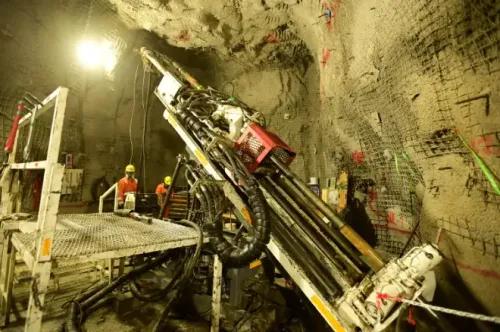
The bill identifies eligible investments, including exploration and assessment of new reserves, mine development works such as galleries, ramps, shafts, raises and tunnels, and the purchase or installation of equipment.
It also includes infrastructure for energy, water, mining waste management, waste rock and tailings storage facilities, and safety.
Ordinary operating, maintenance or reserve replacement expenses associated with the existing production plan would not qualify. Nor would investments that are not necessary to incorporate or exploit the new reserves.
The proposed legislation specifies that RIGI incentives would apply exclusively to investments and production attributable to the mine-life extension plan.
“They shall not be extended to the existing project or to production derived from reserves included in the baseline production plan,” states Article 4.
The bill permits the shared use of processing plants, roads, power lines, water systems and other facilities, provided that a verifiable allocation and traceability mechanism is established.
The explanatory memorandum notes that requiring infrastructure to be duplicated would render projects forming part of the same mining operation unviable.
The Authors' Rationale
In the explanatory memorandum, Fama and Gadano argue that “the progressive depletion of reserves inevitably leads to mine closure unless further exploration, assessment and development activities are undertaken”.
According to the text, extending mine life would make it possible to “preserve direct and indirect jobs, sustain supplier networks, maintain exports and ensure the continuity of economic activity and public revenues in producing provinces”.