The national senator for Catamarca and chairman of the Senate Committee on Mining, Energy and Fuels believes Argentina is going through one of the most important moments in its mining history, although he warns that the challenges related to infrastructure, human resources and supplier development are as significant as the opportunity itself.
By Panorama Minero
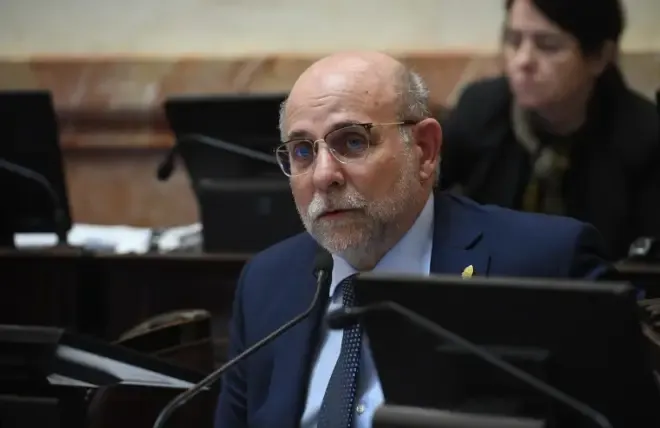
Flavio Fama* does not avoid difficult topics. The national senator for Catamarca and chairman of the Senate Committee on Mining, Energy and Fuels speaks from a background historically linked to the sector, first through academia and now through politics, convinced that Argentina is facing a window of opportunity that will require coordination and long-term planning.
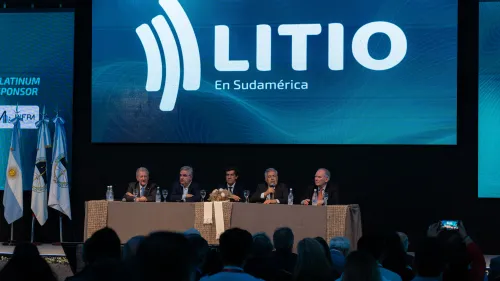
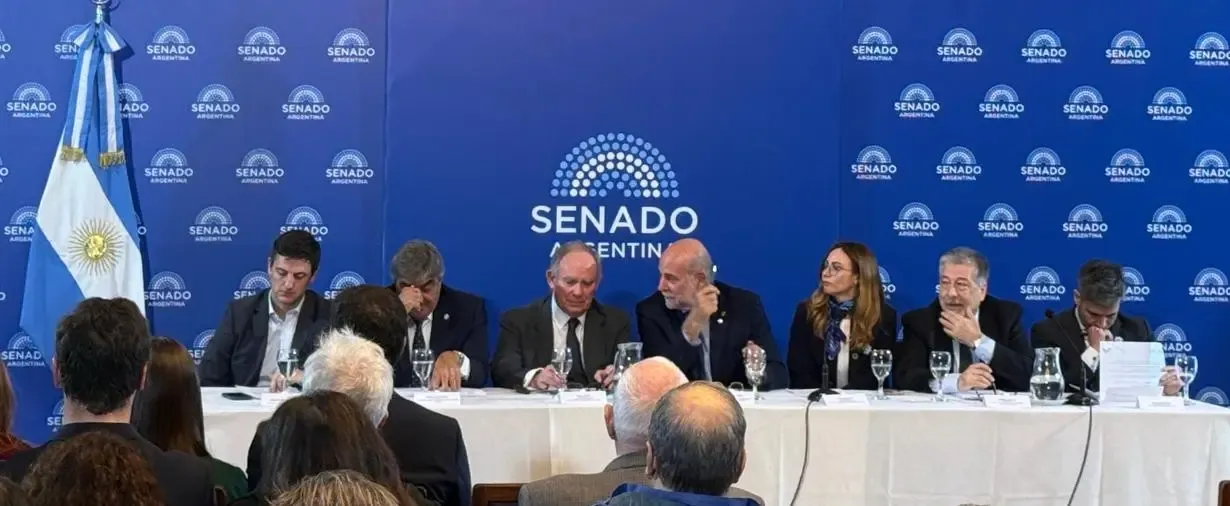
Fama participated in Expo San Juan Minera, where the first meeting of the Federal Mining Roundtable took place, and also promoted the Conference on Competitiveness in the Mining Value Chain held at the National Congress alongside Congresswoman Fernanda Ávila, chair of the Mining Committee in the Chamber of Deputies. For the senator, both initiatives reflect a growing level of coordination between provinces, companies and suppliers.
In this interview with Panorama Minero, Fama stated that Argentina has between five and six years to prepare its supplier base before the country’s major copper projects enter operation. He also warned about future competition between mining and oil & gas for human resources, infrastructure and services. “It’s a tsunami,” he said, referring to the scale of demand that could emerge.
“What we saw at Expo San Juan Minera was unprecedented: investors abroad have absolutely no doubt that Argentina has extraordinary conditions for investment. What was always in doubt was whether politicians were aligned in moving this forward,” Fama said. He added: “Today, that doubt is beginning to clear.”
How would you summarize the current moment for Argentina’s mining industry?
I have no doubt that this is probably the best moment in the history of Argentine mining. What I saw in San Juan during Expo San Juan Minera, organized by Panorama Minero between May 6 and 8, truly impressed me and made me very happy to see that politics is finally aligning with companies, communities and suppliers, making major things possible.
In a way, I see a path being confirmed, and personally I believe it has to be a collective effort. There should be no political jerseys here. The only jersey should be that of national development.
Mining will undoubtedly contribute to the development of the regions where projects are located. If that does not happen, then mining will have failed. That is what we need to work toward, with all the discussions that may be necessary, but ultimately reaching an agreement. This is not about factions, it is about objectives. If the objective is to develop our communities and take advantage of our natural resources, then that is the direction we must take.
Is Argentina prepared to support this growth in terms of human resources and suppliers?
That is the big question. Investments are going to come, there is no doubt about that. In Catamarca, Alumbrera will restart in 2028 and MARA would begin in 2032. But where are the human resources? Are we going to bring them from Chile, Australia or Canada? And what about suppliers? Are they aware of what is coming? These are questions we need to ask now.
We are a federal country, and we cannot forget that. Every province has its own jurisdiction and even its own vision. Some provinces, such as La Rioja, have just blocked a mining company. What will that province achieve? Falling behind.
So how do we organize all of this? Governors are extremely important actors, and they need to coordinate. Because what is coming is a tsunami, a massive wave.
What will mining companies demand from local suppliers?
Once procurement needs begin, governors will tell companies: “Buy locally, hire local people.” And companies will respond: “We will buy from you, but you need to meet standards of quality, quantity and continuity.” Otherwise, they will not hire you.
Mining will open its arms to you, but preparation is essential. The standards are extremely high: product quality, continuity, supply capacity and environmental compliance. If you transport fuel to a mine site and your truck leaks oil, you are not coming back. Those are the standards.
The same applies to human resources. That is why I think the work being done by the UIA is very valuable. Beyond identifying opportunities and gaps, it shows which sectors will be needed and what capabilities will be required. That is the work that must be done now.
How can competitiveness be addressed if a pickup truck in Argentina costs twice as much as in Chile?
A supplier linked to a RIGI-approved project can also become a RIGI supplier, meaning it receives the same benefits as the project itself. I modified the Ley Bases in that regard.
The issue was that RIGI allowed mining companies to import at FOB prices, access dollars at the official exchange rate and freely remit dividends. But if Argentine suppliers do not have those same benefits, what happens? Companies call machinery suppliers in Sweden or Canada, equipment arrives through the ports and goes directly to the mountains. And locally, nobody even notices.
If you want to develop suppliers in Argentina, they must have competitive conditions similar to those of the mining projects. Otherwise, they will never be selected. It is logical.
Does Argentina have industrial capacity that could be redirected toward mining?
Yes, and it needs support to become competitive. For example, the metalworking capacity currently focused on oil & gas also needs to start working with mining. Because within five or six years, these sectors will begin competing with one another.
There is a grey area between these two engines of development. Oil requires certain resources, and mining does too. Industrial engineers, transport, energy, roads, they all need them. There will be tension, and that needs to be coordinated now.
The State must lead and coordinate. It is not only about environmental oversight, which is extremely important. It is also about how to develop a supplier base, how to train people and how to support growth through infrastructure.
Governors, as leaders of their provinces and holders of natural resources, have that responsibility. It is not solely the job of the national government. Congress cannot ignore it either.
What about financing? Who helps companies prepare if they lack capital?
Banks need to step in. Financial institutions need to do their job and lend money. Everyone understands that the economic situation is complex and that recovery will take time, but SMEs need access to local credit. There is still a lot of work to do in that area.
What happens if suppliers from different provinces compete against each other instead of partnering?
The worst thing that could happen is for suppliers from San Juan and Mendoza to start taking projects away from one another. That does not help. They need to work together and expand the supply base.
There should be a serious study and projection: how much money will a company like Josemaría move every month? In which sectors? If we know that, we can form partnerships and become competitive.
We need to think twenty years ahead, and that is not unrealistic. After these major projects, smaller deposits will come into development, many of which are already in exploration today. There is gold, boron, nickel. The ecosystem needs to take shape.
It is naive to think mining will grow for five years and stop there. If politics supports it, there is no limit.
How should the tension between the 20% local supplier requirement under RIGI and stricter provincial demands be resolved? Should Congress intervene?
I do not think the Legislative Branch should intervene there. If something needs to be corrected, it will be corrected, but it should arise from actual demand and territorial planning.
Some things do not work because there is no coordination. In Santa Cruz there is a 90% local hiring requirement. How do you achieve that? There needs to be articulation.
What did Expo San Juan Minera and the Federal Mining Roundtable agreement leave behind?
What I saw in San Juan truly impressed me. Having the governors of Santa Fe and Córdoba sitting there is not a minor detail, because they need to speak with their metalworking industries and tell them to prepare.
But beyond the governors, what really made a difference was the presence and support of the national Executive Branch. Politics matters much more than people think.
Investors abroad have absolutely no doubt that Argentina has extraordinary investment conditions. What was always in doubt was whether politicians were aligned in moving this forward.
Seeing that alignment in San Juan, between the national government, provinces, companies and suppliers, was a very strong signal. And those are the kinds of signals that move investments.
Flavio Fama is a national senator for Catamarca and chairman of the Senate Committee on Mining, Energy and Fuels. He served as rector of the National University of Catamarca for fourteen years and dean of the Faculty of Engineering for nine years.