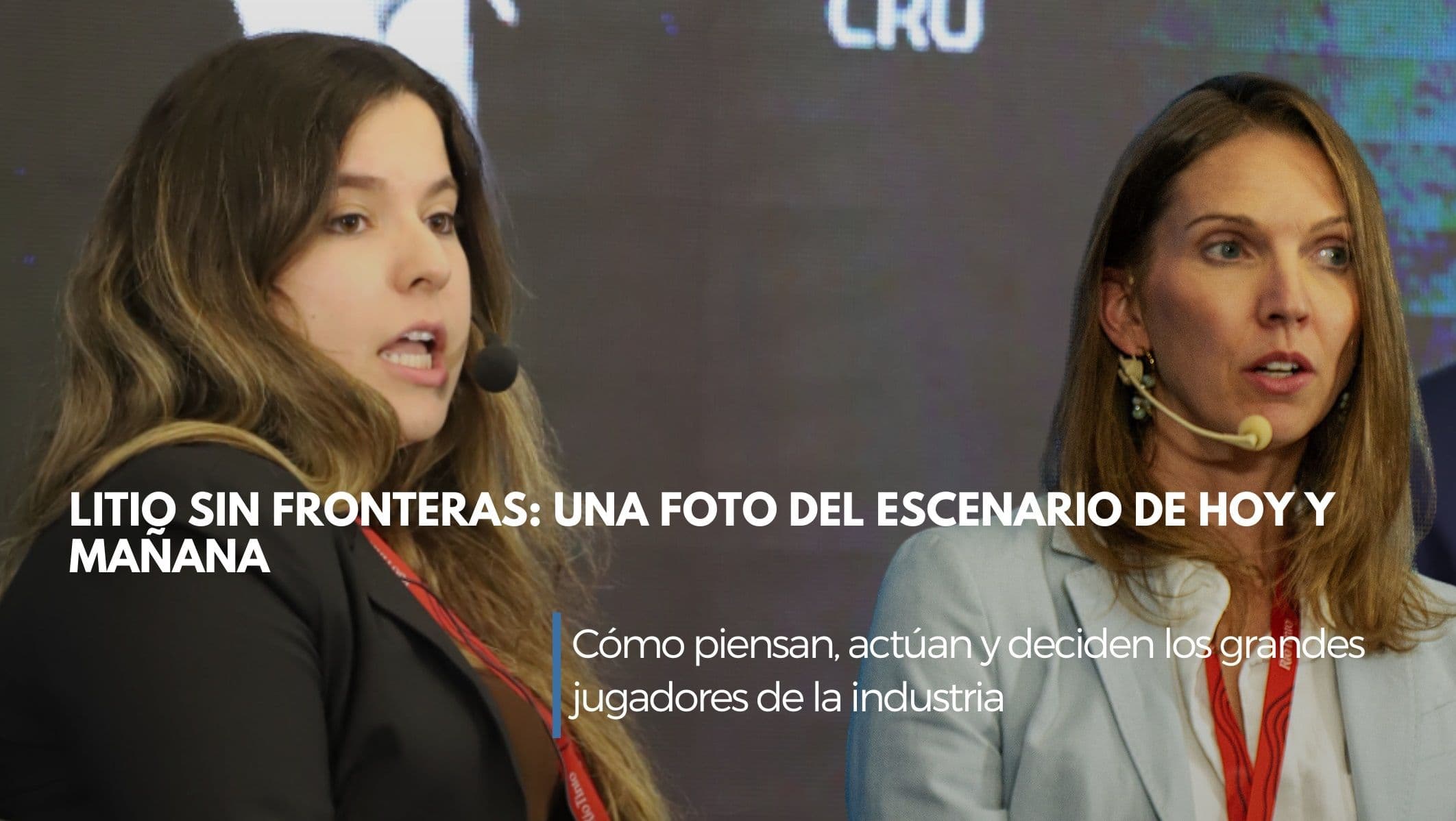
Lithium Without Borders: A Global Snapshot of Today and Tomorrow
September 29, 2025 · Duration 55:14 · 4 speakers
How major industry players think, act, and make decisions
Speakers

Kelly O'Brien
Vice President Investor Relations, Lithium Argentina

Roland Chavasse
Secretary General, International Lithium Association

Fernando Sulca
Senior Analyst, Battery Raw Materials Assets, CRU

Leticia Simionato
Senior Price Reporter, Fastmarkets
Transcript
Read the full transcript
0:23So, our conversation here today will be divided into four blocks. So, the first one, we'll discuss South America position versus China. In Block 2, we are going to discuss supply chain developments in South America amid falling prices. In Block 3, then we are going to start talking a little bit about regulatory and policy outlook, how tariffs and the new trade policy in the U .S. are influencing the supply chain.
0:56the last block is the next phase of growth for lithium and for electrical vehicles and battery adoption globally so welcome everyone here so moving to our first block here about South America position versus China so we know that today China dominates the lithium value chain but instead of seeing the country as an enemy we have a lot to learn from its resilience For example, at FastMarkets, we believe that the low -priced environment that we've been facing the last month, an increasing security of the Chinese lithium mining industry has resulted in a reduction in the forecast of mining supply from China over the next two years.
1:41This development has influenced the forecast for processing capacity. However, though we have this scenario, we don't expect this impact to last. beyond the near term with the nation with China continue to increase its mine supply to meet growing lithium demand So it shows China continues to be a resilient in terms of lithium production So Kelly, I want to start with you What in your opinion is the legacy of China meaning what other lithium producers in the world what other producers country should learn with China's rise a leader in the lithium industry. Sure. Well, thank you for having me here. I know that I'm not Joe Lowery, but we do have a few things in common. Joe and I grew up, both of us, in rural western New York. We both lived in China around the same time. We both believe in the long term of lithium. Big difference with Joe and me is that I made my flight, and Joe did not. So here we are.
2:46But I When I think of China, I think back to when I got into this industry 15 years ago, and China had no place in lithium. The lithium market was much different then than it is now, of course, but it does seem that China set its sight on being a leader in the EV industry and ultimately in the lithium industry. And I remember when they first said they're going to bring on 400 ,000 tons of lithium.
3:16lithium conversion and I think there were people out there who said they will never be able to do this but they did it and ultimately over the last 10 to 15 years China has objectively become a leader in lithium processing and as they were doing that of course they got involved in the natural resource and you know acquiring projects and partnering with different groups around the world and so here we are with China you know objective leading lithium processing and I think as we look to the future there's a saying that comes to my mind which is if you can't beat them join them and I think if we go direct head head -to -head with the Chinese with lithium processing though I don't think there's a scenario where the West can really catch up anytime soon if ever and so I think that this partnership models that you see joint ventures that have been relatively effective, especially in the case of Lithium Argentina, are really the wave of the future
4:17and this collaboration to develop projects is ultimately necessary because, well, the Chinese and our partner, Gongfang, are very, very good at lithium processing and other things. I do think that smaller companies or local companies bring experience to the upstream, bring financing experience, are able to help set up the teams that are necessary to have the dialogue with communities and so as we look to the future and I think as the industry does I think this you know this partnership model is going to be very important perfect yes I love that if you can't be joined in the highlight of your commentary really good thank you Kelly now rolling moving a little bit looking at South America in general not only the leap of triumph but including brazil too so uh we forecast at fast markets that from 2025 to 2035 so the next 10 years south america will remain the continent being the largest lithium produced in the world
5:22accounting for 30 percent of the total mining supply uh chile will stay the largest produced in the region making up 69 percent of lithium production in south america 2025 and then 46 % in 2035 so we see that the the percentage will get lower of Chile participation because we expect Chile to lose market share from golf in Argentina supply that is expected to grow now with projects in Argentina starting to produce and everything so I made this data and everything how do you see South America positioning itself as a major producer in terms challenges and opportunities the continent have and also I'd like to add to this question do you think the continent needs to insulate itself from European classifications of lithium and why
6:24I think it's not working here hi thank you but thanks thank you for the question thank you for allowing me to come here and share my opinions with you. It's a great pleasure to be back here in Argentina. And yes, it is really very exciting. There's a tangible feeling in the air of excitement, of positivity. I think if I compare it to other conferences which I go to around the world, here in South America there is a genuine sense.
7:01that a really big adventure is starting and it's very exciting the EU classification I'll just park for a moment if you don't mind yeah sure and I'm not going to get into the nitty-gritty of forecasting but certainly for men from the point of view of the International Lithium Association we see demand for lithium across the board extremely positive extremely high for the long term the world needs every lithium atom it can get and obviously a country such as Argentina is perfectly positioned really really well positioned if we have a quick look around the region in Brazil where they've got the rock mines particularly in Minas Gerais.
8:00This is relatively quick and easy, relatively, to get moving, and already we're seeing tremendous growth in that region. Just north of here, in Bolivia, I'm sure you don't need me to tell you that the challenges to produce Lithium in Bolivia continue, and only very recently we saw that we're seeing a court in Potosoy overturn the permits of Uranium -1 and the CATL consortium, setting it back even further. Interestingly, of course, the election is starting to look like it's going to have a very different flavor in Bolivia, so perhaps this time next year the attitude, the approach, the feeling in the air will be significantly improved from a lithium and business point of view.
8:56I said just now that Argentina is perfectly poised to take advantage of this and I believe that not only do you have the resources and the connectivity in the world but the openness to investment from global partners as you mentioned is absolutely essential to develop a whole plethora of different projects at the same time allows one or two perhaps not to each pool potential overall you get there. Riggi, I hope I'm saying that correctly, is really doing tremendous things from what, when I speak to ILEA members in Argentina, they say that Riggi has made a huge difference to the confidence that they have in the long-term investments and the long -term work here in Argentina. So I congratulate the government on that and hope it continues for many, many years.
9:49years. Europe? Yes. Do you think the continent needs to insulate itself from European classifications of Lithium and why? I have to be slightly careful what I say here, because two years ago I was on stage, and I mentioned the fact that the European Union has decided... that lithium is toxic oh yes toxic not just any old toxic toxic as in arsenic mercury hexavalent chrome like really really badly toxic and i mentioned this and it was very embarrassing because there was a trade delegation from the european union at the event in salta and they had no idea they had no idea that at the same time is coming here to Argentina and saying please please give us some lithium on the other hand they were saying we don't want your lithium because lithium is toxic it's isn't we have tried to explain to the European Union that they've misunderstood and we've tried to explain to them the long-term damage that this will cause to their economy
11:13just because just because my neighbor is cutting off his leg before he runs a race it doesn't mean to say that I should or you should there's no reason to copy them frankly and in fact there was a letter from the government of Argentina the federal government Chile Canada Australia America and the UK all official letters to the European Union saying disagree so I think Argentina can avoid avoid falling into that trap by simply sticking to the science sticking to the best practice and staying with the global majority who see lithium as I thought it is don't eat too much of it but at the same time it's not going to kill you Just ask them, ask the millions of people who take it as medicine every day.
12:21Back into your first answer about challenges and everything. You mentioned elections and I think it's important to mention that when we talk about production of Lithium in South America, it's funny because... some players in the market, they think it's a uniform block, like, if not, the difference that each country has, each company. So everybody thinks, oh, South America, we have low-cost protection.
12:53But there are several nuances to this. So each region, each company, each country has a specific characteristics that deserve to be related. So we can understand, like, in Brazil, we have hard rock. so it's extremely just producing spajamine, we have other companies producing chemicals too, like CBL, but exporting it, so each country, so talking about South America as a block, it's complicated sometimes because we have this difference.
13:22So, Fernando, I'd like you to talk a little bit, like, comparing countries in South America, which one do you think is winning? Lithian or Ally in terms of competitiveness at the moment, and why? Thank you, Leticia, for the question. Thank you for Panorama Minero to organizing this amazing event, and thank you for the invitation. Now I will answer your question, and I think that you have highlighted a word that I have heard all day long, and it's competitiveness.
14:03I will repeat, but believe me, I have prepared this before, but I will repeat what Ignacio from Rio has told before, competitiveness is not only one measure, there are three aspects that I would like to bring now, and one is the quality of the resource, which is the geology, the second one is the processing technology that you will need to prove to take the product. lithium carbonate or lithium hydroxide and the third one and then one of the important topic that i want to talk now is the rules to exploit lithium and the unique costs that are attached to each jurisdiction so i want to i would like to bring some historical data here back in 2015 chile was the leader lithium producer in the world. In the same year, the dispute between SQM, which is the larger producer in the world right now, and Corfo, which is the governmental entity that owns the right to exploit in the Salar de Atacama, started. Fast forward 10
15:21years today, Chile is no longer the leading... processing country of lithium is the biggest in South America but is the third in the world and sadly Chile has not commissioned any new projects since 2015 they have the same projects that they have 10 years ago even though and don't get me wrong here the Salar de Atacama if it is not the best is one of the best resources in the world But, the regulation has taken a toll on the Chilean production, and they have not been able to commission any new project.
16:07On the other hand, let's talk about Argentina now. Today, Argentina is the fourth producer in the world. After... Australia, China, Chile. Argentina is becoming a big player right now and it is forecasted for the next year to grow 44 % and here I will repeat also what has been told in the morning. There are four new mines ramping up right now from 2025 to 2026 and there are two expansions as well.
16:50What about the long term? Argentina has also five projects in the pipeline and even more expansions all the way until 2035. That will allow Argentina to grow 15 % in a compound annual growth rate. And this is because Argentina has almost the whole package. Amazing resources, competitive a proven technology to obtain lithium carbonate or lithium in general and also a friendly regulation to attract investment finally I will touch in the other players in the region Brazil which as you've mentioned is a hard rock producer sadly doesn't have such amazing geology as in the lithium triangle and Bolivia that good resources but they have failed one more time to put these big resources into production therefore i think that the answer is clear today argentina is winning the rally of the lithium and is winning the and attracting the investment into the country yes thank you and i think i would like
18:12just to to reply you ask you another question when you analyze the cost curve between Chile Argentina Brazil and Bolivia you also think Argentina is well positioned in terms of the cost curve and its projects what do you think yeah thank you Leticia I'm so glad that you answered this question because I can expand more in the previous point that I have highlighted and again the cost curve is measure and compare each asset to another asset and again those three aspects that I have told before are the big players when we compare one asset to it to another let's talk about resource resources for example the projects in Argentina they range in grade from 0 .5 to 0 .7 milligrams liter per grams of lithium per liter while in Chile they are slightly bigger nevertheless Chile has this royalty that it can be it can be as high as 40 % which makes all the Chilean projects directly dependent on the lithium price
19:35so their position in the cost curve will be related to this lithium carbonate price. Also, Argentina has a flexibility in the processing side. Chile has banned all evaporation bonds in the new projects, so they have fixed only DLE as the main source of technology to obtain lithium. On the other hand, Argentina has a mix. DLE and evaporation, which allows them to obtain higher recoveries right now, as high as 90%, which put them in a nice position in the cost curve. Same as Brazil. Brazil has a much better competitive technology to obtain the lithium than their peers in Hard Rock, let's say Australia or Zimbabwe. They use a technology called DMS, Density Media Separation, that...
20:35is more competitive in cost than the flotation used in Australia and Africa. All this combined make most of the projects in South America, or almost all of them, in the half side of the cost curve. So I think that they are competitive, and in general, even though each country has their own particularities, in general, South America. is a competitive jurisdiction. Thank you, Fernando, very good insights.
21:08Now to finish this first block, I want to go back to Kelly, who started this block. So to finish our comparison with China and everything, so although my first question to you in this block was about the lessons we could learn with China, now thinking about what South America specifically could learn and opportunities in at the same time China's role in supply control and its investments abroad so what are the implications for South America and how the regions should be prepared not only about like aligning to China but in terms of there are a lot of Western companies now investing in South America I could not mention Rio Tinto acquiring Arcadia So, how to balance the situation that we have other Western companies wanting to invest here in China, aggressively controlling investments abroad, so how do you think South America could balance it as a region that is receiving investments abroad, independent of the region?
22:21We think Argentina has tremendous opportunity. I think you have to, yes. I don't think so.
22:40How about now? I have three little boys. I can scream really loud too if I need to. Just kidding. No, I think Argentina has tremendous opportunity. Going back to your points, I think the resources and- the three points that you listed are very important, I might add one to that, that is the team, the team that you're able to build. You can have great resources, you can have a great government behind you, but if you don't have a team with experience, or if you don't have a team that can work together to put these projects into action and operation, you can fall apart at the beginning.
23:17And so I think that this goes back to my first point, that yes, the Chinese are here. Yes, Argentina has great resources, but there needs to be collaboration with some of these small Western companies. As you said, there's North American companies that are here, there's Argentine companies, of course, that are here. I think that this partnership to bring all of the expertise globally together to advance these projects is going to be really important.
23:44But again, Argentina has tremendous opportunity in terms of the resources and also... As you pointed out, just with the government, when you think of RIGI and these incentives that make Argentina much more attractive than it has been in the past. Perfect. And now, let's move to our second block of questions about supply chain developments in South America and the falling prices, which we all know has been falling since...
24:20last year, before, so recently we saw some volatility for lithium prices, so lithium prices rise a little bit, but it was like a movement of speculation regarding CL, TL, the situation in China with the mining suspensions and everything, so there were a lot of speculations, so prices were up, but it didn't stay that high, that long, because... we know it's a move of speculation so our forecast is fast markets for example we see stronger price support from 2027 on uh reflecting the the shift to a supply deficit so but we still there's a lot of things to happen we need to analyze how the situation in the u .s will reshape the scenario with the v demand we are going to discuss it later so there's still a lot of uncertainty We are still, the market's still waiting for a supply deficit that might become true from 2027, but still a long path ahead, so in the near term, we still see falling prices.
25:30So Kelly, to you again, talking about, thinking about you as an employee of Lithium Argentina, what do you think the industry should be doing to deal with the price volatility? and the lessons that companies have from the recent downturn of lithium prices. Yeah, I think the lithium industry, it's not in its infancy. I think lithium is coming out of diapers, but lithium is still a toddler.
25:58And so as this market grows and as you have demand that's north of 20%, maybe even 30% that we've seen in previous years, and you have supply shortages and you have very long leave. times with these projects, as this market develops, I think we will continue to see some volatility going forward. But I think from our point of view, I can't control the price. And I remember going to conferences three years ago, four years ago, and $50 ,000 per ton was going to be the new norm.
26:37We're not there, clearly. have come down and now okay it's going to be 10 it's going to be 15. I think the answer is you don't know I don't know if you guys know tell me because you're the next billionaire nobody knows what the price of lithium is going to be so as an operator our focus well we love to hear about prices going back up and you know if they go back up to 40 50 80 we're printing money and that's that's a beautiful thing But the reality is, we can't control that.
27:11No one can control that. There's no, this is not a monopoly. I think a few years ago with the Chilean producers, Esquim Avamaro, the two of them at least had a little bit more say in pricing. It's not the case today. And so what we need to focus on and what we focus on at Lithium Argentina or Joint Venture XR, the cost. It's the one thing we can do. When you want to be on the bottom end of the cost, Kermit, any commodity.
27:36and i think that's been proven in the lithium industry the last two years that if you're not it's it's a very painful and can be a very long process so um you know that with with xr our joint venture and um we've been able to bring those costs down to those costs are at six thousand dollars per ton we'll keep trying to push them down because that's all we can do and hope for the best with racing yes yes yes just said about nobody really knows it's it's complicated because there's also there's always something happening that changes that reshapes this scenario like this year we had Trump so it changed it like the the forecast because we had a president that is not pro -EV although at the beginning he was a lie to Elon Musk and everybody thought oh this is our time for Lithium right now, because EV demand is going.
28:36But well, it didn't happen, this alliance. So yeah, it's very interesting. Fernando, just back to you real quickly. So in Argentina, we have a lot of projects developing. So I just wanted to hear your opinion. But many early stage projects, depending of the stage there, within exploration and financing are expected to be delayed, not only fast markets expected, but I guess a lot of other market intelligence companies think that a lot of projects won't be delayed or even some won't happen.
29:14Consider the global high capex for new projects in the low-pricing situations. So I just wanted to go a little bit deep. What do you think about the projects in Argentina, or if you want to mention other in South America, how they are dealing... with this falling price? Do you think they are waiting? Do you think they are going to postpone? Yeah, I think that I completely agree with Kelly. It's like companies will try to push their projects ahead and the only way they can do it is making them more competitive. So in that front, I think that everyone is still pushing harder to bring all the projects online.
29:54But the truth is when we forecast, I know that it's not an exact forecast, but when we forecast the supply coming out in the next years, we use a probability. Before I mentioned that Argentina will grow the capacity in the long term with five projects in the pipeline. So basically we have downgrade the probability on those five projects. It means that before were in a 50 % probability in other words half of them will go online and half of them no but we have done downgrade that probability from 50 % to 30 % which means that from those five only two or maybe one will come on online in the 10 years that can change our forecast of course it will depend which one goes online but I think that again with the conditions that Argentina has right now not all of them will be there in five years or ten years but they will be around and maybe in another super cycle all of them can be online but I think that that's our that's
31:11our forecast that we downgraded the probability of each country and sadly that is our view I think now we can move to our third block, because I think all the pricing talk was really well covered here, about regulatory and policy outlook, so how the new trade policy in the U .S. are influencing supply chains. So in the U .S. we had the Inflation Reduction Act, and now there was a ratification of the One Big Beautiful Bill Act in the second quarter this year, so basically we'll eliminate...
31:4930D consumer EV tax credit from September 30, so making a sharp reversal in the federal support for EV, so this will impact directly EV demand, so at FastMarkets we expect the removal of 30D subsidies to reduce consumer demand, following we expect a brief increase in sales ahead of the expiry date, so August to the end of But yeah, so the scenario is low demand in the market across the globe.
32:27So now I have the same question for all of you, let's do a different format. I will start with Roland. So my question is to all of you, how do you think the markets are being impacted and will be impacted by the US trade new policy? medium term we have to consider also that Trump is very unstable so and what is happening in the US doesn't follow like no path and what do you think will be the consequences and thinking about Latian as a national security and its global implications I do enjoy your questions Latisha because so small and there's what a really easy answer to each of them that's a joke what I find really fascinating about the situation in the USA is that while on one hand subsidies are being taken away from personal purchases of electric vehicles at a federal level on the other hand you have incentives to develop supply chains which make the US more self-sufficient, which includes domestic mining.
33:56On a state level, many states, admittedly mostly Democrat voting states, are bringing in their own subsidies to encourage electric vehicle uptake, and indeed... some of the forecasts I've seen say that California, New York, the two coastal blue zones, they're not going to be much impacted at all and they could still reach 90 % EVs by 2030. So states can do a lot, business can do a lot, we are watching with great interest all of the petro brines around the smack brine fields so so basically Eastern Texas and Arkansas and there you have an awful lot of oil being produced and with the oil comes up brine not as rich as the solar brine but it still has lithium in it and so you have companies like Exxon Mobile Chevron Occidental Equinor and I should mention Equinor recently joined association they're all investing hundreds of millions which arguably in the grand scheme of things to them is not a huge sum of money but for the
35:18lithium industry that's a huge sum of money I was in in Riyadh in Saudi Arabia back in January and I was talking to the minister of petroleum he goes oh yes we're going to produce lithium that's very interesting minister how much And he goes, well, we're investing a billion, a billion dollars, and we reckon we can get to 100 ,000 tons by 2030. I almost fell off my chair. There is lots of lots of lithium out there.
35:48And I think, I truly feel that, firstly, it's very difficult to know what President Trump is going to do next. And I think if he, when, when, when he appreciates... the business case for producing lithium in America and sees the value that brings to America he will be more supportive of it and maybe we'll see another electric vehicle in front of the White House before he leaves power yes that's a good point more positive than what what I had said before but yes we have had to Kelly what do you think a man It might be a little more direct and controversial, but I think again, and this might be because I'm coming at it from an operator point of view, but again, let's focus on the task at hand, which is produce, increase production, reduce costs.
36:47It's a tough market. Let's focus on what we need to do. And number two, who cares? This is a distraction. It's going to create noise, it might move shares up and down in the short term, but the reality is the U.S. is not a huge part of the demand today. So let's focus on what we need to focus on. Our case is cost and operations. Yes, good point. Do you think it might be a demand in the future?
37:21More demand from the U.S.? Absolutely, absolutely. There will be more demand in the future from the U.S. I mean, you can see it when you go there. It's not China, but you can see, you know, you see the EVs, the electric storage systems. Yes, in the future, absolutely. But I think today, all of the news and all of the headlines are more of a distraction than anything else. Yes, perfect. And to you, Fernando, to finish this block, what do you think, what's your opinion about it?
37:49I am afraid that I have a more negative opinion than my colleagues. I think that this is the direct conversation that we have with battery producers in the US and the short answer is that tariff are increasing their costs. Of course, the tariffs have different effects across the value change, but especially for battery producers that need to import the cathode and nanode materials into the US, that's an immediate...
38:22Increasing in the costs, and we know that here costs are to be an important part of the business And tariffs have been increased in almost all the countries not only China or especially of course especially China But also South Korea Canada and even Morocco Nevertheless as you mentioned that this year not all are bad news Back in July the O3B Has been signed And this brings a relief and hope for especially battery producers, because even though this OV3 didn't bring back the EB tax credit, it did maintain it for the battery producers, which they...
39:14Oh, sorry. Well, it maintains the credit for battery producers, which they really needed to keep in business. So, yeah, I think that that's my view. Thank you. Yes. Thank you, Fernanda. Anyone else wants to add any commentary about this topic? Or... reply to each one commentaries or not perhaps if i may leticia just to point out that the the lithium industry indeed the electric vehicle industry the electrical storage solutions industry it's all very very globalized and so you can't really i mean to take your point kelly you can't look at one thing in isolation because things just move um the great example of this that when America put up hundred percent tariffs on Chinese made electric vehicles these enormous ships carrying thousands of electric vehicles they just went to Rotterdam to sell them in Europe so Europe is really really easy and cheap to buy a electric vehicle from China so it hasn't slowed
40:36them down it's just we directed it yes interesting So I think we should move to our last, because of time, to our last block of topics. So let's try to focus more on the future, the bright side of the future. So the next phase of growth for lithium, EVs, and battery adoption globally. So talking about ESG, Roland, going back to you to start. So... ESG are becoming more important for the mining industry and for the battery raw material supply chain.
41:17So companies are no longer seeking the lowest cost material, but they also need to consider non -economic factors which include being green and trying to adapt to new ESG standards. Some countries have stricter regulations than others. Like we see, for example, in Europe, we see that the continent is more advanced in terms of restricting material that is not environmentally friendly, while some countries have lower ESG standards and everything.
41:57So, but at the same time, I feel that there is a tension between low -cost production and environmental social standards. So, being environmental friendly and the challenge of building sustainable operations. So, how do you think we manage that? The balancing of being green and having these worries about ESG, but at the same time, we'll have a low-cost production, which will be profitable amid falling prices.
42:29Another easy question. Thank you. I think... it's worth reminding ourselves at the start that today if you look at the lithium industry compared to most other mining industries around the world the lithium industry is one with really very high standards it's almost entirely industrial it's almost entirely done by listed companies who are pressurable through their share price of course and it's aware because because lithium essentially goes into electric vehicles for 85 90 percent and electric vehicles are consumer products there's immense leverage between social expectations and the mining companies you don't get this with some types of mining but with lithium you because the lithium product is touching literally touching the end consumer the lithium industry when it came together to create the international lithium association in 2021 a condition of its creation was that sustainability and esg were put right at
43:53the at the heart of our mission and well as ensuring that in the future I mean what's very interesting Kelly I fully hear you about driving down cost but clearly that's not at the cost of anything I mean you're not going to cut costs no matter what because this is a country with laws and if you if you break environmental laws your permits will be taken away and there were standards the environmental sources and I'm not in playing not to follow the standards baby absolutely the key thing the absolutely really critical thing is to have a level playing field in a level playing field really Argentina has got a fantastic opportunity here of course if the playing field is not level then even someone as gifted as Lionel Messi would struggle to score a goal if the pitch was at a four 65 degree angle. We need to keep a level playing field, we need to ensure that basic standards do not get cut in the race to the bottom and
45:10there needs to be a recognition that ultimately the lithium industry at the moment has got an excellent standard, all of the new projects have got an excellent standard that they are aiming towards. Well, that's it, really. Yes. And following your answer, I'd like to mention some examples of companies aligning with social standards and everything. For example, in Brazil there is Sigma Lithium, which does a really interesting work with the community where Lithium is producing So just to give some examples about aligning, like playing the field and aligning and guaranteeing the traceability and everything.
46:01So an example. And the region where Lithium is producing, not only here in the Lithium Triangle, but in Brazil, having this relationship with the community is part of one of the ESG and use of renewable resources. So we see... We see more and more mining companies thinking about it, not only about cost, CapEx, OPEX or whatever, but what should we do to make sure we are environmentally friendly, the communities are happy, our production is considered okay in terms of low cost, in terms of carbon emissions and everything.
46:44So, yes, we see more and more mining companies trying to... to this scenario and try to, of course we have other situations like in Africa and everything but it's just another topic maybe I could add something there really quick yeah I think if you look at the big producers in South America so the Chileans and the Argentine side of the border I think there's a lot of really great examples of what should be done in terms of the E the S and the G but Again, if we look at XR, I think they've done an incredible job of incorporating the communities, having a real dialogue with communities.
47:25I think, of course, they need to be heard, and it needs to be heard from the beginning of development. For Lithium Argentina, of course, we have XR that's in operation, but we're also beginning the process of development for PPG. And the ESG is at the core of that. It's at the center. as it should be. I would say one of the challenges facing ESG is that there's no SEC, there's no regulator, there's no one rule.
47:53So it's very, it's sort of at the discretion of the operator, of the developer, to determine how they want to measure things and what they find important. So I think that that's a big challenge. But again, I do think in South America it's low-cost production just because they're great resources if I'm you know gonna bucket the different resources but also I think the the big players are doing a really great job in terms of ESG yes yes I definitely agree yes we we monitor that at fast markets we see how really advancements in terms in South America mainly and now moving a little bit at the topic and moving in in the supply chain. Fernando, I'd like you to talk a little bit about battery and the future of battery. How do you see the future with the four -generation LFP batteries reshaping upstream production? Yeah, for sure. I will keep it this short, just for the sake of time.
49:04So, the short answer to... your question is yes we do see the upstream reshaping due to the fourth generation of LFP and we will we have been following this close for almost a year and the implications of this new generation is not only in the battery making it's all the way the value change and also even geopolitics this new generation of LFP is fundamentally higher density cathode material standard for batteries. And why is this so important? Because right now this new generation is enabling EVs in China supercharging. That means that with five minute charge they can have as high as 250 mile range of autonomy.
50:03But not all the manufacturers can do this material to do this new generation of batteries. That's why CATL has aggressively secured the procurement of this material and has both Fuling. And here is where the history goes into the upstream. Because Fuling and Ganfen right now are building a platform. of LFP that will be using lithium sulfate to generate LFP. And this is another fact. Right now, Sinema and Wajao are building lithium sulfate capacity in Africa. And the only reason that we see this viable is because the world or China basically needs lithium sulfate as a feedstock but not only lithium sulfate is the feedstock for this new generation of of batteries it's also lithium chloride and several companies in argentina are changing the lithium carbonate production plants into lithium chloride we are not saying here that lithium carbonate won't be a feedstock anymore there are still a lot of capacity
51:33in China that will use lithium carbonate but in the future or the new projects will consider lithium sulfate and lithium chloride in their evaluation as a product as a final product that will bring down cost it will it will bring down the cost of the battery as well, so that's my answer. Now we are moving to my last question of the panel and I'd like to end with you Kelly. I started with you and I'll end with you.
52:13When you think about the future of lithium, I cannot avoid thinking about acquisitions and mergers and acquisitions. So we, today, in FastMarkets, we forecast more than 1 ,000 lithium projects globally, but only 124 mines or mine development projects are sufficiently advanced in their development to influence our forecasts. So we see there are a lot of projects. We just monitor 125 mines and other 185 processors or processes.
52:50So... So seeing this as an area of a lot of projects going on, a lot of developments, in different developments of stages, and at the same time we see this merger, a lot of mergers and acquisitions. We see oil companies, like Roland has mentioned, in the US entering the lithium space, so how do you see that? How do you see mergers and acquisitions? Is this like a... do you see it as a challenge for...
53:20projects are for junior mining? I don't, I see it as an opportunity. While oil and gas, there's, you know, it's a different set of skills. There are some skills that do overlap with lithium projects. So I think that that skill set, again, when partnered with the right mix can be very lucrative in the lithium space. I also think they generally have very big balance. sheets, which can also be very helpful in the lithium space when you're dealing with a lot of smaller junior companies.
53:54So I think there is a space for them in the future. I mean, we've seen some of that, as you mentioned, in the U .S. and globally, but I think there is a good space. Again, maybe going back to where I started, it is really all about the right relationships and good collaboration to move this industry forward, but particularly... in Argentina. I think there's a great opportunity for that. We've seen it. I think we'll continue to see it, especially with the positive momentum that Roland said. You feel that when you come to Argentina. You don't necessarily feel that in other jurisdictions, but there's a positive energy, and it's exciting. So while the lithium price is low and we're all a little bit sad this year, this isn't forever. There's a good future here.
54:44yes well so we ended up with a very positive commentary from Kelly I don't know if you guys want to add any commentary before finishing your thank you to the ladies in the translation box you've done a wonderful job yes thank you for the translation thank you everybody and see you around we'll be there to the end of the conference so
55:12Thank you.
More from this event
 Duration 2:40:50
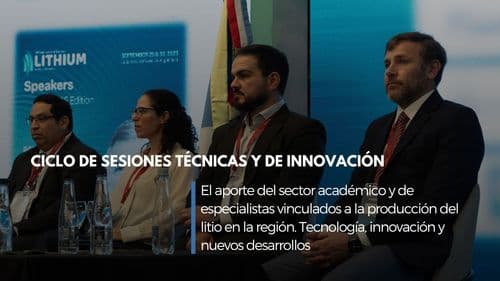
Technical Sessions Series Event closing led by academics and experts from the scientific community linked to the lithium sector.
Sep 30, 2025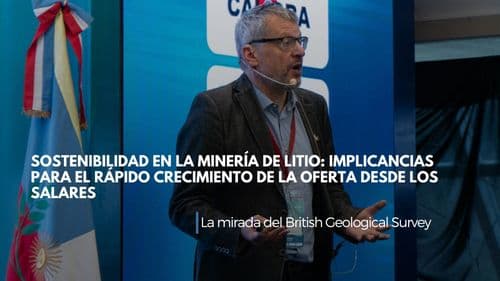 Duration 21:04
Implications for the Rapid Growth of Brine-Based Supply
Sep 30, 2025 Duration 16:56
Value Engineering: Efficiency and Optimization for Mining Projects
Sep 30, 2025 Duration 12:43
Cerro Blanco Geothermal System – Antofagasta de la Sierra
Sep 30, 2025 Duration 23:21
Own Goal: Why the Long-Awaited Push for Industrialization is Destroying Value
Sep 30, 2025 Duration 44:07
Human Resources: The Key Link in Creating Value for the Lithium Industry
Sep 30, 2025 Duration 21:31
Fastmarkets: Global Lithium Prices — Volatility Amid Supply-Demand Imbalances
Sep 30, 2025 Duration 26:19
S&P Global Commodity Insights: Americas Lithium Supply Chain — Navigating Slow Progress in a Landscape of Opportunities
Sep 30, 2025