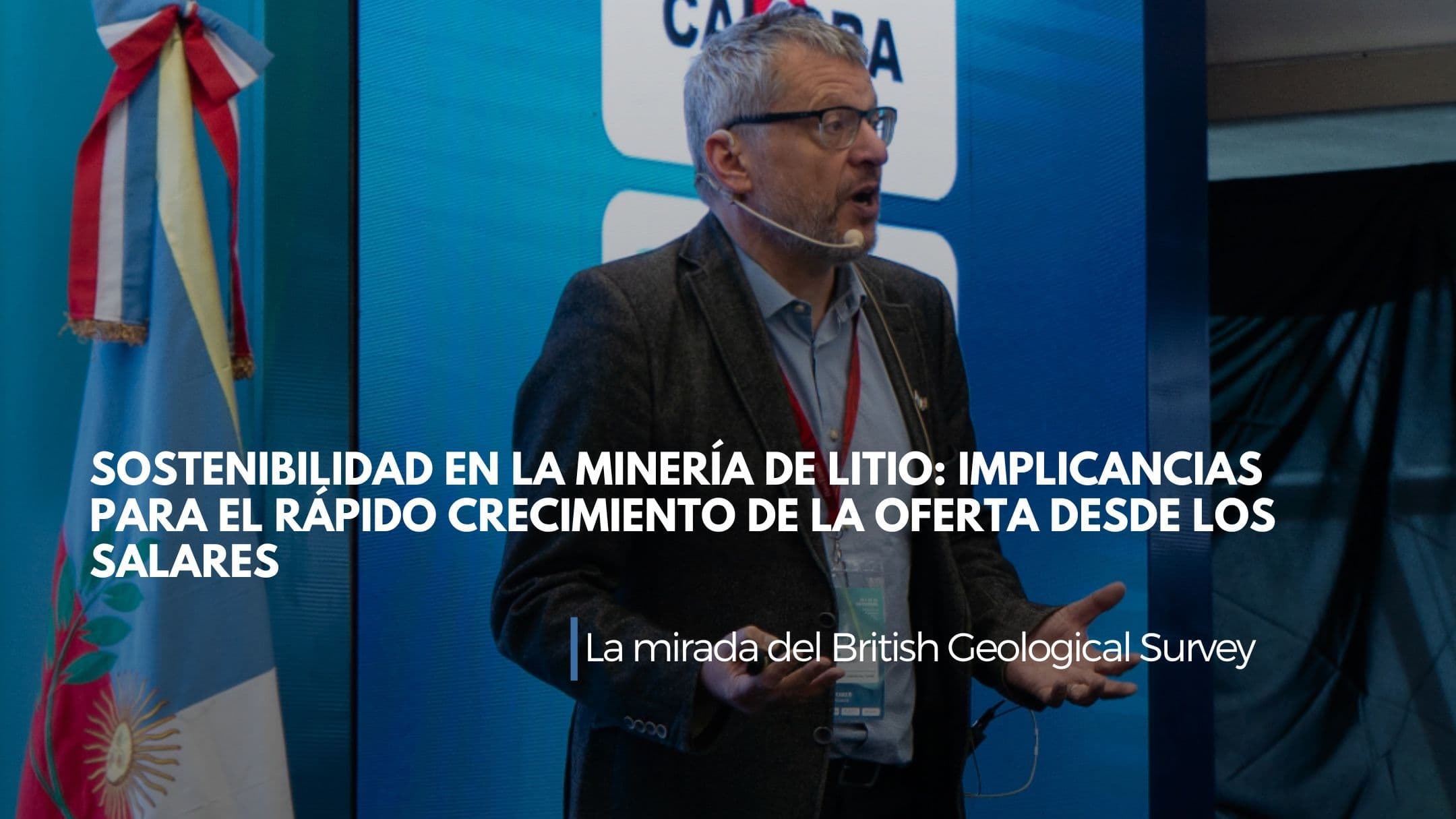

Implications for the Rapid Growth of Brine-Based Supply
September 30, 2025 · Duration 21:04 · 1 speaker
The British Geological Survey perspective on sustainability and lithium mining
Speakers

Andrew Hughes
Principal Groundwater Modeller, British Geological Survey (BGS)
Transcript
Read the full transcript
0:23Hello, and just check that this all works. No, that's not good. Gracias, gracias. So, firstly, I'd like to say a big thank you for the invite to speak here at Panorama Mineral. It's a great honour, and I'm looking forward to talking to you, and I'm aware that lunch is coming, so I will keep to time. I have a few thank yous to say. to the embassy team, Alfredo and Jemina, for their work to get us here, and also to the project officer, Luke Harper, from the Foreign and Commonwealth Development Office. It's also a great honor to be in Argentina again, and particularly in the province of Catamarca.
1:13So what I'm going to talk to you today is about sustainability, and sustainability has a lot of different meanings for different people, and the work I'm presenting... is that's undertaken by the BGS Brines team, Evie Petaratsky, Hannah Grant who I'm pleased to say is in the audience today, Rowan Hawkes and myself but of course like many scientific and other studies there's a huge team behind us so I need to thank them. So what I'd like to do is pose a series of questions because sustainability means many things to many different people So I want to think about, is lithium mining sustainable from an extraction point of view?
2:03Is lithium mining environmentally sustainable, or can it be? Is it socially sustainable? And cumulative impacts, can they be managed? And in particular, I'd like to end on some recent, recently completed... completed and some current BGS projects that we're exploring some of these issues. So I'd just like to introduce the organisation I work for. As many of you are aware, the British Geological Survey is one of the world's oldest, we're very pleased with that.
2:38It's a public body, it's not within government but it's part of government and we undertake strategic geoscience. really on behalf of society, both in the UK but also worldwide, which is why I'm standing here. The important thing though is we are impartial and independent of government. We try and provide the right scientific advice for the right situation. Our turnover is something like 80 million US dollars and we receive just under half of that from the government, the rest we make up with bidding for projects and as you can imagine because I'm standing here we operate internationally and many of my colleagues including myself both enjoy and operate in countries around the world so just to give you a quick background to lithium brines and BGS firstly this is all part of the UK's critical mineral strategy and what we're trying to do within the UK is really improve the resilience of critical mineral supply
3:48chains. We want to accelerate the growth of UK's domestic capability, very importantly collaborate with international partners, and then enhance international markets. And as part of that we operate the critical minerals intelligence center that's funded by the UK British government and we provide advice to the UK government on the supply demand and market dynamics of the mineral sector including economic, social and governance issues.
4:21Now, we've undertaken work in the region for quite a long time. You can see I've got a few grey hairs, so I started my work in 1994, working on Ombre Murto, amongst other projects, when lithium perhaps wasn't so sought after, it was potassium. in those days but recently in 2018 we've been asked by stakeholders both the UK government and internationally to become involved in this sphere and we again we've been very pleased to do that and over the years we've done various pieces of work and I'm going to end up talking about the work we're doing in the last year or so but very importantly because we are a public body we want to make our research as openers openly available as possible so all of the work all of the science I will talk about you can follow up and read and whilst the majority of it is in English at the moment we are obviously recognizing that we have to work in two languages and we are working on publishing reports in both Spanish and
5:26English as well so there's the report my colleagues are very bored with me talking about this but I did do the work in 1994 So, my first question is, is lithium mass extraction from brines sustainable? And first off, I think we want to, and this is part of our role, we want to have a look at the situation. Now I know many of you, if not all of you in your room, are very familiar with the landscape about lithium brines and salars.
5:54But we like to use these diagrams as a way of summarising the issues and in showing the important features that occur in the region itself. And I still can't get them to think. So, what we would do is develop this diagram. It's a summary diagram. It's not any one solar, but it shows typically the processes that occur. And we're looking at, for example, this is the Atacama style of extraction. So, we've got the well -filled here, the evaporation ponds, which many of you will be familiar with, the processing plant, which is not necessarily going to be on the solar itself, and...
6:33the other operations. But importantly, what we want to summarise is the fact that there's people on the solar itself that rely on the drinking water, have a spiritual connection with the salt flats, but animals as well. We're very familiar with the flamingos and their interrelationship with the lagunas on the salars. Now moving into perhaps the 21st century, then DLE comes in. And here, this is a diagram to represent the changes represented by...
7:01DLE. So we've got the DLE plant itself, often on the salar, we've got the well field which can be smaller here, but also importantly we've got reinjection. And this is to make the point that actually reinjection sits between the wellfield and the environmentally sensitive areas where the lagunas live and breathe. And this is a very important point about the salar itself. Now the question I'm asking is mining sustainable and some of the work this is a representation of the work we've done in Bolivia thinking about how the provenance of lithium how it gets to the solar and how it gets created and you're very well aware that it's evaporative processes in the natural environment it's evaporation predominantly from the lagunas which concentrates the lithium to the concentration value as grams per liter or there or thereabouts that it's economic for extraction So we put together this project, again you can read more about it, but basically we looked at a way
8:02of creating a workflow that we could then put together an understanding of how lithium is concentrated. One of the things we did with the model that we created as a result of this is we looked at the travel times, the time it took for a particle of lithium to get from the end of the catchment into the solar itself, and that's often of the timescale of a million years. which is obviously quite interesting because the system itself is relatively young, the Andes are between 10 and 20 million years old, a relatively young mounting range.
8:34So clearly, as the lithium is making its way to the solar, things are changing. And the other thing that changes recently, changes over time, is the climate itself. And this diagram is looking at the changes of rainfall backwards from the present day. And the curve represents the fact that the system can get drier and wetter. when it's wetter, the deposits are more lacustrian, more sedimentary. When it's drier, they're halite. So you've got this stacked system of halite and lake deposits. But I think what my point is is that you've got this complex system that evolves over time and it's actually quite difficult to understand.
9:11I mean we heard a talk earlier about geothermal operations and that's sort of thinking about a basin scale. and evolution. So I think the thing to bear in mind is that lithium deposits take a long time to come in place. In Uini we study about 200 tons a year of lithium goes into the solar but extraction as we've heard earlier is at least 4,000 tons a year. So clearly mining isn't sustainable from a lithium point of view. But can it be environmentally sustainable? Now one of the things that's really important to bear in mind I feel anyway and particularly as a groundwater specialist is that there are complicated systems. They are the most complicated groundwater system on the earth, I would argue. It's from my point of view. And so what we've tried to do is create these diagrams based on our understanding but importantly what's available in the open literature to really pull together the main features
10:10of what's going on. And I think the really key thing here is the Lagunas. This is where the environmental target is And this is the thing you really must understand if you're going to appreciate the environmental impact of well -filled operations on the solar itself and the higher level species, such as flamingos. Now, clearly, you can protect these systems using reinjection, because essentially what you're doing is reducing the mass of brine, the red stuff here, that you're taking out.
10:39If you reduce the mass of brine you take out, you reduce the lowering of the brine surface, you protect. the Lagunas. Job done. However, what I'm not representing here is the geological complexity in the subsurface and really that's another key part of understanding these complex systems. Now this is just to reiterate a diagram again we produced for one of our papers, but thinking about the difference between traditional evaporation here and the DLE, I'm thinking about the sort of qualitative differences of brine of the brine water movements around the system, and you can clearly see that actually the direct lithium plant, there's less loss of water to the atmosphere, often controversial in these arid systems, but the fact is you need perhaps more water to run the DLE plant in itself. So it's a trade -off. Whilst you can reduce the localised environmental impact on the Lagunas, you then have to put more embodied carbon...
11:41for example, in the DLE plant itself, but also you have to have other feedstocks, including fresh water, going to the DLE plant. So clearly there's a bit of work to do there to understand the advantages and disadvantages of these two systems. And going back to Ombre-Murto, it is interesting that Ombre-Murto has had the longest DLE plant operating in the lithium triangle region.
12:06And it's interesting to know why that might be. So how can lithium brines be extracted responsibly? This is a piece of work we did based on workshops we undertaken during COVID, online and virtually, and we came across, we looked at the different challenges. In this case, this diagram represents the environmental challenges, the different impact receptor, such as lithium operations, the environment, and the communities and the bars there you can see are the different severity of the impacts on each side. Now I haven't got time to go into those in detail but I think the things we found that there was a significant challenge in the water cycle itself particularly around brine abstraction and the freshwater abstraction but also the geochemistry. One of the reasons that the salars are so complicated is because you've got a lot of solutes in the system that can interact. And this could be one of the issues in terms of
13:11reinjection. And again, this piece of work we summarised in a paper, which you can read. So the other thing is cumulative impacts. We've talked a lot today about different projects, but they sit in an area, they sit in a water basin, and they share resources, both natural and human-made. Now, the good news is... there's a number of different ways to look at environmental impacts on a broader sense and also to manage them as well. And these are some examples of the options available to you. But I'd like to just put a little bit more detail on strategic environmental and social assessment, so called SESA, but also the UN Resource Management System, UNRMS. So the first thing is about strategic environmental and social assessment, SACERS, the really important thing is that they are cross -border and multi -dimensional. They look at environmental and social impacts and they look at that together. They're higher
14:16level than the project-based environmental in impact assessment, which means they cover a larger area, not just the project itself, and they can be looked at in the light of policy plans and programs within the region and they can link into this. making and they really are a tool for decision makers to look on a broader sense and see what is going on and how to monitor and minimize the impacts of multiple projects either in lithium or other extractive industries. The other opportunity is the United Nations Resource Management System or UMRMS and this really embodies the sustainable development goals, the SDGs, into a system that can look at how your project is operating. And again, it looks everything from water aspects to social aspects and all things in between. And it is a very transparent and versatile tool for all stakeholders to examine the situation, including civil society. So the last part of my talk really
15:22is just to think about the recent and current BGS projects, and how they... fit into the sustainability argument. Now we're very lucky that we got a recent UK government funded science and innovation project to look at responsible sourcing of lithium in a fast changing, fast increasing market. So given that we're a research organisation we decided to focus on producing a research roadmap to understand how we can address some of these challenges.
15:54to upscale lithium production and minimize the impacts. So we did it by a series of workshops in Chile and Argentina, including up the road at Salta. And we took our understanding, both ourselves and the community understanding internationally, and tested it in groups of stakeholders, much like yourselves at the moment. And some of you in the audience actually came along to these meetings.
16:19We used the pestle analysis, which is political, economic, social, technological, legal and environmental to provide a framework for what is going on. Now, based on the outcomes from these workshops, we came up with nine key challenges that the research roadmap could address. So we're thinking about solar processes, environmental challenges, new technologies, including DLE, Thank you.
16:50about infrastructure, supply chains and development, data and transparency, governance issues, social issues, standards and certification and the global lithium market. And we've heard a lot of talks this morning about the lithium price and last year this was clearly a big concern for a lot of stakeholders because the price had just undergone a significant reduction. But just a few things on...
17:18data and transparency. There was a lot of talk earlier about portals, and that's excellent. I think we certainly would advocate that data has to be shared and made available, but in a way that all stakeholders understand. And the other thing is about standards and certification. There is a proliferation of standards and certification approaches. The real question is which ones work, which ones are useful, and which ones actually help.
17:46reduce environmental issues. So we produced this diagram and this diagram is part of a summary document that's available in Spanish and I can provide details if you wish to, but we took the nine research priorities and then started adding in short -term projects which would help understand this, particularly in the research field. I won't go into these details because of the time, but some of these projects can then feed through to the work we're doing at the moment now. So just to sum up, my final few slides is part of the FCDO Growth Gateway project which is funding me to be here today.
18:30I'm very pleased that we'll be able to do a project in Argentina. We're developing the BGS view on cumulative impacts of lithium and copper mining given their potential. proximity in Argentina given in the northern provinces, and what we'd like to do is a system review gap analysis engage with stakeholders such as we're doing now and then come up with suggestions for a framework to how to minimize these impacts.
18:59So we have a series of questions and this is where you know we would value your input. So how are lithium mining impacts currently managed in terms of environmental and social? What are the governance frameworks being considered for holistic approaches? And then how do different stakeholders view the problem? What mechanisms are there to take their views into account? And finally, is there a higher level view on lithium and copper mining and their potential for cooperative resource usage, shared infrastructure and the like?
19:33So my final slide, so we can go to lunch, is thinking about series of questions I posed earlier. So is mining lithium brine sustainable from an extraction point of view? Well the answer is no. It takes a very long time for the lithium deposits to be produced and we're taking out, certainly in parts of the world we've studied, much more lithium that's going in on a daily basis. Can lithium brine be mined environmentally sustainably? Yes, but we would argue that the really key thing is to have the- good subsurface system understanding to understand how the extraction from the wellfield can impact the key environmental targets. And can lithium mining be socially sustainable? Well the answer is yes again but with the caveat we have to ensure that all stakeholder views are taken into account from all levels. And then can cumulative impacts be avoided? Again the answer is but with the right approach and using the right frameworks so my final
20:40point is we feel the rapid and responsible lithium production from Salars is possible but require will require concerted effort from the international community and we would like to play our small role in making this happen thank you very much for your attention and I'll be happy to have discussing over lunch
More from this event
 Duration 2:40:50
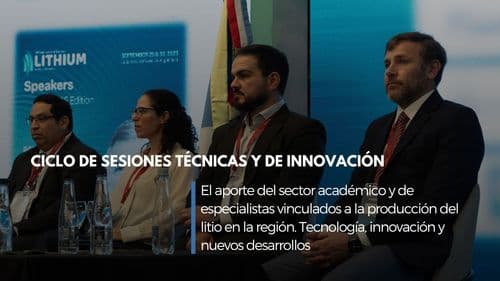
Technical Sessions Series Event closing led by academics and experts from the scientific community linked to the lithium sector.
Sep 30, 2025 Duration 16:56
Value Engineering: Efficiency and Optimization for Mining Projects
Sep 30, 2025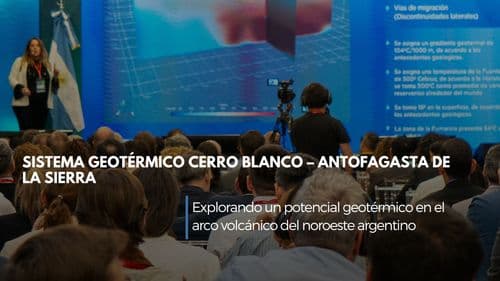 Duration 12:43
Cerro Blanco Geothermal System – Antofagasta de la Sierra
Sep 30, 2025 Duration 23:21
Own Goal: Why the Long-Awaited Push for Industrialization is Destroying Value
Sep 30, 2025 Duration 44:07
Human Resources: The Key Link in Creating Value for the Lithium Industry
Sep 30, 2025 Duration 21:31
Fastmarkets: Global Lithium Prices — Volatility Amid Supply-Demand Imbalances
Sep 30, 2025 Duration 26:19
S&P Global Commodity Insights: Americas Lithium Supply Chain — Navigating Slow Progress in a Landscape of Opportunities
Sep 30, 2025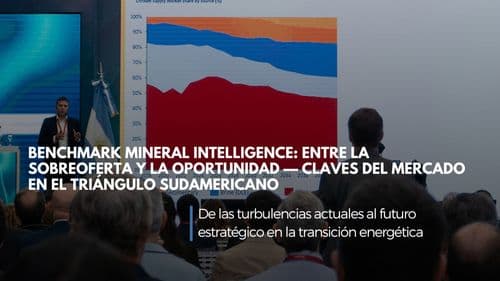 Duration 25:33
Benchmark Mineral Intelligence: Between Oversupply and Opportunity — Key Market Insights from the Lithium Triangle
Sep 30, 2025