Rodolfo Navas, Director of Technical Secondary Education and Vocational Training in San Juan, warned that demand for enrollment in technical schools has surged over the last two years, driven by the employment opportunities generated by the mining industry. Admission requests currently exceed institutional capacity by between 150% and 200%.
The official explained that mining activity impacts a wide range of specialties, from Electromechanics and Electricity to Renewable Energy and Food Processing. He also highlighted the collaborative work being carried out with companies and mining projects to align educational programs with labor market needs, at a time when the shortage of technicians and skilled workers has become one of the sector’s main challenges.
By Panorama Minero
Technical education in San Juan is experiencing unprecedented demand fueled by expectations surrounding mining activity, particularly metalliferous mining. Rodolfo Navas, Director of Technical Secondary Education and Vocational Training at the Ministry of Education of the Government of San Juan, noted a significant shift in the interest of young people in technical careers, creating unprecedented pressure on the public education system.
Within just two years, the situation has shifted from available vacancies to critical saturation. According to Navas, at the beginning of the current administration in late 2023—during enrollment for the 2024 academic year—many technical schools were unable to fill all available positions and still had vacant spots. However, projections for the 2025 and 2026 academic years have shown a complete reversal. Today, all institutions report excess demand ranging from 150% to 200% above their available capacity.
A tangible example of this pressure occurred in the department of Albardón, where groups of parents approached the Ministry of Education requesting the opening of additional places, a demand that could not be met due to the physical limitations of the institutions.
Navas explained that this phenomenon is not a passing trend but rather a consequence of mining’s “cross-cutting impact” on the provincial economy. The employment expectations generated by metalliferous mining affect nearly every technical specialty.
The official highlighted strong demand for traditional technical programs such as Construction Technology, Electromechanics, Electricity, and Automotive Mechanics, the latter being essential for maintaining the heavy vehicle fleets used at mining operations.
Similarly, areas such as Renewable Energy have gained unusual prominence, with particularly strong growth in schools such as EP 5 and EP 7. Even sectors such as Food Processing are benefiting, as they are responsible for supplying critical goods to high-altitude mining camps.
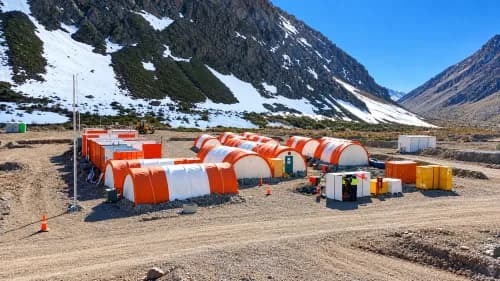
To ensure that training remains relevant and effective, the Ministry of Education maintains close ties with the private sector. Navas mentioned direct collaboration with major projects such as Vicuña, Los Azules, and Gualcamayo, as well as with the Industrial Union, mining service chambers, and various SMEs.
“If we were not connected to the private sector, the work carried out through technical education would not be relevant,” the official emphasized, underscoring that the provincial government's directive is to respond to labor market needs so that graduates can achieve immediate workforce integration.
The challenge, however, is significant and extends beyond provincial borders. Navas compared San Juan’s current situation to what occurred in northern Argentina with the lithium industry, where demand for skilled trades and technicians consistently outpaced the educational system’s capacity to supply them.
In response, San Juan will host a regional meeting of provinces at the end of June. The forum will seek to coordinate joint responses to the growing demands of the mining labor market, recognizing that as mining operations expand and dormant mines return to activity, the gap between workforce demand and training capacity has become one of the province’s most important strategic challenges.