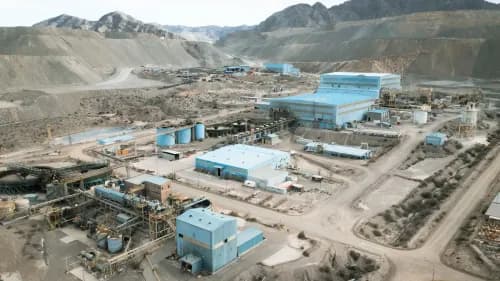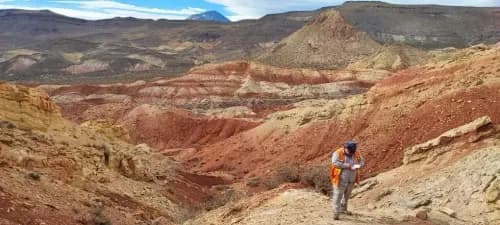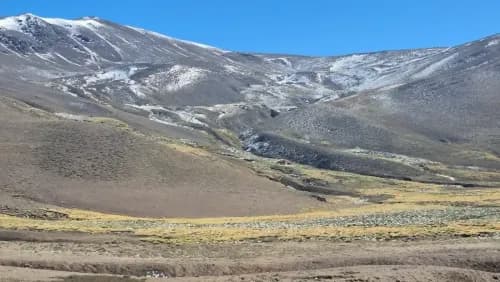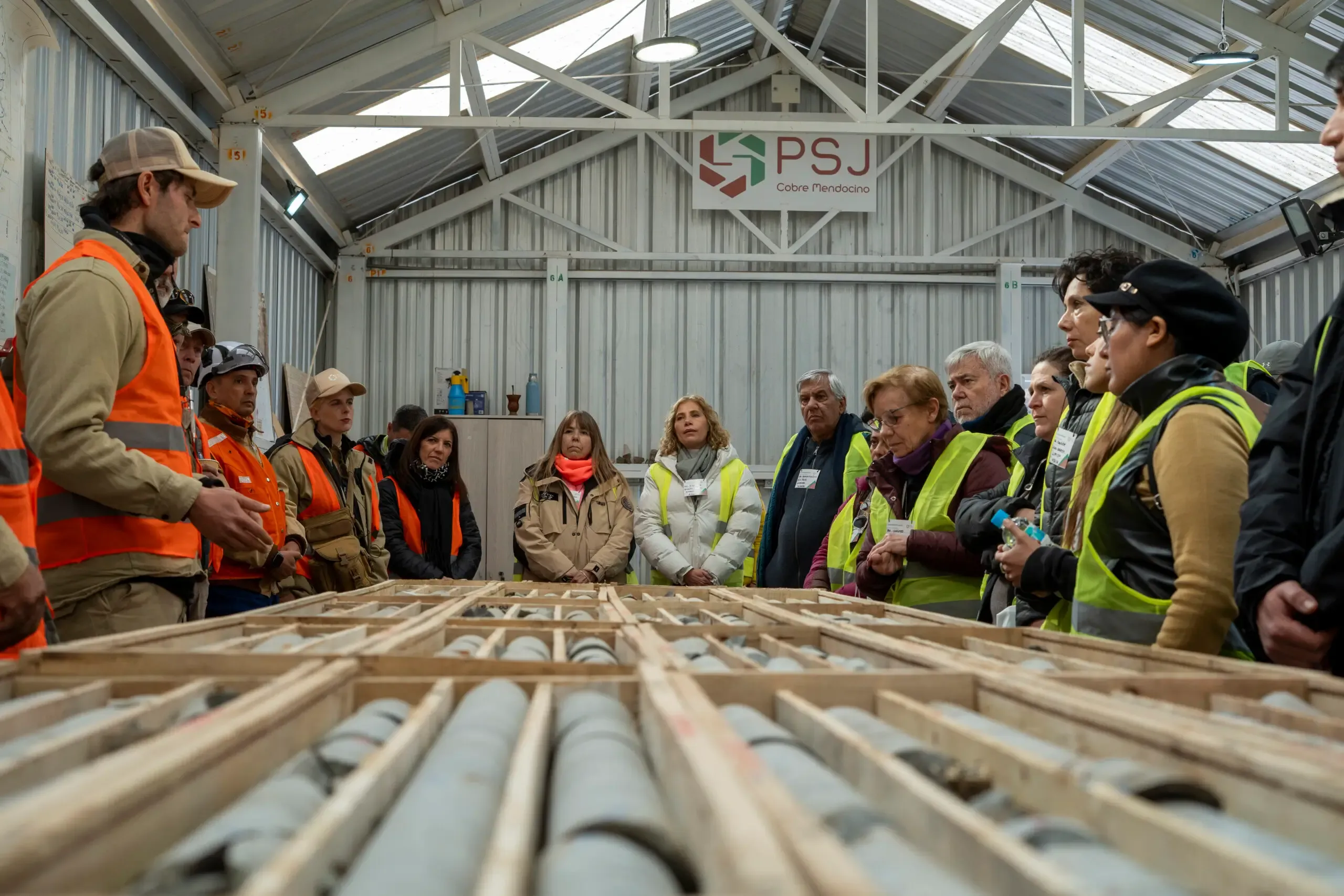
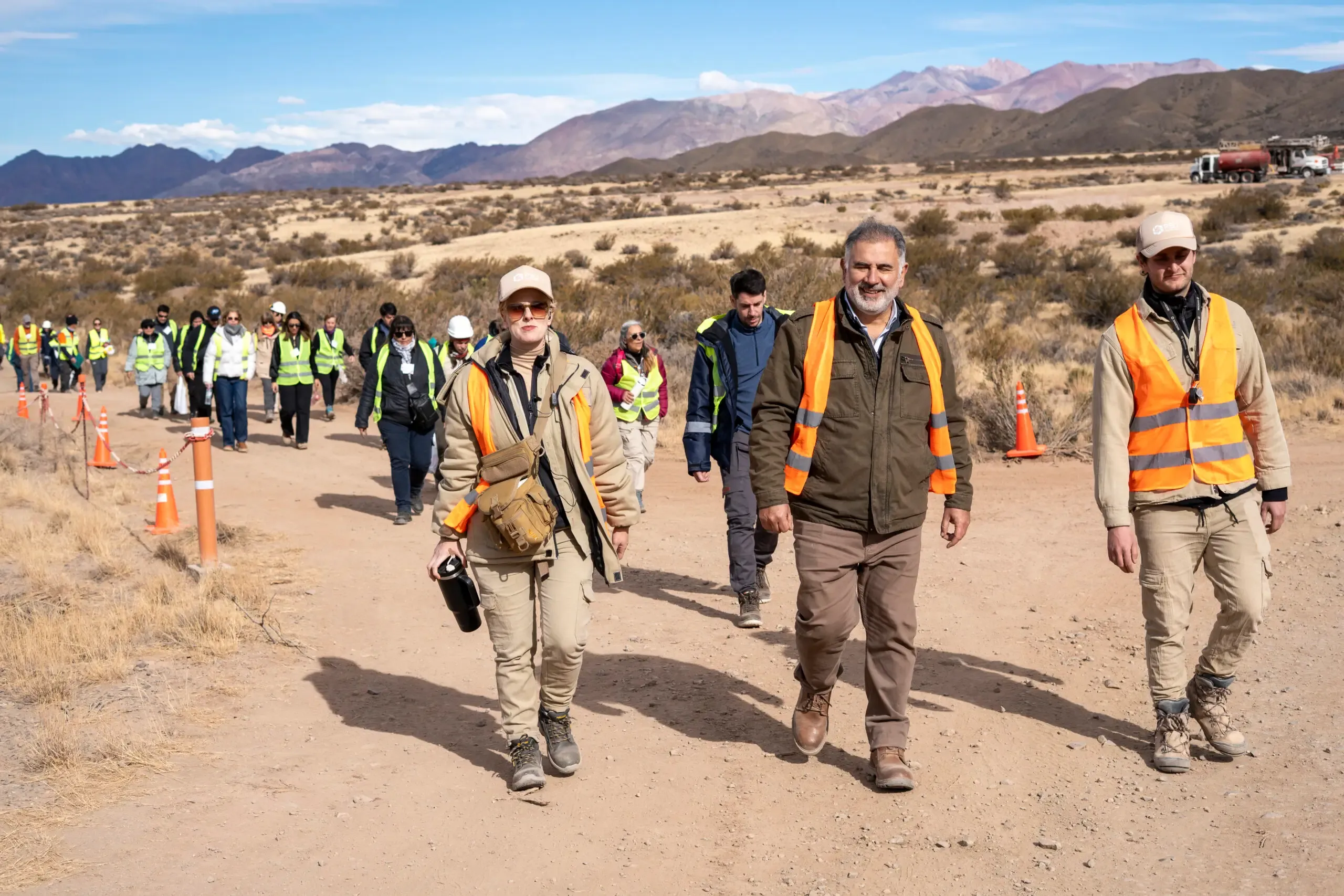
Less than six months after its formal establishment, the Environmental Management Unit (UGA) associated with PSJ Cobre Mendocino carried out its first participatory inspection open to the community at the project located in Uspallata. The site visit brought together provincial authorities, representatives of technical agencies, and registered citizens to participate in the monitoring and oversight of the activities currently authorized at the deposit.
By Panorama Minero
The event represents the first field deployment of a structure that Mendoza activated following the legislative ratification of the Environmental Impact Assessment (DIA) for PSJ, the first metallic mining project for exploitation approved in the province under the framework of Law 7,722. It also marks the transition from institutional formalization to the actual operation of a system that the provincial government seeks to establish as the standard for mining development.
What is the UGA?
The Environmental Management Unit is a technical and multi-sector body created to support the monitoring and oversight of mining projects with an approved Environmental Impact Assessment. Its role is to complement the work of the Mining Environmental Authority and the Mining Environmental Police through field inspections, document reviews, technical monitoring, and the ongoing evaluation of reports incorporated into the environmental file.
Its design aims to broaden oversight and strengthen the traceability of every operational stage. It goes beyond traditional inspection by incorporating a framework of continuous monitoring and open participation.
In the case of PSJ, the UGA is composed of more than 20 organizations, including the General Department of Irrigation, the National University of Cuyo Foundation, the National Technological University, provincial agencies responsible for the environment, biodiversity, cultural heritage and territorial planning, the Provincial Highway Directorate, EPRE, and agencies involved in water and energy monitoring.
This structure also includes a component that distinguishes the Mendoza model: the possibility for adult citizens to participate directly in inspections through an open registration process.
Its implementation began with Malargüe Western Mining District I, later expanded to Malargüe Western Mining District II, and is now being applied for the first time to a mining project in the exploitation stage.
From Exploration to Exploitation
The difference in scale between those previous experiences and PSJ is both technical and operational. While the UGAs in Malargüe monitor projects in the early stages of exploration, with campaigns focused on the initial validation of geological targets and the generation of baseline information, PSJ is already working on a defined deposit with an in-fill drilling program that forms part of the path toward feasibility studies and project development.
The project already has an Environmental Impact Assessment approved and ratified by law and is currently advancing an in-fill drilling campaign aimed at increasing data density within known mineralized zones to improve the resolution of the geological model and optimize key engineering and design variables.
In this context, PSJ Cobre Mendocino CEO Fabián Gregorio stated: "Although we are currently going through a highly technical development stage, with significant engineering work, we also consider it essential to listen to the community."
This changes the nature of oversight. As the project advances, technical complexity, the volume of information, and the need for continuous monitoring of environmental, operational, and water-related variables all increase.
In this context, PSJ becomes the first operational test of the UGA model applied to a project moving toward production.
The First Site Visit at PSJ
During the visit, participants toured the areas where the in-fill drilling campaign and other technical activities related to the consolidation of geological and engineering information are currently underway. The visit began with a health and safety induction and continued with technical presentations on the objectives of the campaign, the work methodology, and the environmental management measures implemented.
The group then visited several operational locations where participants were able to observe the drilling activities and other work associated with the process of increasing the geological data density of the deposit.
Unlike an initial exploration campaign, in-fill drilling focuses on areas where geological information already exists and seeks to increase data density in order to reduce uncertainty regarding continuity, geometry, and grade distribution within the deposit. This information is essential for refining geotechnical parameters, improving mine planning, and optimizing the future design of the operation.
During the inspection, officials from the Mining Directorate also emphasized that part of the work is being carried out by Mendoza-based companies employing Mendoza workers.
"We were able to inspect the locations where Mendoza companies with Mendoza employees are working. These instances allow the community to participate in the monitoring process, enabling society to see firsthand what is being done and to follow each stage of the project," said Jerónimo Shantal.
This also links the project's technical progress with the development of a local supplier network and one of the areas the province seeks to strengthen in preparation for mining expansion: industrial and service capacity.
Transparency, Traceability and Continuous Oversight
The UGA model is also part of Mendoza's adherence to the Extractive Industries Transparency Initiative (EITI), an international standard designed to strengthen information disclosure, accountability, and multi-stakeholder participation in activities related to natural resources.
In practice, this means that monitoring does not end with a single inspection. The UGA has the authority to review technical documentation, coordinate additional inspections, analyze deviations, and monitor compliance with the environmental commitments assumed by the company.
The operation of this framework is becoming increasingly important in a province where metallic mining remained largely inactive for almost two decades and where one of the main challenges continues to be maintaining oversight mechanisms that are visible, continuous, and verifiable.
With this first participatory inspection at PSJ, Mendoza opened a new chapter in that process. Not only because of the progress of a specific project, but also because it has begun to assess in the field the actual capacity of the oversight model that it seeks to consolidate for the development of the mining industry.