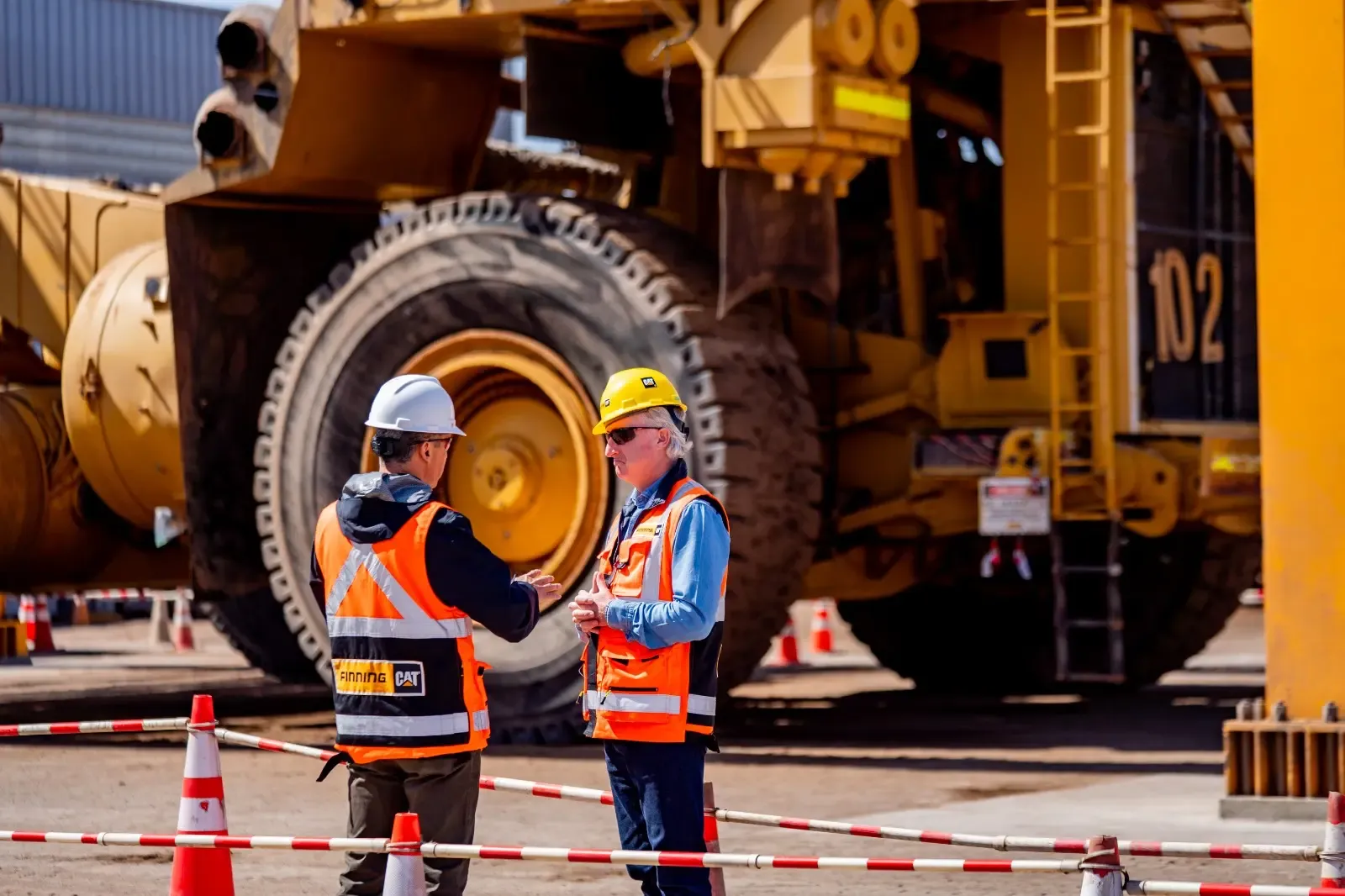
Kevin Parkes, President and CEO of Finning International, examined how artificial intelligence, automation and electrification are redefining the future of mining. He also highlighted Argentina’s potential as one of the major drivers of regional mining development.
By Panorama Minero
We would like to know which the new technologies are offered by Finning, like AI, robotics, and automation. Are we entering a new era of technology in mining equipment?
Mining is more challenging than ever. We face labor challenges, cost challenges, and geology challenges. Technology is one of the main ways to solve some of those issues, or at least improve them.
At the highest level, we already have autonomous vehicles, like the ones operating in Chile today. We also have mines in Canada that are completely autonomous and running extremely well.
There are many opportunities. Some people may focus on the impact on jobs, but it is important to think about AI and automation in terms of better work. Different work, but better work.
For example, you could drive a mining truck for 12 hours a day, or you could sit in an air-conditioned room and control the machine remotely. My belief is that we will still need more people anyway. Automation is not taking away jobs; it is changing the nature of the work.
When I get asked about AI, I also think about technical training. We currently have a four-year program for training our technicians. If we can accelerate that process, we can create a better experience for new people entering the industry. We will be able to train people faster and provide better support when they are actually on the job.
Another important area is data. Machines now generate large amounts of information through sensors across many different systems. This will help us plan better and reduce downtime. We will have the right parts, the right technicians, and the right training available.
Our company will be able to repair machines faster, which means greater productivity for customers. It will also help us improve parts management and ordering processes.
We also have guidance systems that help operators dig more accurately, work more safely, and compact material to the right standards. Machines are becoming increasingly intelligent, and they can help average operators perform at a much higher level.
Another important area is communication — making sure people can quickly reach the right experts and get the right information. In many ways, it is like getting very good health advice for a machine. Connecting with the right person to solve problems quickly is another great use of AI.
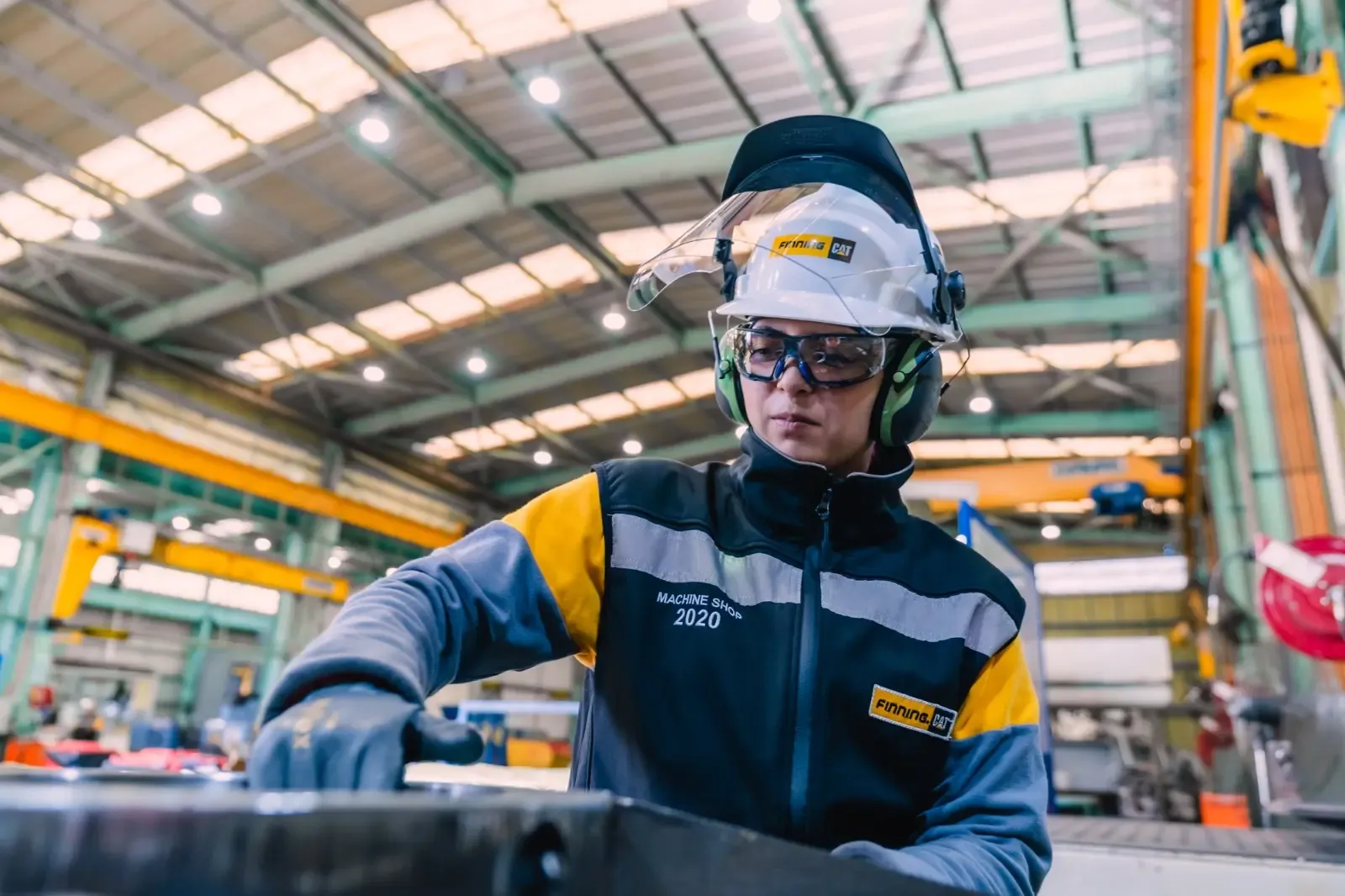
You have observed many young people at this San Juan International Mining Expo. These young people are already accustomed to digital environments and online video games. Could they become the future operators of mining equipment?
People are interested. I have a 21-year-old son, and that is how he thinks about technology today.
I think it is important to educate young people about a couple of things. First, mining is a long-term opportunity. Building success in mining takes time. We need to teach younger generations’ patience and perseverance.
Mining is also no longer the industry many people imagine from decades ago. Today there are technical jobs and technology everywhere.
For example, we have cameras that can detect tire temperature and pressure as machines drive past. These are just some of the many interesting applications of technology in mining.
For younger generations, these technologies feel intuitive and digitally familiar.
You commented that mining is no longer like it was in the old days. What are Finning’s solutions related to electric vehicles and batteries?
We have an electric truck today — a 793 — currently in trial. It is the second-largest truck we produce, and it will begin trials at Codelco in Chile in about two months.
It is an electric vehicle that can be charged while in motion. The system is called dynamic energy transfer. The truck has an arm that connects to an electrical charging infrastructure while it is operating.
In some parts of the mine, the vehicle uses batteries. In other parts, it is charged directly through the system while moving.
We also have diesel-electric trucks, which are already widely used around the world. These trucks use a diesel engine combined with electric motors. They can operate on diesel while also connecting to the energy transfer system.
Our company also produces hybrid machines that use combinations of engines and generators to power the wheels and final drive systems.
We believe we are on a very good path toward electrification. The transition may take longer than originally anticipated, but we are confident it is achievable, and we are very encouraged by the direction we are taking.
There are several challenges, like human skills, technology, and the lack of new ore bodies. Is this a kind of perfect storm for the mining industry?
In many ways, it is a perfect storm. We have ageing fleets and limited investment around the world. At the same time, we face labor shortages, rising costs, environmental challenges, and the need to adopt new technologies.
All of these factors together create major challenges, but they will also help make mining more resilient, sustainable, and efficient in the future. Technology adoption will be essential.
Finding the right partnerships is also very important. During these days, I have had many conversations about starting the education process much earlier — in high school, or even before high school. We need to engage young people in mining much sooner.
Young people learn differently today. Solving this perfect storm will require a combination of technology, new ways of working, better recruitment and training, and stronger partnerships.
That will be essential to overcoming these challenges.
You also referred to the environment. What about new technology related to recycling tires?
The first step in sustainability is making things last longer — tires, engines, truck frames, and major components.
The second opportunity is reuse and remanufacturing. In South America, for example, we rebuild around ten engines every week. They return to our facility in Antofagasta, where they are completely disassembled, rebuilt, tested, and then sent back to mine sites.
An engine can be rebuilt seven or eight times, which reduces the need to manufacture and transport new engines around the world.
We do the same thing in Canada. We focus on reuse and remanufacturing.
Our goal is to make components more durable, longer-lasting, rebuild able, and reusable. That is part of our value proposition: performance, durability, and remanufacturing.
We often say our machines are built to be rebuilt. We design them so they can continue operating efficiently for many years through multiple rebuild cycles.
What is your vision of the mining industry in Argentina, here at the San Juan International Mining Expo?
Look around at this event. You mentioned last night that this show is three times larger than the previous edition. When I walked in today, there were thousands of people waiting to enter.
You can see both young people and experienced professionals here. Old colleagues are reconnecting, and new generations are getting involved.
We have waited a long time for this opportunity, and I have never been more optimistic about Argentina than I am today.
Argentina has gone through challenging periods, but it also has a unique opportunity to develop its resources and expand its power generation capacity. Other countries around the world have made mistakes during similar growth processes. Perhaps Argentina did not move as quickly, but it also avoided some of those mistakes.
This is a very important moment for the country. Argentina has educated, capable, and enthusiastic people. What Argentina needs — for its people, employees, and businesses — is stability.
If the country can maintain that stability, it will require patience, but I remain very optimistic about the future.