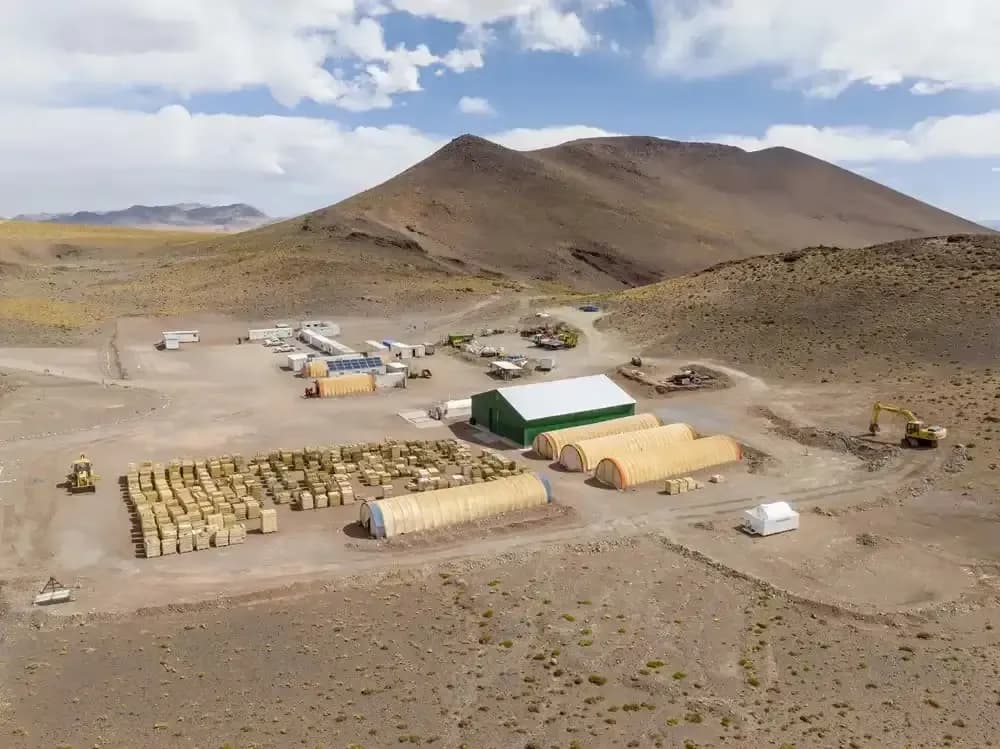
The AbraSilver executive details the technical status of the project, the coordination between Salta and Catamarca, and Diablillos' positioning in the global silver and gold market. The project has a projected processing capacity of 9,000 tonnes per day, an initial investment exceeding US$500 million (plus more than US$760 million over the life of the mine). With significant growth potential and a major opportunity for local supplier participation, the company aims to transform a historic deposit into a competitive mining district in Northwestern Argentina (NOA).
By Panorama Minero
The Diablillos project has just been incorporated into the RIGI. What concrete impact does this approval have on the planning and development schedule of the project?
The concrete impact is that it accelerates investment timelines. We estimate that we will begin pre-construction works as soon as the Environmental Impact Declarations (DIAs) from the provinces of Catamarca and Salta are available; in reality, only Catamarca’s DIA is still pending. One of the requirements of the RIGI is a minimum investment of US$80 million within the first two years, and at Diablillos that amount will be significantly exceeded.
At what technical stage is the project today and what are the main milestones you expect to achieve during 2026?
Today, the project is close to presenting a feasibility study and updated resource estimates, together with the final stage of approval of environmental impact declarations in the provinces.
How is the interprovincial coordination of the project between Catamarca and Salta progressing, and what challenges does developing a project that involves both jurisdictions entail?
It is an interesting aspect, since the good coordination between both provinces and the willingness to cooperate in this area add a development experience in the region that strengthens the mining sector and the relationship between them. For the project, it is an exceptional control factor that raises the quality level of the work on site, because it is inspected by both jurisdictions and every process contributes to improving the project.

From the company’s perspective, what production scale and potential mine life could the project reach?
The processing scale planned for the project is 9,000 tonnes of ore per day, and this leads to a mine life for the current pit of 16–17 years. With evaluations of growth in known resources and the incorporation of future mining methods in different mining phases, production could extend to close to 30 years.
AbraSilver recently announced the acquisition of new properties surrounding the project. What role do these assets play in the future expansion strategy of the Diablillos district?
These are geological targets associated with the Diablillos mineralizing system. Clearly, the consolidation of these areas will increase the mine’s life and its future economics.
What is the company’s long-term vision for Diablillos within the mining landscape of the NOA?
The company’s exploration focus is on Northwestern Argentina, with an interest in developing more projects like Diablillos. We have a team with sufficient and proven experience that has allowed us to reclassify a forgotten mine into a world-class project today.
In a context of growing global demand for metals, how does AbraSilver position Diablillos within the international silver and gold market, and what opportunities does it create for mining in northern Argentina?
The opportunity in the NOA has been demonstrating that a forgotten project deserves a second chance, and this allowed us to triple its resources in less than five years, making it 100% viable both technically and economically.
This can be replicated in many historic projects throughout the region.
The development of projects in the Puna involves logistical and energy challenges. What are currently the main infrastructure variables that affect the project’s competitiveness, and what progress has been made to address them?
Like any development in the world, it initially depends on energy development. The other challenges are then evaluated according to the natural factors of the region. The important thing is to size projects according to the available resources, while being aware of natural limits. Regarding logistics, today there are excellent local service providers who know better than anyone how to operate under mining safety standards, making this a strong sector within the industry.
Projects are built by communities and suppliers; mining companies are merely the link that makes it happen. Therefore, the added value of the resource is local and Argentine.