Trade, mining, and logistics: Panama explores new opportunities for integration with Argentina. PANORAMA MINERO’s exclusive interview with Juan Luis Correa, Ambassador of Panama to the Argentine Republic.
By Panorama Minero
How is bilateral trade between Argentina and Panama currently structured? What are the main sectors driving this economic relationship?
The trade relationship between Panama and Argentina has experienced a period of lower dynamism in recent years, although it continues to maintain relevant exchanges. Argentina mainly exports spare parts, engine components, and related services, while Panama exports services, chemical products, and cocoa. Panama’s incorporation as an Associate State of Mercosur at the end of 2024 opened new opportunities to deepen bilateral ties. Both countries are advancing negotiations on a trade agreement, whose Terms of Reference have already been signed, and the products of interest to each party will soon be defined.
Panama seeks to expand its export presence in Argentina with agro-industrial products such as coffee, pineapple, shrimp, and bananas. In this context, Panamanian producers and the company Cabrales have advanced an agreement to import green coffee beans, process them in Argentina, and market them under brands from both countries. The launch is expected in the coming months.
At the same time, Argentine companies have begun evaluating investment opportunities in Panama, attracted by its free trade agreements and special export-oriented regimes. Argentina’s economic opening is also encouraging national companies to explore new alternatives for expansion and business generation abroad.
Does Panama have a mining tradition, or is it a relatively recent activity?
Panama does not have a mining tradition comparable to that of other Latin American countries, although there are historical precedents linked to gold extraction dating back to the colonial period. In fact, when the Spanish arrived in Panamanian territory and founded the first city on the mainland of the American continent, the region was known as Castilla Del Oro (Castile of Gold), in reference to the presence of objects and handicrafts made of gold by indigenous peoples. However, these were very rudimentary and small-scale forms of exploitation.
Panama’s true incorporation into modern large-scale mining occurred in recent decades with the development of the Cobre Panamá project, operated by First Quantum Minerals. This undertaking represents one of the most important copper deposits in the world and constituted the main example of international mining investment in the country.
However, the mining contract linked to the project was declared unconstitutional by the Supreme Court of Justice toward the end of 2023, which subsequently led to the suspension of mining operations. Since then, the new Panamanian government has maintained channels of dialogue with the company, allowing, among other things, the commercialization of remaining concentrates, generating income for both the company and the State.
The Cobre Panamá mine contributes approximately 3% of the country’s Gross Domestic Product. Last year, even without the mining operation in production, Panama recorded economic growth of 4.4%; however, when the mine was operating, growth rates reached levels between 8% and 9%.
The project generates a significant impact in terms of employment and economic activity, both through direct labor and through the extensive network of suppliers linked to its operation. According to First Quantum estimates, during periods of peak activity the mine employed around 10,000 Panamanian workers, in addition to technical personnel from Canada and Australia, who also participated in training and knowledge-transfer processes for local workers.
Currently, the Government of Panama continues evaluating the next steps and the future of the project within the corresponding institutional and legal framework.
Are there opportunities for the development of Argentine mining suppliers in Panama?
Argentina has a broader and more diverse mining trajectory, with experience developed in different provinces and linked to different minerals. In that sense, interesting opportunities could arise for Argentine supplier companies in a potential scenario of reactivation of mining activity in Panama, contributing part of the services and capabilities they currently provide to the Argentine mining sector.
One of the most relevant aspects of the development of Cobre Panamá was the work carried out by First Quantum in the area of human resource training. The company promoted training and educational programs that enabled the incorporation of Panamanian workers into different areas of the mining industry. Today there are Panamanian professionals specialized in mining who acquired their experience directly through these training processes, considering that the country previously did not have a consolidated mining tradition or academic structures specifically oriented toward the sector.
Panama does, however, possess extensive experience in other strategic segments, particularly financial services and international banking, areas in which the country has been developing human capital for decades. In mining, that capacity-building process began more recently.
In this context, and subject to the decisions adopted by the Government of Panama regarding the future of Cobre Panamá, new opportunities could emerge related to supplier development, technical training, and regional business cooperation.
How do you currently assess the competitiveness of the Panama Canal in relation to initiatives seeking to develop alternative logistics routes in the region?
There are various projects and initiatives in the region, such as the Isthmus of Tehuantepec corridor in Mexico or the revival of proposals linked to an alternative canal in Nicaragua. However, the Panama Canal continues to maintain a highly competitive and efficient position within international maritime trade.
One of the main factors is the canal’s tariff and operational structure, designed to offer economic and logistical advantages over alternative routes, such as transit through the southern end of the continent via the Beagle Channel or the Strait of Magellan.
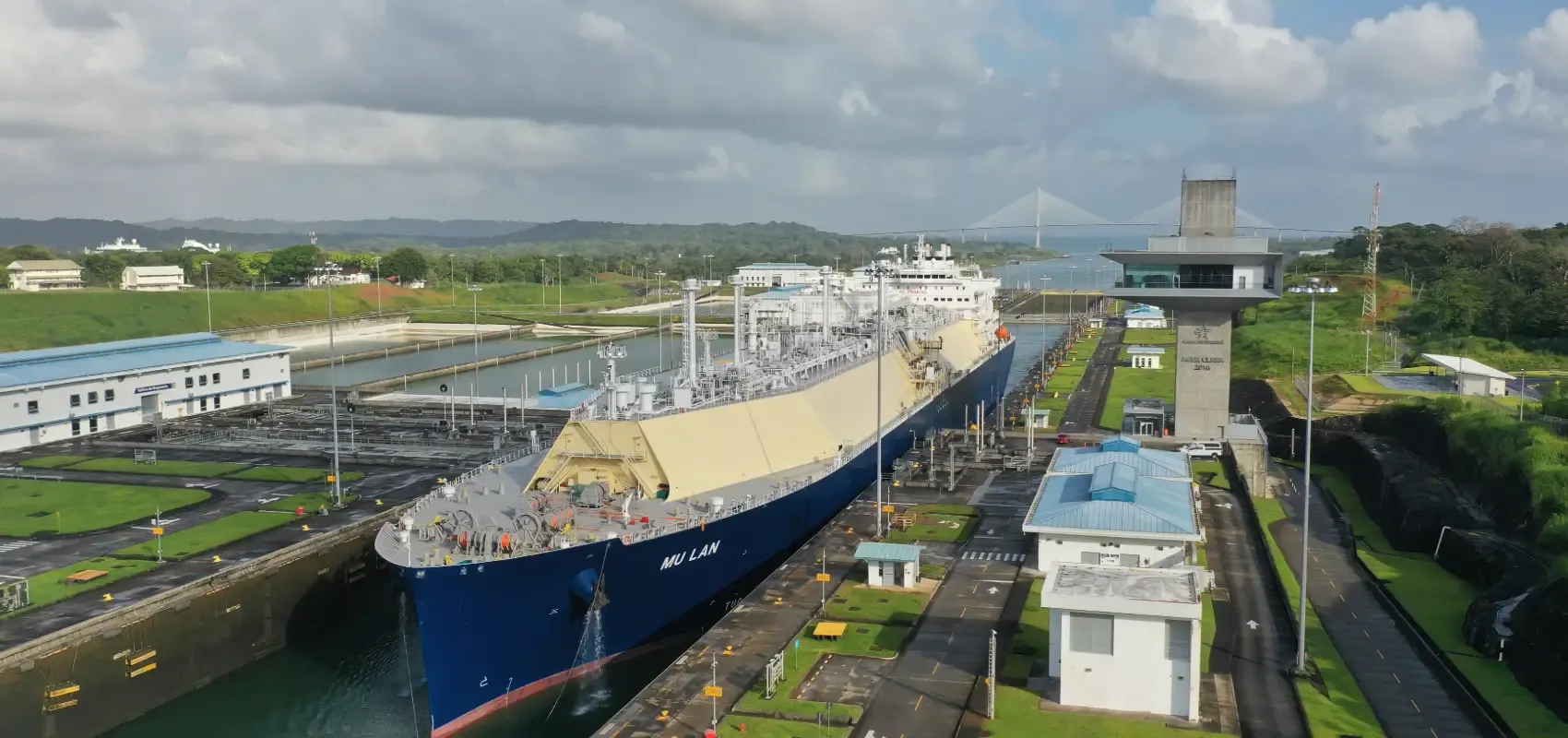
Furthermore, the expansion of the Panama Canal, completed approximately a decade ago, represented a significant leap in operational capacity. Before that expansion, a Panamax vessel could transport between 7,000 and 8,000 TEUs. Today, Post-Panamax vessels can move up to 17,000 containers and transit the canal in approximately 13 hours.
From a logistical standpoint, it is very difficult to replicate that efficiency through regional land corridors. For example, transporting a cargo of that magnitude by road from South American Pacific ports would require crossing multiple countries, with considerably higher costs and transit times.
Nevertheless, Panama understands that competition represents a positive incentive to continue improving its infrastructure and operational capacity. In this regard, the country maintains a long-term logistics expansion strategy. Panama currently has five main ports and is already analyzing the development of two new terminals, considering that by 2030 installed port capacity will begin approaching saturation levels. The objective is to guarantee sufficient infrastructure to support the growth of international trade over the coming decades.
Additionally, the ACP (Panama Canal Authority) authorized the construction of an interoceanic gas pipeline and an aqueduct to transfer water from the Indio River to Gatún Lake, with the objective of ensuring a secure water source to guarantee canal operations in the face of climate change. These investments amount to US$13 billion and will generate direct employment for the country.

“Panama and Argentina Are Advancing Negotiations on a Trade Agreement.”