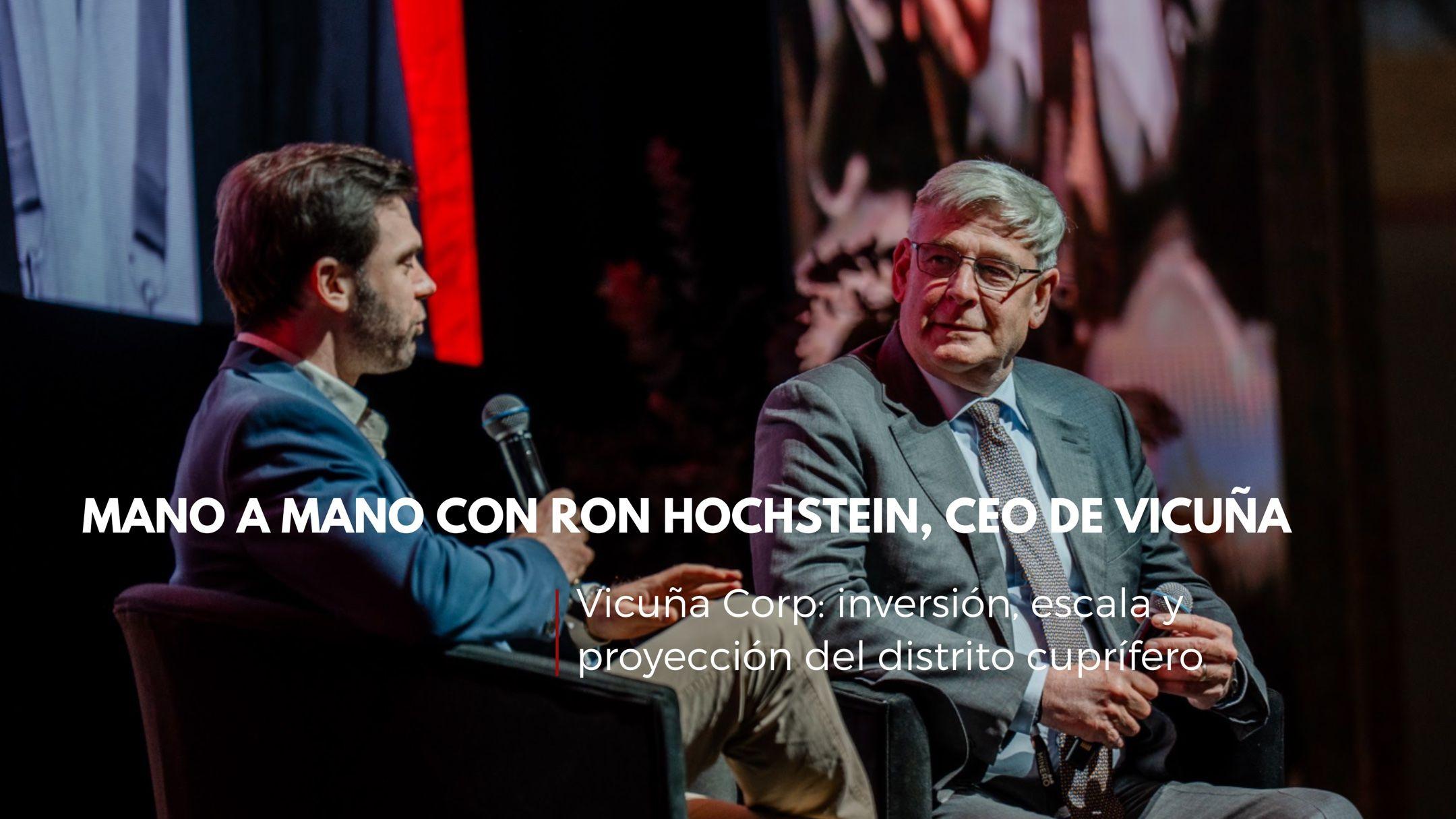

One-on-One Interview with Ron Hochstein, CEO of Vicuña: By Fernando Heredia, Forbes Argentina
May 6, 2026 · Duration 18:02
Transcript
Read the full transcript
0:09Hi, Ron, how are you? Muy bien. Este me preverá vez en este Monero, Panama, en San Juan. Es muy grande exposición. Muy grande. Great expectations about Vicuña project. It's true. I think... Everyone in this room knows at least something about Vicuña, but for those who are new in mining, can you tell them what Vicuña is? Vicuña is actually pretty unique. What's really unique is the history.
0:46It was discovered by Argentinian geologists and there was two separate deposits, Jose Maria Fila del Sol. And it's the history of the Lundin group originally who have been in the country now for over 30 years. They started with Alambrara, then the geology team moved to the discovery of Valadero. After that was sold, they then looked at this new area in the Vicuña district. And that was staked.
1:24Lucas Lundin like to say, it was an overnight 20 -year success. Those two deposits now have come together into the Vicuña joint venture, which is 50 % owned by BHP and 50 % owned by Lundin Mining. We just recently completed the preliminary economic assessment earlier this year. And it's the first picture which really shows the potential. for Vicuña in that by combining these two deposits this operation has a mine life currently of over 70 years. It will be one of the five largest copper mines in the world based on current operations and projected projects. The third largest gold mine in the world and the second largest silver mine in the this truly is a world -class large project and it's very exciting for the province of San Juan and for the Vicuña team it's really huge 18 billion dollars of investment right I I'm pretty sure that almost every day somebody ask you Ron when are you going to bring those 18 billions to Argentina we need them
2:48But now we know that part of that, I think that $800 million are going to be spent this year. Is that true? Yeah, this year our budget's $800 million. And we're spending that on engineering. We're spending that on some of the infrastructure. We're going out for bid to improve the roads there. We've actually started early earthwork. we started this about a week ago we have several new trucks and operators most of the operators are from San Juan province most of them are from local communities actually and that started the engineering there's drilling going on to continue to expand the resource and continue what we're doing year is doing all the work to bring it to the point where our shareholders, BHP and Lundee Mining, are planning to make a sanction or FID decision, essentially a construction decision for stage one by the end of this year.
4:03That's great. Infrastructure is a key topic. You mentioned some things about that. But which is the main plan of the company to be able to build the roads, the energy supply, and to be able to ship the copper around the world? Yeah, infrastructure is a big part where a lot of our planning is. And, you know, the first construction, the first phase of that 18 billion, 18 .1 billion is 7 .1 billion, which is the first stage one.
4:39There's a. There's over 1.4 billion of that is infrastructure. So we're doing a lot of work right now with the province and with the various firms to move forward on what work needs to be done on the highways. A big part is power. So we're working with the provincial authorities and everything on permitting. There's a hearing coming up in approximately, I think, just over a month from now.
5:08And the key is that what Vicuna is doing and with the province is to invest in that infrastructure, which will then be at the benefit of the province. So it's really a joint effort between the province of San Juan and Vicuna Corp to improve the infrastructure. And this infrastructure, too, it's just not for. Vicuña Corp. This is going to benefit the development of other potential mining operations in the province as well. It's just that we're first and we're moving aggressively and that's really what we need to develop the industry in this province. Talking about infrastructure, we heard in the news in the last few weeks some problems with the government of La Rioja about road that takes to the camp base have you reached an agreement with them yeah that was a challenging situation they filed a judicial action against vicuña corp about two weeks ago and the issue was around the part of the road that we use through the province there's a small part that goes through
6:26larioja and the overall project eia we've had a lot of support. I think one of the biggest things from this experience was the support from the province of San Juan in determining that, no, the primary jurisdiction is this province. But one of the credit to our team on the ground was that there started to be protests in Guantacal and other communities. against the provincial government because they wanted jobs.
7:05We have over 150 people currently working for Vicuña from La Rioja. This wasn't initiated by us. That was initiated as a grassroots thing from the community. And I think that's one of the strong things that we as an industry can really start. to show how we can benefit communities we just don't benefit our shareholders right we benefit communities communities can grow and when they start to see the benefits of the mining industry it's it's significant prior to coming to vicuna i was ceo of lending gold and we were tasked with building the first gold mine ever modern gold mine ever seen in ecuador It was over a 10 -year period, and through that construction of that mine, Lundin Gold is now the largest taxpayer in Ecuador.
8:10The provincial Zamorch and Chimpe, the province we're in, reduced poverty rates significantly. Local suppliers, over 95 % of the employees of Fruta del Norte are Ecuadorian. of which over 50% are from the local province, which had no mining experience. And that's really, we're taking some of that experience from lending gold and focusing on training, ensuring that people in local communities, such as our operators of our trucks, and businesses also are growing with the mining.
8:49Coming back to La Rioja, we have now been able to... to have dialogue with the government and i'm happy to announce that the judicial order was actually lifted as of today and therefore our teams are going to evaluate the road tomorrow to see what condition is but we'll be able to start using that road again tomorrow that's good news and you you've just mentioned ecuador a country with no experience in mining i'm not saying that argentina has no experience but we are not Canada or Chile. Do you see the the same problem in Ecuador of how to manage the expectations about mining and how can you apply your experience in Ecuador here?
9:38I've been involved with Facuña now since November of last year and part of the reason I was asked to come over was the the success we had in Ecuador. But I see San Juan actually is very different. I think San Juan is a province. This region does have a lot of mining experience. It's blessed with great geology. The key is now, how do we move forward with that? And part of it is the political environment we're in now.
10:15One of the key things we're in now is waiting for in order to make that sanctioned decision is our confirmation of our riggy PELP application which was made in December last year. We're continuing to work with the government on that application but that was one of the big things that really pushed BHP and Lundin mining to move forward. Combine that with the current the administration here in San Juan and they're showing their bit of their willingness to work with companies on infrastructure, on supporting the development of these various operations, it's the right time. As I think Mike Henry, the current CEO of BHP, said at a large investment conference in Miami, in a lot of respects, it's the perfect storm right now in terms of the position we have here in Argentina.
11:13two partners that want to see this move forward very rapidly and essentially just the quality of the project and it's a great time and I think San Juan in a lot of respects it is a mining province, it has a tremendous amount of opportunities we're already seeing local suppliers step up for example Cater West has taken over all the catering and going from, you know, we're just going to be going up to 7,000 people on site.
11:47That's a big job for a local company, but they're stepping up. They're ready to go. There's other contractors in that that we're working with to continue to expand. This province is just on the brink, I think, of some very exciting times. Have you decided if you're going to export by Chile or by the Atlantic Ocean? Right now, in the first stage, we are looking at transporting through Argentina into Chile.
12:17It's just it's much closer. Majority of the smelters are accessible off the Pacific side versus the Atlantic side. So that's the initial plans, but we continue to evaluate other options. There's a significant amount of infrastructure that comes with stage two, stage three. of the project, including a desalinization plant, potential concentrate treatment facilities, concentrate pipeline, etc. So there's a lot of work yet to be done.
12:50And what are the next steps? What's coming next? You mentioned the FID. We also are waiting for the RIGI. We are waiting for the start of the contraction. Can you tell us about... And how do you see the next year for Vicuña project? The next year for Vicuña and the team is also going to be a very exciting year for everyone here in San Juan and Argentina. You know, we're moving ahead to sanction.
13:24That's what we're really, the things we can control is we're doing all the engineering, ensuring that we're project readiness. We're hiring a... significant number of people right now our engineering company floor is doubling their staff within the next month and here in vicuna our our hr team is is very busy hiring significant numbers to be able to have be project ready be able to show our shareholders we're ready to build this the so a sanctioned decision is you're going to be big news for Argentina, the Rigi -Pelp. We're working with the San Juan government on various initiatives with regards to infrastructure. I think some news from them, hopefully over the next few months as well. We've got very good discussions going on right now.
14:23There's going to be some, the news may not be rapid, but there's going to be some very big announcements this year. And both shareholders have said they are working towards making a sanctioned decision by the end of this year. The numbers are so big that I can't imagine how all this can change San Juan in the next decade. Can you tell us something about your experience in Ecuador?
14:52How there, like, the impact of the mining projects in the region were... They were functioned The province that we were in in Ecuador had as I said zero mining and essentially was subsistence agriculture It also there's 24 provinces in Ecuador and so March and chip a Was the second if you looked at the lowest poverty level is the number one and Highest poverty level is number 24 so March and chip a was number 23 This was a province that, and its GDP amongst the provinces was one of the lowest.
15:33That province now is in the top 10 in terms of poverty levels. Poverty levels have dropped 13 percentage points. Most other provinces, there was only five provinces over an eight -year period that had a reduction in poverty. The four others... had less than a point, less than 1%. Smarch and Chipe, 13%. Yansatza, the canton that we're in, is now, this is a canton with a city of about 25, 30 ,000 people.
16:12That canton now is one of the top 10 dynamic cantons in the whole country. It's only behind Quito, Iguayaquil, Cuenca. some of the major, Esmeralda, some of the major cities. All that's, a lot of that is from local suppliers, local employment. As I said, lending gold is the largest taxpayer in the country. And I think the biggest thing is that Ecuador has seen now what responsible mining can do.
16:48San Juan already knows what responsible mining can do. mining can do through the operations of Aladero and other things. But when we look at the scale that we're looking at with Vicuña and some of the other projects here in San Juan, it's going to be significant. Ron, we don't have much time but may I ask you some more question? How's your Spanish? It's horrible. That's one of the things I regret after being in Ecuador for ten unfortunately everyone wanted to practice their English and I am making a concerted effort and my team over here was will agree that when I'm here next year which hopefully I will be I'll be able to speak to you in Spanish well I promise that's a promise and I hope that next year you can tell us great news about the CUNYA project, not only in Spanish, but with an accent from San Juan.
17:54I'll try. Okay, thank you very much Ron.
More from this event
 Duration 10:47
May 7: Mining Day Ceremony with Luis Lucero
May 7, 2026 Duration 12:02
May 7: Mining Day Ceremony with Marcelo Orrego
May 7, 2026 Duration 20:18
Closing Remarks by Michael Meding: President of Argentina Copper Sessions 2026
May 6, 2026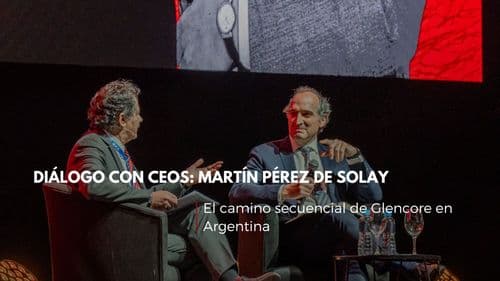 Duration 21:09
One-on-One with Martín Pérez de Solay: CEO, Glencore Argentina
May 6, 2026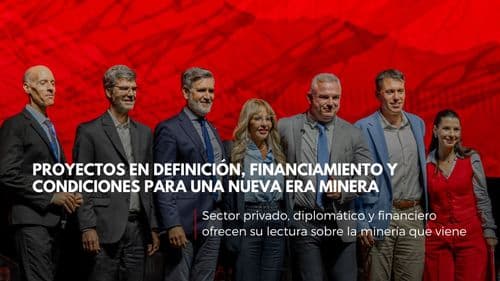 Duration 56:21
Financial, Business and Diplomatic Sector Panel: Citibank, Challenger Gold, McEwen
May 6, 2026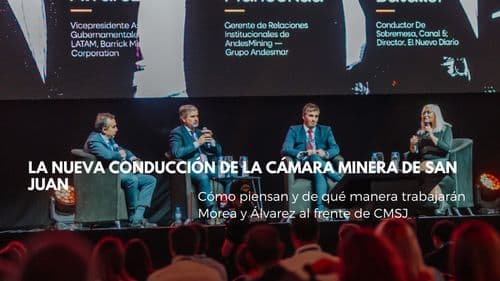 Duration 34:26
San Juan Mining Chamber Panel: José Morea and Marcelo Álvarez
May 6, 2026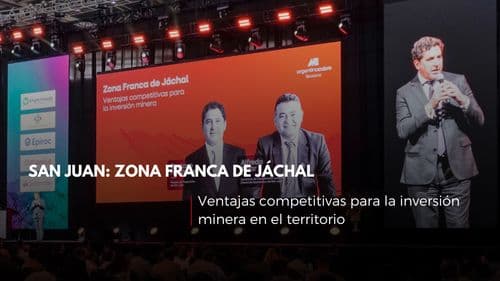 Duration 12:08
Jáchal Free Trade Zone Presentation: Gustavo Fernández and Alfredo Aciar
May 6, 2026 Duration 19:43
Argentina Cobre Sessions Opening: Juan Pablo Perea
May 6, 2026