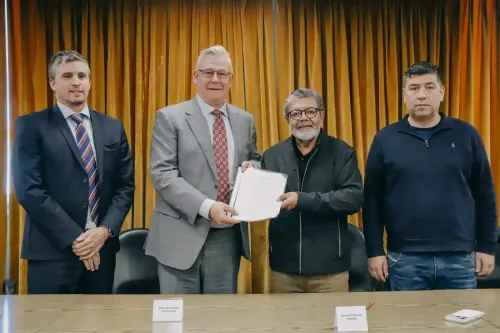
The Faculty of Engineering of the National University of San Juan (UNSJ), through the Mining Research Institute (IIM), obtained a new patent that introduces an innovative mathematical method to accurately measure the roundness of sand particles used in hydraulic fracturing, or fracking. The development, approved by the INPI (National Institute of Industrial Property) in January 2026, was led by Dr. Eng. Daniel Chuk from the IIM and uses artificial vision and the Fourier Transform to eliminate subjectivity from traditional analysis. The technology makes it possible to evaluate sand quality quickly and objectively, with potential impact on the hydrocarbon industry.
By Panorama Minero
A new patent positions Argentine public education at the forefront of applied technology, through the Faculty of Engineering of the National University of San Juan (UNSJ). It is an innovative mathematical method designed to accurately determine the roundness of sand particles used in the fracking technique — or hydraulic fracturing — a critical process for hydrocarbon extraction in unconventional reservoirs such as those of Vaca Muerta.
This advancement, approved by the INPI on January 30, 2026, represents the tenth patent of UNSJ and the eighth for its Faculty of Engineering. The development is the result of several years of research within the Mining Research Institute (IIM), under the leadership of Dr. Eng. Daniel Chuk.
The End of Subjectivity in the Oil Industry
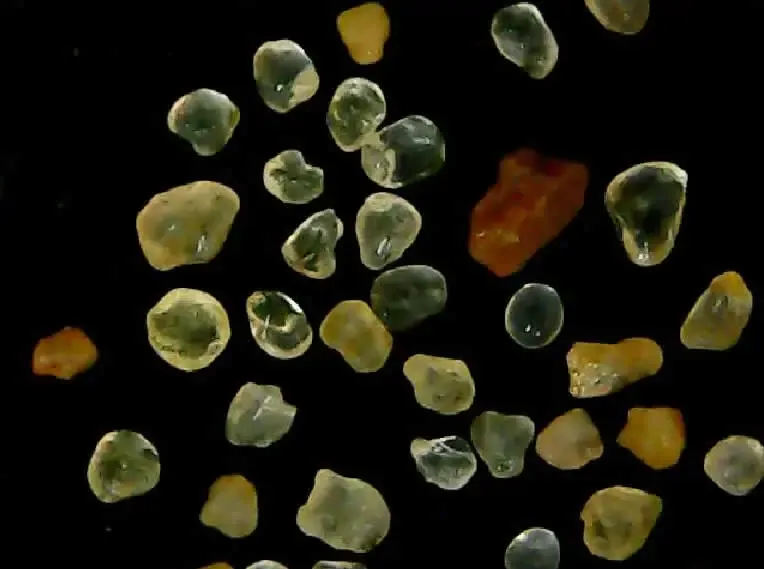
Until now, the industry worldwide has been governed by the American standard API 19C. According to Dr. Chuk, this regulation has become “outdated” over time, since it depends on the subjectivity of a human operator who visually examines the grains of sand and compares them with a reference chart. Even with trained personnel, this traditional method carries a high margin of error due to differences in visual criteria.
The invention patented by the UNSJ team breaks with this paradigm. Technically referred to as an “Automatic method for determining the roundness measurement of a two-dimensional object using artificial vision and the Fourier Transform,” this system allows objective and highly precise measurements. By applying the Fourier Transform to the contour analysis of the particles, the developed software can decompose the geometry of the grain in terms of frequencies, eliminating any trace of human doubt in the process.
Daniel Chuk and a Team of Excellence at the IIM
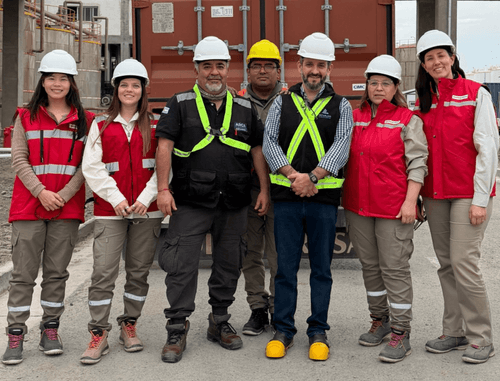
The success of this project responds to the vision of Dr. Eng. Daniel Chuk, who identified the needs of the industry and led a high-quality interdisciplinary team. Together with him, Mg. Eng. Carlos Gustavo Rodríguez contributed his knowledge in artificial intelligence and neural networks, tools that were combined with mathematical methods to refine the system.
Also noteworthy is the work of Lic. Adriana Luna, who during her time at the Institute was an important contributor in promoting the use of artificial vision to solve this specific problem related to fracking sands, a topic on which she is currently developing her doctoral thesis.
The Mining Research Institute has been the foundation that made this method a reality. The IIM not only conducts theoretical research but also has a long track record of providing technical services, such as mineral solubility and compression tests. The granting of this patent validates the work the Institute has carried out for decades to solve real industry problems.
Strategic Impact on Hydrocarbon Extraction
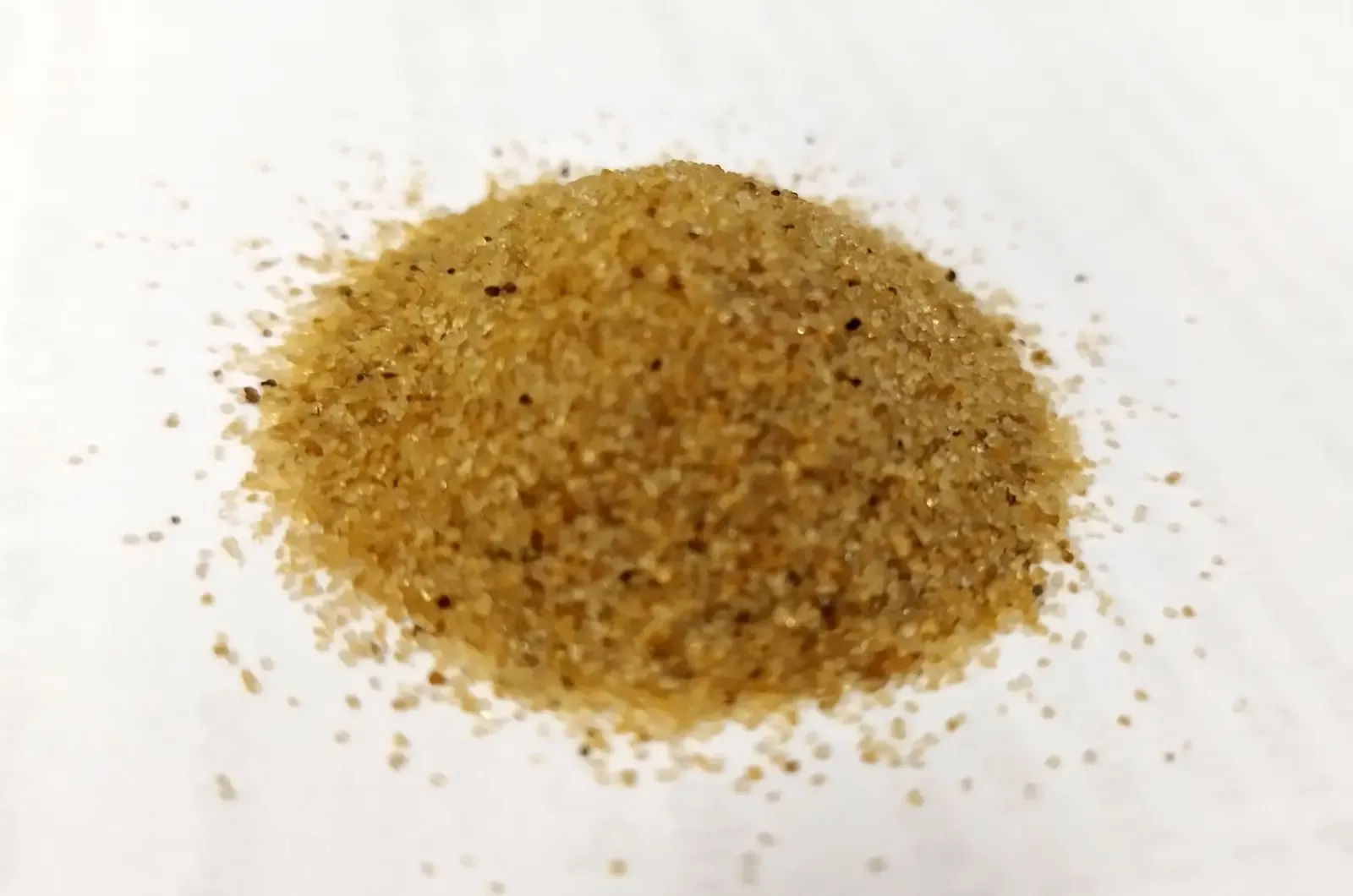
To understand the magnitude of this achievement, it is necessary to analyze the role of sand in fracking. In hydraulic fracturing, water, sand, and chemicals are injected at high pressure to break underground rocks. The sand acts as a “proppant” that keeps those fractures open so that oil and gas can flow. However, not just any sand is suitable: it must have a resistant siliceous composition and, fundamentally, optimal roundness and sphericity to allow the passage of hydrocarbons.
Dr. Chuk points out that logistics is currently one of the greatest challenges, since much of the sand used in Vaca Muerta comes from distant places such as the Paraná River. These sands are transported by ship along the Argentine coast and then moved by truck to Vaca Muerta. The possibility of quickly and safely analyzing sand quality in local quarries — such as those being studied in areas of Ullum and Iglesia in San Juan — could significantly reduce logistical costs. In fact, in San Juan there is a fracking sand quarry with significant growth and development projections.
Accessible and Federal Innovation
One of the most notable features of the patented method is its technological accessibility. According to Dr. Chuk, the user in the field only needs a simple and inexpensive USB microscope. The image is then digitally sent to the Institute, where it is processed by highly complex software. This eliminates the need to send physical samples and drastically speeds up response times.
The Value of Public Universities
Beyond the technical advancement, this achievement is also testimony to the value of investing in science and technology within the university sphere. Dr. Chuk emphasizes that research should not be considered an expense but an investment with multiplying effects on the socioeconomic activity of the region.
The ability of the National University of San Juan to generate patents of this importance demonstrates that the knowledge produced has global impact, contributing to the updating of international standards and improving the efficiency of industries such as energy and mining.