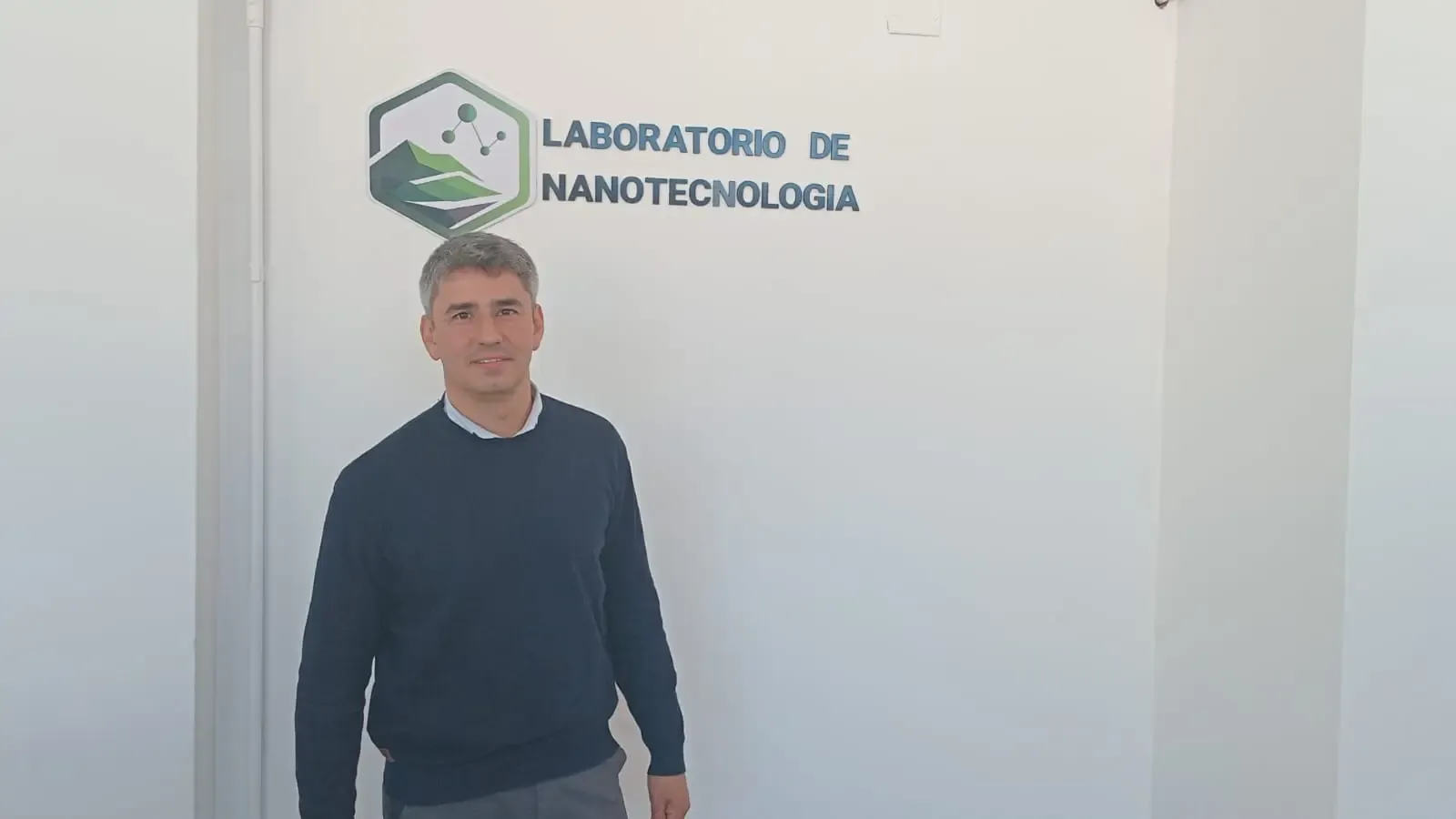
The National University of San Juan (UNSJ) has inaugurated Argentina's first Laboratory of Nanotechnology Applied to Mining, a milestone aimed at linking scientific research with the productive and environmental needs of the mining sector. Integrated into the Mining Research Institute of the Faculty of Engineering, the laboratory is headed by Dr. Ariel Maratta, with Lic. Andrés Azcona serving as Deputy Director. Together, they lead an interdisciplinary team committed to positioning San Juan as an internationally recognized hub for technological innovation.
By Panorama Minero
The National University of San Juan (UNSJ) has taken a historic step for Argentine science and industry with the inauguration of Argentina's first Laboratory of Nanotechnology Applied to Mining. This new facility, integrated into the Mining Research Institute of the Faculty of Engineering, was created to serve as a bridge between cutting-edge scientific research and the operational and environmental challenges of the mining industry. Under the leadership of Dr. Ariel Maratta and Lic. Andrés Azcona, the laboratory seeks not only to optimize processes but also to lead a technological revolution capable of positioning both the province and the country within the international innovation landscape.
A Track Record of Excellence: From the Laboratory to Industry
The journey toward establishing this research center began in 2018. What initially emerged as a basic research initiative focused on developing new materials for the chemical analysis of elements of mining interest soon expanded thanks to the quality of its findings. According to Dr. Ariel Maratta, this initial work led to high-impact scientific publications and awards recognizing its level of innovation.
The initiative continued to evolve through the incorporation of nanotechnology into postgraduate programs and the supervision of doctoral research focused on industrial applications, including effluent treatment. This sustained growth enabled the group to become part of the network of the Argentine Nanotechnology Foundation (FAN), receiving key institutional support after being recognized as Argentina's first research team dedicated to applying this technology to the mining sector. Ultimately, after securing several competitive research grants and with the support of the Dean of the Faculty of Engineering and the San Juan Secretariat of Science and Technology, the team established a dedicated facility for the synthesis and characterization of nanomaterials.
Organizational Structure and Human Capital
The laboratory operates under four strategic pillars: scientific and academic training, knowledge generation, technological development, and innovation services. The team currently consists of 13 researchers, including laboratory specialists and collaborators from other disciplines who contribute an interdisciplinary perspective.
This academic approach extends well beyond scientific publications. Recently, the group contributed a chapter to an international nanotechnology book, reflecting its commitment to generating new knowledge from San Juan for the world. In addition, the laboratory serves as a training center for advanced undergraduate and doctoral students, preparing the professionals who will lead the mining industry of the future.
Innovation Services and Technology Transfer
One of Dr. Maratta's core priorities is collaboration with the private sector. The laboratory offers a range of services designed for companies seeking to enhance their competitiveness. Its main services include:
-
Technology Validation: Assisting science-based companies in testing their developments using state-of-the-art equipment and real-world samples.
-
Custom Material Synthesis: Development of nanomaterials specifically designed for industrial processes.
-
Specialized Training: Technical training in extractive metallurgy and nanotechnology applications.
-
Innovation Consulting: Advisory services for start-ups and established companies seeking nanotechnology-based solutions to operational challenges.
Cutting-Edge Projects: Sustainability and Efficiency
The laboratory is currently developing several projects with the potential to transform mining operations through more sustainable practices.
Effluent Treatment through Magnetophoresis: One of the laboratory's most promising developments is the creation of super paramagnetic nanomaterials capable of simultaneously adsorbing multiple metals. These materials can be separated from water using an external magnet, eliminating the need for filters or centrifuges and enabling a faster, more cost-effective, and more sustainable process. The team is currently working with a mining company in northwestern Argentina to scale this technology toward a pilot plant.
Copper Recovery and Separation from Leach Solutions: In collaboration with the Catholic University of the North (Chile), the research team is developing magnetic separation techniques aimed at isolating and recovering metallic species present in leach solutions. The project seeks to simplify processing, reduce water consumption, and minimize the use of conventional chemical reagents.
NanoDus: Led by Dr. Brian Carrizo, this project focuses on the development of a nanocomposite for dust suppression on mining roads, providing a practical solution to improve operational safety, reduce the resuspension of particulate matter, and minimize the environmental impact associated with mining activities.
Cross-Sector Innovation and Technology Transfer: The nanotechnology developed by the laboratory also extends to other productive sectors. The team is collaborating with the local company Maxicolor on the development of super-refractory thermal coatings, and with Bosque Urbano on recycled plastics with antiseptic properties through the incorporation of nanoparticles.
Strategic Agreements for Validation and Technological Development in Mining: The laboratory is also advancing collaborative agreements with Biotermal and CCO Nano Solutions aimed at the validation, scaling, and development of new technologies for the mining sector. These partnerships strengthen technology transfer; enable the evaluation of solutions under real operating conditions, and foster innovations with direct implementation potential for mining companies.
The Future of Sustainable Mining
Dr. Ariel Maratta emphasizes that nanotechnology is essential for reducing the environmental footprint of the mining industry. By using more reactive materials, smaller quantities of inputs are required, while the ability to reuse these nanomaterials hundreds of times promotes a genuine circular economy.
Maratta believes that innovation enables industries to remain competitive over the long term, emphasizing that technology allows companies to adapt to increasingly demanding environmental regulations. Supported by government programs and growing interest from clients in the United States and Canada, the laboratory stands on the threshold of a new industrial revolution, ready to transform scientific knowledge into an economic driver that contributes to Argentina's development.